Venezuela’s Aging F-16 Fleet: From Regional Supremacy to Survival Against the Odds
-
| Defense Systems Analyst

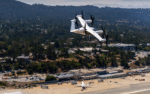
The recent encounter between Venezuelan F-16s and the U.S. Navy destroyer USS Jason Dunham has drawn attention back to one of the most unusual fighter fleets in the world. Venezuela, once a close U.S. defense partner, today maintains a handful of Cold War-era F-16A/Bs despite sanctions, attrition, and the parallel introduction of Russian Su-30 fighters. This article reviews the history, current status, and operational significance of Venezuela’s surviving F-16s.
Origins of Venezuela’s F-16 Program
In May 1982, Caracas signed the Peace Delta program, making Venezuela the first South American country to acquire the F-16. Between 1983 and 1985, it received 16 single-seat F-16A Block 15s and 8 two-seat F-16B Block 15s, powered by Pratt & Whitney F100 engines.
These fighters replaced older Mirage III and Mirage 5 aircraft, and were initially supported by 150 AIM-9L/P-4 Sidewinders. At that time, Venezuela possessed the most advanced air combat capability in South America.
Combat Use and Early Upgrades
Venezuelan F-16s first saw combat in November 1992 during a failed coup against President Carlos Andrés Pérez. Government-loyal pilots flying F-16s shot down multiple aircraft, including OV-10 Broncos and AT-27 Tucanos used by pro-Chávez rebels.
In the late 1990s, Venezuela planned upgrades, including F100-PW-220E engines, but the rise of Hugo Chávez and the subsequent deterioration in U.S.-Venezuelan relations froze all official modernization and spares supply.
Decline Under Sanctions
By the 2000s, U.S. arms embargoes severely limited support. Chávez even threatened to sell the F-16s to Iran, a move that sparked intelligence concerns in Washington. Rumors persist that Iran may have accessed at least one airframe for technical study, though unconfirmed.
To maintain some combat capability, Venezuela turned to alternative suppliers. Israel provided Python-4 air-to-air missiles and the Litening targeting pod, allowing limited integration of precision-guided munitions. However, offensive options remain constrained, with most ordnance limited to unguided bombs and rockets.
The fleet also relied on “cannibalization” of airframes and the black-market acquisition of parts to remain barely operational.
Current Status of the Fleet
As of late 2024, according to FlightGlobal, Venezuela’s operational fleet consists of only three F-16As and one F-16B. Independent estimates vary, with some analysts suggesting 5–8 airframes might be flyable under optimal conditions.
These surviving aircraft are assigned to Grupo Aéreo de Caza 16 “Los Dragones”, based at El Libertador Air Base near Maracay. Despite their age, they are occasionally deployed for patrols, joint exercises, or symbolic shows of force — as in the recent approach to the U.S. Navy destroyer.
Strategic Role in the Shadow of Su-30MK2V
Today, Venezuela’s frontline capability is centered on 21 Su-30MK2V Flanker multirole fighters, acquired from Russia between 2006 and 2008. These aircraft are vastly more capable, armed with beyond-visual-range R-27 missiles, Kh-31 supersonic anti-ship missiles, and guided bombs.
Yet, Caracas continues to operate its dwindling F-16s. Their symbolic value as Western-made fighters and their potential use in air policing still justify their maintenance, even if they are obsolete compared to regional peers like Chile’s upgraded F-16s.
Key Points
- Venezuela was the first F-16 operator in South America (delivered 1983–1985).
- Fleet peaked at 24 aircraft (16 F-16A, 8 F-16B), all Block 15.
- Combat proven during 1992 coup attempt.
- Sanctions and embargoes halted upgrades, forcing reliance on Israel and black-market parts.
- Current fleet: 3–4 operational aircraft, with readiness at historically low levels.
- Strategic role overshadowed by Russian Su-30MK2V fighters, but F-16s remain for political and symbolic reasons.