US Air Force Receives 9th E-11A BACN Jet to Enhance Tactical Communications
-
| Aerospace & UAV Researcher

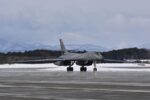
The U.S. Air Force has officially received its ninth E-11A Battlefield Airborne Communications Node (BACN) aircraft—a Bombardier Global 6000-based platform modified by Northrop Grumman. This milestone further strengthens the USAF’s ability to provide persistent airborne communications bridging across complex and contested environments.
Strategic Role of the E-11A in Modern Warfare
The E-11A BACN serves as a high-altitude communications gateway that enables interoperability between disparate platforms and forces. Operating at altitudes above 12,000 meters (40,000 feet), the aircraft acts as a “Wi-Fi router in the sky,” facilitating real-time voice and data links between ground forces, manned aircraft, unmanned systems, and command centers—even when terrain or adversary jamming would otherwise prevent line-of-sight communication.
This capability is essential for Joint All-Domain Command and Control (JADC2), the Pentagon’s initiative to connect sensors to shooters across land, air, sea, cyber, and space domains. The BACN system enables legacy platforms using incompatible waveforms or data links—such as Link 16, SADL (Situational Awareness Data Link), EPLRS (Enhanced Position Location Reporting System), and IP-based networks—to communicate seamlessly.
Platform Overview: Bombardier Global Business Jet Modified for ISR
The E-11A is based on the Bombardier Global Express/6000 business jet platform. Its long endurance (up to ~12 hours) and high-altitude performance make it ideal for persistent ISR and comms relay missions over large operational theaters like Afghanistan or the Indo-Pacific.
- Manufacturer: Bombardier (airframe); Northrop Grumman (BACN integration)
- Crew: Typically two pilots; mission crew varies
- Endurance: ~12 hours
- Cruise Altitude: ~41,000–51,000 ft (~12.5–15.5 km)
- BACN Payload: Includes radios supporting UHF/VHF/SATCOM/Link16/IP networks; onboard data processing; secure comms interfaces
The BACN payload includes multiple radio gateways capable of cross-banding between tactical datalinks and satellite communications. It also supports dynamic network management functions such as Quality of Service prioritization—critical during high-tempo operations involving joint or coalition forces.
Fleet Expansion Timeline and Procurement Details
This ninth aircraft was delivered under a $464.8 million contract awarded in June 2021 to Northrop Grumman for up to six additional E-11As with integrated BACN systems. The contract includes engineering support through January 2026.
The USAF had previously operated only four active E-11As under the Air Combat Command’s 430th Expeditionary Electronic Combat Squadron based at Prince Sultan Air Base in Saudi Arabia. One aircraft was lost in a crash over Afghanistan in January 2020 due to engine failure. The fleet expansion aims not only to replace that loss but also to grow capacity amid increasing demand for resilient airborne C3I nodes across CENTCOM and INDOPACOM theaters.
BACN Program Milestones
- 2005–2008: Initial development under USAF’s Advanced Concept Technology Demonstration program
- 2008: First deployment aboard EQ-4B Global Hawk UAVs
- 2011–present: Operational fielding aboard manned E-11As
- 2021: Contract awarded for six new jets with upgraded mission systems
- 2025: Delivery of ninth operational airframe completed
BACN vs Rivals: Unique Capabilities Among Airborne Gateways
The BACN-equipped E-11A fills a niche role distinct from other ISR or AEW&C platforms like JSTARS or AWACS. Unlike those sensor-focused platforms designed for surveillance or battle management roles, BACN’s primary mission is communications relay—especially bridging non-interoperable networks in denied environments.
This makes it complementary to other airborne gateways such as:
- NATO AGS RQ-4D Phoenix: Focused on ground surveillance rather than comms bridging.
- E-7 Wedgetail AEW&C: Provides radar-based air picture but limited tactical datalink translation.
- MQ-9 Reaper with GatewayONE pod (experimental): Offers limited-duration relay but lacks persistence or full waveform support.
BACN remains unique in its ability to persistently bridge multiple waveforms at theater scale with low latency—critical during joint fires coordination or CAS missions involving dissimilar assets like F-22s, A-10s, MQ‑9s and SOF teams on the ground.
Tactical Implications Across Joint Operations & JADC2 Architecture
The addition of more E‑11As enhances U.S. capabilities in several key areas of modern warfare doctrine:
- Datalink Interoperability: Enables legacy fighters like F‑15C/E or A‑10C Warthog to share situational awareness with stealth platforms like F‑35 via Link16-to-IP bridging.
- CAS & SOF Support: Provides real-time voice/data relay between JTACs on ground and fast movers overhead—even when SATCOM is degraded or terrain blocks LOS radios.
- MDO Resilience: Acts as an airborne node immune from most ground-based jamming threats due to altitude advantage; complements LEO satcom constellations under ABMS architecture.
- NATO/Coalition Ops: Bridges waveform gaps between allied forces using different C4I standards—particularly relevant during joint exercises like Red Flag or Defender Europe.
The USAF has increasingly emphasized “kill web” architectures over traditional linear kill chains—requiring every sensor/shooter node be connected at machine speed across domains. In this context, platforms like the E‑11A become critical enablers rather than niche assets.
Sustainment Challenges & Future Outlook for BACN Fleet
Sustainment remains a challenge given that most current airframes are modified commercial jets not originally designed for military ruggedization. However, their mature logistics base from business aviation helps reduce lifecycle costs compared to bespoke military designs.
The USAF continues exploring future concepts such as integrating miniaturized BACN-like payloads onto MQ‑9 Reapers or even attritable drones under programs like GatewayONE or Skyborg—but these remain developmental efforts lacking the endurance/payload capacity of dedicated manned jets like the E‑11A today.
If funding remains consistent through FY26 NDAA cycles—with projected ABMS investments exceeding $3 billion—the total fleet could expand beyond ten aircraft by late decade depending on global demand signals from CENTCOM/INDOPACOM commands and NATO partners seeking similar capabilities via foreign military sales (FMS).