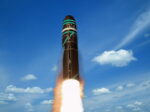
U.S. Air Force to Conduct Minuteman III ICBM Test Launch as Part of Strategic Readiness Validation
-
| Defense Systems Analyst

Milivox analysis: The U.S. Air Force is preparing to conduct a scheduled test launch of an unarmed LGM-30G Minuteman III intercontinental ballistic missile (ICBM) from Vandenberg Space Force Base. This routine but strategically significant event serves as a critical validation of the United States’ nuclear deterrent posture and the operational readiness of its aging but still vital land-based ICBM fleet.
Background
The upcoming test is part of the Air Force Global Strike Command’s (AFGSC) recurring evaluation cycle for its strategic missile forces. According to official statements by AFGSC and echoed by U.S. Strategic Command (USSTRATCOM), such launches are not responses to current geopolitical events but are planned months in advance to demonstrate system reliability and crew proficiency.
The LGM-30G Minuteman III has been the backbone of America’s land-based nuclear deterrent since entering service in 1970. Originally designed during the Cold War, it remains one-third of the nuclear triad alongside submarine-launched ballistic missiles (SLBMs) and strategic bombers. Approximately 400 Minuteman IIIs remain deployed across three missile wings located at Malmstrom AFB (Montana), F.E. Warren AFB (Wyoming), and Minot AFB (North Dakota).
Technical Overview
The LGM-30G is a three-stage solid-fueled ICBM with a maximum range exceeding 13,000 km. It is capable of delivering multiple independently targetable reentry vehicles (MIRVs), although under New START treaty limitations, current configurations typically carry a single W78 or W87 thermonuclear warhead with yields ranging from 300 kt to 475 kt.
- Length: Approx. 18 meters
- Launch weight: ~36,000 kg
- Guidance: Inertial with GPS updates; CEP ~200 m
- Basing: Silo-based; hardened underground facilities
- Propulsion: Solid-fuel stages by Thiokol/Aerojet Rocketdyne
The upcoming test will involve a non-nuclear configuration with telemetry instrumentation replacing live warheads. The missile will be launched from Vandenberg SFB toward the Reagan Test Site at Kwajalein Atoll in the Marshall Islands—a flight path used for decades during operational tests.
Operational or Strategic Context
This test comes amid heightened global tensions involving peer adversaries such as Russia and China—both modernizing their own strategic arsenals at pace. While U.S. officials emphasize that these tests are pre-planned and not intended as signaling tools, they nonetheless serve as visible affirmations of American second-strike capability and command-and-control resilience.
The aging Minuteman III fleet has undergone multiple life extension programs over the past two decades, including upgrades to propulsion systems, guidance packages, and reentry vehicles. However, according to Milivox analysis, these measures are increasingly constrained by legacy airframe limitations and obsolescence risks—prompting urgency behind its replacement program.
The GBSD Transition Looms
The Ground Based Strategic Deterrent (GBSD)—now formally designated as the LGM-35A Sentinel—is slated to replace all existing Minuteman IIIs starting in the early-to-mid 2030s under a ~$100 billion program led by Northrop Grumman. Until then, continued testing ensures that existing systems remain credible under extended service life conditions.
Market or Industry Impact
This test reinforces ongoing demand for sustainment contracts involving key defense primes such as Boeing (legacy integrator), Northrop Grumman (GBSD prime), Lockheed Martin (reentry systems), Honeywell Aerospace (guidance components), and Aerojet Rocketdyne (propulsion). Each launch also validates telemetry instrumentation packages developed by contractors like Leidos and Kratos Defense.
The broader industrial base supporting legacy ICBMs remains vital—not only for sustaining current capabilities but also for ensuring knowledge transfer into Sentinel production lines over this decade.
Aging Infrastructure Challenges
A Government Accountability Office report released in late FY2023 highlighted growing concerns about silo integrity, environmental compliance issues at older launch control centers, and cyber-hardening gaps—all areas that require interim investment until full GBSD fielding occurs.
Milivox Commentary
As assessed by Milivox experts, each successful Minuteman III launch serves dual purposes: validating technical performance metrics while reinforcing allied confidence in U.S. extended deterrence commitments—particularly among NATO members facing renewed Russian assertiveness or Indo-Pacific allies wary of Chinese expansionism.
This latest test underscores both the enduring relevance—and growing limitations—of Cold War-era systems operating well beyond their original design life spans. While effective today through rigorous maintenance cycles and component refreshes, reliance on legacy platforms introduces risk margins that only next-generation systems like Sentinel can fully address over time.