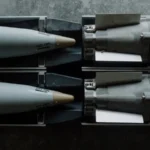
US Weighs Tomahawk Cruise Missile Transfer to Ukraine, Reshaping Strategic Threat to Russian Rear
-
| Defense Systems Analyst

The United States is reportedly considering transferring Tomahawk land-attack cruise missiles (LACMs) to Ukraine—a potential game-changer in Kyiv’s ability to strike high-value targets deep behind Russian lines. If approved, this would mark the first time a NATO-grade subsonic cruise missile with a range exceeding 1,000 km would be delivered to Ukraine. The implications for Russia’s rear-area logistics and command infrastructure could be profound.
Tomahawk Overview: A Proven Long-Range Strike Asset
The BGM-109 Tomahawk is a subsonic cruise missile developed by the United States in the late Cold War era and has been continuously upgraded over decades. Designed for precision strikes against high-value targets at long ranges while evading air defenses through low-altitude flight profiles and terrain-following navigation, the Tomahawk has been used extensively since Operation Desert Storm.
Key specifications of modern variants include:
- Range: ~1,600 km (Block IV); up to ~2,500 km (Block V Maritime Strike variant)
- Warhead: 450 kg unitary conventional warhead
- Guidance: GPS/INS with TERCOM and DSMAC terminal guidance; Block V adds two-way datalink
- Launch platforms: Surface ships and submarines (vertical launch systems); some land-based test launches conducted
The missile’s modular architecture allows mid-life upgrades. The latest Block V variant includes improved navigation resilience against GNSS jamming and maritime strike capability with moving target engagement.
Strategic Rationale Behind Potential Transfer
The reported deliberations on transferring Tomahawks are driven by several strategic considerations:
- Deep Strike Capability: Ukrainian forces currently rely on HIMARS/GMLRS (~80 km) and ATACMS (~300 km) for precision strikes. The addition of Tomahawks would extend that reach fivefold or more.
- Targeting Russian Rear Echelons: Key targets like airbases in Crimea (e.g., Belbek), logistics hubs in occupied Donbas or southern Russia (e.g., Rostov-on-Don), and C2 nodes could be brought within range.
- Dissuading Russian Escalation: By threatening critical infrastructure far from the frontlines—previously considered safe—Ukraine could impose new costs on Russia’s war effort.
This follows a broader pattern of Western escalation in weapons transfers—first with Javelins and Stingers in early 2022; later tanks like Leopard 2s; then long-range systems like Storm Shadow/SCALP-EG missiles (~250+ km). The UK and France have already supplied these air-launched cruise missiles; however, their limited inventory constrains sustained usage. A US-supplied ground- or sea-launched system like the Tomahawk could offer greater volume and persistence.
Legal Constraints and Workarounds Under MTCR
A key hurdle is compliance with the Missile Technology Control Regime (MTCR), which restricts transfers of Category I systems—defined as those capable of delivering a payload ≥500 kg over ≥300 km. The Tomahawk clearly falls into this category.
However, MTCR is an informal political agreement rather than a binding treaty. Precedents exist where exceptions were made for allies under strict end-use monitoring. In Ukraine’s case—given its existential war footing—the US may justify an exemption under national security grounds or reconfigure older Block III variants with reduced payloads/ranges to circumvent MTCR thresholds technically.
Plausible Delivery Platforms: Land-Based Adaptation?
A major technical question is how Ukraine would launch the missile. The US Navy deploys Tomahawks from Mk41 vertical launch systems aboard cruisers and destroyers or from submarine torpedo tubes. Ukraine lacks such platforms.
Plausible options include:
- Mk41-based mobile launcher adaptation: Some NATO countries have explored truck-mounted Mk41-based solutions (e.g., Poland’s Aegis Ashore derivative). A similar system could be provided or adapted for Ukrainian use.
- TEL-converted solution: A bespoke transporter erector launcher using surplus naval canisters or containerized launchers akin to Israel’s LORA system may be feasible.
A precedent exists in Japan’s plan to deploy land-based Tomahawks as part of its counterstrike doctrine starting FY2026 using modified launchers. Alternatively, if launched from NATO waters via allied vessels under Ukrainian targeting coordination—a highly escalatory move—it would require intense political calibration due to risk of direct NATO-Russia confrontation.
Moscow’s Response Calculus
The potential delivery has already triggered alarmist rhetoric from Russian officials. Kremlin spokesperson Dmitry Peskov warned that such a move “would cross red lines,” while state media amplified narratives about “direct NATO involvement.” However, similar warnings were issued before previous Western deliveries—including tanks and Storm Shadow missiles—with no direct retaliation against NATO states materializing thus far.
Moscow may respond asymmetrically via increased strikes on Ukrainian infrastructure or cyberattacks on Western logistics chains but is unlikely to escalate militarily against NATO over this specific transfer unless accompanied by allied-operated launch platforms inside Ukrainian territory—a scenario Washington appears keen to avoid.
Tactical Impacts vs Strategic Signaling
If transferred in limited numbers—say dozens rather than hundreds—the tactical battlefield impact may be modest compared to GMLRS saturation fires or FPV drone swarms. However, their strategic value lies in signaling capability escalation and forcing Russia to disperse assets deeper into its interior—complicating logistics and raising defense costs across vast areas previously considered secure rear zones.
This aligns with evolving Ukrainian doctrine emphasizing “deep battle” disruption through multi-domain effects—from sabotage teams near Moscow rail hubs to long-range drone raids on oil refineries near St Petersburg. In this context, even symbolic use of Tomahawks could catalyze disproportionate defensive overreactions from Russia’s military bureaucracy.