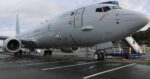
US Navy Awards Four Concept Contracts for Collaborative Combat Aircraft Program
-
| Aerospace & UAV Researcher

The US Navy has taken a significant step in its pursuit of next-generation carrier airpower by awarding four contracts for conceptual design work on its future Collaborative Combat Aircraft (CCA). The awards—granted to Boeing, Lockheed Martin, Northrop Grumman, and Anduril Industries—mark the beginning of a competitive development phase aimed at fielding autonomous or semi-autonomous uncrewed systems that will operate alongside manned platforms as part of the Next Generation Air Dominance (NGAD) family of systems.
Carrier-Based CCA: A New Chapter in Naval Aviation
The Navy’s CCA effort is distinct from the U.S. Air Force’s own CCA program but shares similar objectives: developing uncrewed aerial vehicles (UAVs) capable of teaming with manned aircraft to perform missions such as strike, electronic warfare (EW), intelligence-surveillance-reconnaissance (ISR), and decoy operations. However, the naval variant must meet additional challenges—including catapult launches and arrested landings aboard aircraft carriers—making it a more complex engineering endeavor.
This initiative falls under the broader Next Generation Air Dominance – Carrier Variant (NGAD-CV) program. The CCA is envisioned as an integral part of future carrier air wings (CVWs), augmenting or replacing legacy platforms like the F/A-18E/F Super Hornet in certain roles and enhancing survivability and lethality through distributed operations.
Contractors Selected for Conceptual Design Phase
The Naval Air Systems Command (NAVAIR) awarded concept refinement contracts to:
- Boeing – leveraging decades of naval aviation experience and its MQ-25 Stingray program;
- Lockheed Martin – likely building on lessons from its X-47B UCAS-D participation and F-35C integration;
- Northrop Grumman – known for its pioneering work on stealthy UAVs like the X-47B and B-21 bomber technologies;
- Anduril Industries – a newer entrant emphasizing rapid development cycles and AI-enabled autonomy.
The value of each contract was not disclosed publicly. However, these awards are focused solely on maturing initial concepts rather than producing prototypes. The goal is to refine operational concepts and system architectures that can inform future acquisition milestones.
Design Priorities: Stealth, Modularity, Autonomy
The Navy has not released detailed technical requirements but has emphasized several key attributes:
- Carrier Suitability: Designs must be capable of launch/recovery via catapults/arresting gear or other novel methods compatible with CVNs.
- Low Observability: Stealth features are expected to enable survivability in contested environments.
- Manned-Unmanned Teaming: CCAs will operate under varying levels of autonomy alongside F/A-XX fighters or F-35Cs.
- Modular Payloads: Open mission systems architecture will allow rapid reconfiguration for ISR/EW/strike roles.
- Aerial Refueling Compatibility: Potential integration with MQ-25 Stingray tankers could extend range/deployment options.
This approach aligns with broader Department of Defense efforts to field “affordable mass” through attritable or expendable platforms that can complement high-end assets while reducing operational risk to human pilots.
Differentiation from USAF’s CCA Program
The U.S. Air Force’s CCA program—part of its own NGAD initiative—is further along in development. In April 2024 it awarded contracts to Anduril and General Atomics for prototype CCAs expected to fly before FY2026. These systems are designed primarily for land-based operations with long-range strike capabilities against peer adversaries like China or Russia.
The Navy’s version faces unique constraints due to maritime operations. For example:
- Certain airframe geometries may be unsuitable due to deck handling limitations;
- Sustained saltwater exposure demands corrosion-resistant materials/coatings;
- Tighter size/weight limits due to hangar deck elevators and launch systems;
- A need for robust datalinks compatible with shipboard comms infrastructure such as NIFC-CA or TTNT networks.
This divergence means that while some technologies may overlap between services—such as autonomy stacks or mission software—the physical platforms themselves are unlikely to be shared across domains without major redesigns.
Toward a Future Carrier Air Wing Architecture
The Navy envisions a future CVW composed not only of manned fighters like the forthcoming F/A-XX but also multiple tiers of uncrewed assets including CCAs optimized for different mission sets. This could include:
- Sensors-forward CCAs: penetrating ISR drones operating ahead of strike packages;
- Loyal wingmen: flying in formation with manned aircraft providing jamming/decoy functions;
- Shooter drones: armed UCAVs capable of precision strike using internal weapons bays;
- Aerial refuelers or comms relays: extending range/persistence across dispersed formations.
This distributed approach supports survivability against modern IADS threats by complicating enemy targeting cycles while enabling massed fires at standoff ranges. It also supports emerging Joint All-Domain Command & Control (JADC2) constructs by integrating sensors/shooters across domains via secure mesh networks.
Next Steps and Timeline Uncertainty
NAVAIR officials have not announced firm timelines beyond this initial concept phase. A downselect could occur in late FY2026–FY2027 depending on budgetary support and technical maturity assessments. Flight demonstrators may follow thereafter if Congress funds a formal Engineering & Manufacturing Development (EMD) phase within NGAD-CV’s budget line items post-FY2028.
An eventual Initial Operational Capability (IOC) date remains speculative but is unlikely before the early-to-mid 2030s given prior timelines seen in MQ-25 development cycles. However, rapid prototyping authorities under Middle Tier Acquisition pathways could accelerate certain aspects if urgency increases due to geopolitical factors such as Indo-Pacific tensions or peer advancements in UCAV capabilities by China’s PLA Naval Aviation arm.
Strategic Implications for Carrier Strike Groups
If successful, naval CCAs could significantly reshape how Carrier Strike Groups operate by enabling distributed lethality without increasing pilot risk exposure. They could allow CVNs greater stand-off distances from shore-based threats while still projecting power inland via long-range unmanned sorties coordinated through airborne battle managers aboard E-2D Advanced Hawkeyes or future E-XX successors.
This shift would mirror trends seen globally as navies experiment with integrating UAV swarms into traditional blue-water doctrines—from France’s SCAF-Marine studies to Japan’s unmanned fighter escort concepts under FX programs—and reflects growing consensus that future air superiority will depend heavily on human-machine collaboration at scale rather than platform-on-platform parity alone.
Conclusion: A Competitive Path Ahead
Boeing, Lockheed Martin, Northrop Grumman, and Anduril now face an intense competition—not just against one another but against physics itself—as they attempt to deliver viable designs that can survive both bureaucratic scrutiny and electromagnetic warfare environments alike. The U.S. Navy’s decision signals clear intent: tomorrow’s carrier decks will host more than just pilots—they’ll host algorithms trained for war at sea.