U.S. Army Selects Swedish Saab Giraffe 1X Radar in $46M Deal to Strengthen Allied Air Defense
-
| Defense Systems Analyst

The U.S. Army has awarded Swedish defense firm Saab a $46 million contract for the delivery of its Giraffe 1X radar system, marking a significant step in bolstering short-range air defense (SHORAD) and counter-unmanned aerial system (C-UAS) capabilities among allied forces. The procurement underscores growing demand for agile, multi-mission sensors amid evolving aerial threats.
Giraffe 1X: Compact Radar with Big Capabilities
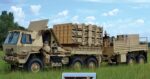
The Giraffe 1X is a lightweight, software-defined X-band 3D radar designed for high mobility and rapid deployment. Weighing under 150 kg and capable of being mounted on light tactical vehicles or fixed installations, it offers simultaneous air surveillance and drone detection functions with minimal logistical footprint.
Key specifications include:
- 360° azimuth coverage with up to 75 km range for air targets
- High update rate (up to once per second)
- Simultaneous tracking of over 100 targets
- Automatic classification of rotary/fixed-wing aircraft and UAVs
- Low probability of intercept (LPI) waveform design
- Integration-ready with NATO-standard C2 systems via ASTERIX protocol
The radar’s electronically scanned array (ESA) allows rapid beam steering without mechanical movement. It supports multiple missions including SHORAD cueing, C-RAM (counter-rocket artillery mortar), coastal surveillance, gap-filler radar roles, and mobile force protection.
Contract Details and Strategic Context
The $46 million contract was awarded through the Foreign Military Sales (FMS) program managed by the U.S. Department of Defense on behalf of allied nations—though specific end-users were not disclosed. Deliveries are expected between late 2025 and mid-2027.
This acquisition aligns with broader U.S.-led efforts to reinforce NATO’s integrated air and missile defense posture in Europe following Russia’s full-scale invasion of Ukraine in February 2022. The proliferation of Group I–III drones across conflict zones has forced militaries to adapt with layered sensor networks capable of detecting low-signature aerial threats at close range.
“The Giraffe 1X provides unmatched situational awareness in contested environments,” said Erik Smith, President and CEO of Saab Inc., noting its proven performance in both homeland security and expeditionary military operations.
Operational Use Cases: From Baltic States to Indo-Pacific
The modularity and compactness of the Giraffe 1X make it ideal for dispersed force protection missions—particularly for forward-deployed troops or critical infrastructure sites vulnerable to saturation drone attacks or loitering munitions.
Nations such as Estonia have already fielded the system as part of their national SHORAD architecture. In Sweden’s own armed forces, the radar is used aboard CB90 fast attack craft as well as land-based mobile platforms like BvS10 all-terrain vehicles.
The U.S. Marine Corps has also evaluated similar configurations under its Ground/Air Task Oriented Radar (G/ATOR) family but continues exploring smaller radars like Giraffe 1X for expeditionary C-UAS roles within its Force Design 2030 framework.
C-UAS Integration Potential with Kinetic Interceptors
A key advantage of the Giraffe 1X lies in its ability to cue kinetic effectors such as Stinger MANPADS or vehicle-mounted interceptors like Leonardo DART or Rheinmetall Skyranger systems. Its short latency data links support real-time target handoff—a critical feature when engaging small drones operating at low altitude with minimal radar cross-section (RCS).
The radar can also feed into electronic warfare suites or directed energy weapons by providing precise track data on slow-moving or hovering targets that might evade traditional surveillance radars optimized for fast movers.
Saab’s Expanding Footprint in North America
This latest deal reinforces Saab’s growing presence in North American defense markets. The company operates several facilities across the United States including a new advanced manufacturing site in West Lafayette, Indiana focused on aerospace components and sensor integration.
Saab has previously supplied AN/SPS-77 Sea Giraffe AMB radars for U.S. Navy Littoral Combat Ships under Foreign Comparative Testing programs—demonstrating longstanding interoperability between Swedish sensors and American platforms.
The company continues investing heavily in open architecture designs that comply with DoD Modular Open Systems Approach (MOSA) standards—ensuring future upgradeability without vendor lock-in.
Conclusion: A Sensor Fit for Modern Threat Environments
The selection of Saab’s Giraffe 1X by the U.S. Army highlights a strategic pivot toward smaller yet smarter sensors capable of detecting emerging threats like drones and loitering munitions that increasingly dominate modern battlefields. With its compact form factor, multi-mission flexibility, and proven interoperability within NATO frameworks, the system is poised to become a key node within allied SHORAD networks worldwide.