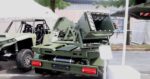
U.S. Army Tests Perovskite-Powered Deployable Microgrid for Tactical Energy Resilience
-
| Defense Systems Analyst

The U.S. Army has successfully demonstrated a novel deployable microgrid powered by perovskite-based solar panels—marking a significant step toward lightweight, high-efficiency expeditionary power solutions. The demonstration highlights the growing role of advanced photovoltaics in supporting tactical energy independence and resilient battlefield operations.
Perovskites Enter the Tactical Energy Arena
Perovskites—an emerging class of photovoltaic materials—have long promised high efficiency and low-cost manufacturing compared to traditional silicon-based solar cells. Their potential to be printed on flexible substrates makes them especially attractive for military applications where weight, form factor, and rapid deployment are critical.
In October 2025, the U.S. Army collaborated with the National Renewable Energy Laboratory (NREL) and the Defense Advanced Research Projects Agency (DARPA) to demonstrate a deployable microgrid system integrating perovskite solar modules at Fort Leonard Wood, Missouri. The test validated performance under realistic field conditions including variable sunlight exposure and rugged terrain.
This marks one of the first known field demonstrations of perovskite-powered systems in a military context—a milestone that could reshape how forward-deployed units generate and manage power in austere environments.
System Architecture: Lightweight Solar Meets Modular Microgrids
The demonstrated system consisted of several key components:
- Flexible perovskite PV panels: Developed using roll-to-roll printing techniques on polymer substrates; each panel weighed under 1 kg/m² while achieving conversion efficiencies exceeding 18% under lab conditions.
- Hybrid power management unit: Integrated inverter/controller capable of balancing input from PV arrays with battery storage and auxiliary diesel generators.
- Energy storage module: Lithium-ion battery bank sized to support overnight operations or periods of low insolation.
- Tactical edge electronics: Load included communications gear (radios/satcom), sensors (EO/IR), and computing nodes simulating command post loads (~3 kW peak).
The modular design allows scaling from squad-level kits (~500 W) up to company-sized base camps (>20 kW). The entire system was packed into two transport cases for air or ground mobility—meeting U.S. Army requirements for rapid setup (<30 minutes) by two personnel without specialized tools.
Operational Drivers: Reducing Fuel Dependency in Contested Environments
The push toward renewables in military logistics stems from both strategic vulnerability and operational inefficiency tied to fuel convoys. According to DoD data, fuel resupply accounted for over 50% of convoy missions during operations in Iraq and Afghanistan—many of which were targeted by IEDs or ambushes.
A deployable microgrid that can generate power on-site reduces this dependency while enhancing operational endurance. For expeditionary units operating beyond reliable supply lines—or in denied areas where resupply is infeasible—energy self-sufficiency becomes mission-critical.
Moreover, silent operation via solar/battery hybridization reduces acoustic and thermal signatures compared to generator-only setups—a notable advantage in ISR-heavy or clandestine missions.
Challenges Ahead: Durability, Efficiency Loss & Field Validation
Despite promising lab results, perovskites face hurdles before widespread adoption:
- Environmental degradation: Perovskite materials are sensitive to moisture and UV exposure; encapsulation remains a key technical challenge for long-term outdoor use.
- Efficiency drop-off: Fielded modules showed ~10–15% lower efficiency than controlled lab conditions due to temperature variation and partial shading effects.
- Sustainability & toxicity concerns: Most high-efficiency perovskites still rely on lead-based compounds; DARPA-funded research is exploring lead-free alternatives with comparable performance metrics.
NREL engineers noted that while current modules may not yet meet multi-year deployment standards like those required by fixed installations (e.g., FOBs), they are well-suited for short-duration missions or rapidly shifting tactical scenarios where weight reduction outweighs longevity tradeoffs.
DARPA’s Role & Future Roadmap Toward TRL Maturation
This demonstration falls under DARPA’s “Expeditionary Power” initiative aimed at advancing TRL (Technology Readiness Level) 4–6 technologies into field-ready prototypes within five years. The agency has invested over $40 million since FY2021 into next-gen energy platforms including thermophotovoltaics, solid-state batteries, and hybrid microgrids incorporating AI-based load optimization algorithms.
DARPA program manager Dr. Elena Karpova emphasized that the goal is not just higher efficiency but “operational adaptability”—systems that can autonomously adjust generation/storage/load profiles based on mission tempo or threat posture without operator intervention.
Tactical Implications Across Domains: From Arctic Ops to Indo-Pacific Posture
The utility of lightweight renewable microgrids extends beyond ground forces:
- Arctic deployments: Where fuel transport is logistically complex; cold-hardened PV systems could enable autonomous sensor outposts or warming shelters without diesel dependence.
- PACOM island chains: In Indo-Pacific scenarios involving distributed basing across archipelagos (e.g., EABO/LOCE concepts), portable renewables reduce logistical footprint while enabling persistent ISR nodes or radar stations off-grid.
- Civil-military disaster response: Rapidly deployable clean energy systems can support humanitarian ops post-cyclone/earthquake where grid infrastructure is damaged or destroyed.
Industry Partnerships & Commercial Dual-Use Potential
The project leveraged commercial advances from companies like Swift Solar (a California-based startup working on tandem perovskites) alongside defense integrators such as Raytheon Technologies who provided ruggedized power management electronics compatible with MIL-STD-810G environmental specs.
This dual-use synergy accelerates transition timelines by aligning DoD needs with commercial innovation cycles—particularly as global demand grows for mobile clean energy solutions across telecoms, mining camps, disaster relief zones, and remote scientific expeditions.
Conclusion: A Step Toward Energy Autonomy at the Tactical Edge
The successful demonstration of a perovskite-powered deployable microgrid underscores how next-gen photovoltaics may soon play a frontline role in military energy doctrine. While challenges remain around durability and lifecycle costs, early results validate their potential as force multipliers—reducing logistical burdens while enhancing operational flexibility across domains from Europe’s forests to Pacific islands. Continued investment through DARPA/NREL partnerships will determine whether these systems can scale into enduring capabilities within the next decade’s force structure evolution.