U.S. Army Selects AeroVironment FE-1 as Next-Generation Counter-UAS System to Defeat Drone Swarms
-
| Defense Systems Analyst

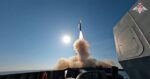
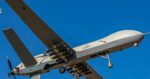
The U.S. Army has awarded a contract to AeroVironment for its FE-1 system under the Future Tactical Unmanned Aircraft System (FTUAS) Increment 2 initiative—marking a significant step in the service’s evolving counter-unmanned aerial system (C-UAS) posture. The FE-1 is designed specifically to neutralize drone swarms using a combination of AI-driven detection and kinetic effectors.
FE-1: A Purpose-Built System for Drone Swarm Defense
The AeroVironment FE-1 (Future Effecter – 1) is a modular counter-UAS solution developed to address the increasingly complex threat posed by small unmanned aerial systems (sUAS), particularly in swarm configurations. Unlike traditional C-UAS platforms that rely on jamming or soft-kill techniques alone, the FE-1 integrates multiple layers of detection and defeat mechanisms—including radar and electro-optical/infrared (EO/IR) sensors combined with precision-guided kinetic interceptors.
According to AeroVironment’s official release and corroborated by Breaking Defense and Janes Defence Weekly reporting in October 2025, the FE-1 leverages machine learning algorithms for real-time target classification and prioritization. This allows it to autonomously engage multiple drones simultaneously—an essential capability given the proliferation of low-cost FPV drones and loitering munitions on modern battlefields.
Contract Details and Operational Context
The U.S. Army selection of the FE-1 comes under the FTUAS Increment 2 program but is also aligned with broader Joint Counter-small Unmanned Aircraft Systems Office (JCO) efforts to standardize C-UAS capabilities across services. While financial terms were not disclosed in public sources as of October 2025, industry analysts estimate initial procurement could exceed $75 million over three years based on similar past awards.
Operationally, the Army aims to deploy the FE-1 at brigade combat team (BCT) level as part of an integrated short-range air defense (SHORAD) network. It complements existing systems like Coyote Block 3 interceptors from Raytheon and electronic warfare suites such as L3Harris’ CORIAN platform.
Key Features and Technical Capabilities
- Multi-Sensor Fusion: Combines radar, EO/IR cameras, RF detectors for robust threat detection in cluttered environments.
- Kinetic Interceptors: Uses small guided missiles or directed-energy projectiles capable of neutralizing Group 1–3 drones (<25 kg).
- AI Targeting Engine: Employs edge-processing ML algorithms for autonomous threat classification and engagement sequencing.
- Modular Architecture: Designed for rapid integration onto tactical vehicles such as JLTVs or Stryker variants.
- C4ISR Integration: Compatible with Army’s IBCS architecture via Link-16 and other tactical datalinks.
AeroVironment has emphasized that one of the key differentiators is low latency from detection-to-engagement—critical when facing fast-moving FPVs or coordinated swarm attacks where seconds matter.
Evolving Threat Landscape: Why Kinetic C-UAS Is Gaining Ground
The selection of a kinetic-focused solution like FE-1 reflects growing concern within NATO militaries about saturation attacks from low-cost UAVs—a tactic widely observed in Ukraine since early 2023. Jamming-based systems have proven less effective against autonomous drones operating on pre-programmed routes or hardened against GPS interference.
This shift toward hard-kill solutions mirrors other recent procurements such as Rheinmetall’s Skyranger turret with laser weapon modules or Israel’s Iron Beam program. The U.S. Department of Defense has also accelerated testing of directed energy weapons under its HELSI (High Energy Laser Scaling Initiative), but field-ready solutions remain limited in number compared to kinetic options like those offered by AeroVironment or Anduril Industries’ Lattice platform paired with Anvil interceptors.
AeroVironment’s Position in the Growing C-UAS Market
This award consolidates AeroVironment’s position not just as a UAV manufacturer but also a full-spectrum counter-drone provider. Previously known primarily for systems like Puma LE and Switchblade loitering munitions, the company has expanded its portfolio into defensive technologies amid rising demand from both domestic and international customers.
The global C-UAS market is projected by Teal Group analysts to grow from $3 billion in FY2024 to over $9 billion by FY2030—driven largely by battlefield lessons learned in Ukraine/Nagorno-Karabakh conflicts where commercial drones have been weaponized at scale.
Next Steps: Fielding Timeline and Future Integration
The U.S. Army plans initial field testing of the FE-1 system at Yuma Proving Ground starting Q2 FY2026 with operational evaluation units delivered by late FY2026 under an Other Transaction Authority (OTA)-based acquisition model aimed at accelerating deployment cycles.
If successful during these trials, full-rate production could begin in FY2027 with potential export variants tailored for NATO allies under Foreign Military Sales (FMS). Interoperability testing with NATO-standard datalinks such as STANAG-compliant interfaces will be part of Phase II development milestones according to DoD acquisition officials familiar with the program roadmap.