Ukraine To Receive Textron MSFV Light Armored Vehicles For The Battlefield
-
| Defense Systems Analyst

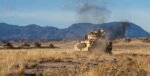
Ukraine is set to acquire a fleet of new-production Mobile Strike Force Vehicles (MSFV) from the United States under a sole-source contract awarded to Textron. Originally developed for the Afghan National Army, the MSFV is a significantly improved variant of the M1117 Armored Security Vehicle (ASV), offering enhanced blast protection, increased internal space, and modular armament options.
This move comes as Ukraine continues to integrate Western armored platforms into its force structure, improving survivability, mobility, and firepower in its fight against Russian forces.
The MSFV Program And Background
The MSFV was conceived as a tailored solution for Afghanistan, offering a lightweight yet more survivable armored vehicle compared to its predecessor, the M1117.
- Developer: Textron Marine & Land Systems
- Weight: ~30,000 pounds
- Speed: Up to 63 mph (101 km/h)
- Armament: Turret capable of mounting M2 .50 caliber machine gun and Mk 19 40mm automatic grenade launcher concurrently, with support for M240 and M249 machine guns.
- Variants: Standard turreted version, open-topped gun vehicle, armored ambulance.
The MSFV incorporates an extended hull for better crew capacity and survivability enhancements against mines and IEDs — a critical advantage for Ukraine, where minefields and artillery cluster munitions dominate the battlefield.
Contract Details And Numbers
According to the U.S. Army Contracting Command-Detroit Arsenal, the new order includes:
- 65 MSFVs to be produced over three years.
- One year of spare parts supplied under the same contract.
- Funding provided through the Ukraine Security Assistance Initiative (USAI), separate from Presidential Drawdown Authority (PDA).
This marks a rare case of new production vehicles being built for Ukraine, rather than transfers from existing U.S. Army stocks.
Role On The Ukrainian Battlefield
Ukraine already operates hundreds of M1117 Guardian vehicles supplied from U.S. Army reserves. The MSFV represents a step up in survivability and versatility.
- Blast protection: Better resistance to mines and roadside explosives.
- Fire support: Dual heavy weapons in a protected turret.
- Mobility: Lighter than main battle tanks, easier to maintain and transport.
- Medical evacuation: Light armored ambulance versions would allow protected casualty transport under fire.
However, vulnerabilities remain. Open-topped turret variants are highly exposed to FPV drones, a defining threat in Ukraine. Images already show Ukrainian M1117s retrofitted with cage armor screens against loitering munitions. MSFVs may require similar field adaptations.
Strategic Implications
For Ukraine, MSFVs provide a flexible armored platform bridging the gap between MRAPs and IFVs. They are not a replacement for tanks or IFVs like the Bradley or CV90 but complement them in:
- Urban operations where speed and compactness matter.
- Reconnaissance patrols with heavier protection than soft-skinned vehicles.
- Mobile fire support for infantry units.
- Casualty evacuation in contested zones.
Production restart at Textron also ensures a dedicated pipeline of vehicles for Ukraine, a critical factor as armored losses remain high.
Interestingly, this is not the first time Ukraine has indirectly benefited from U.S. equipment once meant for Afghanistan. Mi-17 helicopters initially procured for the Afghan Air Force were also delivered to Ukraine, and are now used for strike and utility roles.
Conclusion
The transfer of new-build MSFVs highlights how Ukraine’s allies are now investing in sustainable, long-term production contracts rather than relying solely on surplus equipment. For Ukraine, these vehicles will improve battlefield survivability, mobility, and casualty evacuation capacity, though additional adaptations will be required against the growing FPV drone threat.
As Russia and Ukraine escalate mine warfare and drone usage, the MSFV may prove to be a valuable — if vulnerable — addition to Ukraine’s mixed fleet of armored vehicles.