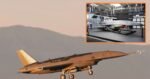
Ukraine Unveils FA v1 Jet-Powered Canard Delta Drone for Tactical Airspace Denial
-
| Defense Systems Analyst

Amid intensifying aerial threats in the Russia-Ukraine conflict, Ukraine has revealed a new indigenous tactical drone—the FA v1. This jet-powered canard delta UAV is optimized for short-range airspace denial and counter-UAV missions. Its unveiling underscores Kyiv’s push to develop cost-effective unmanned systems tailored to its evolving battlefield needs.
FA v1 Overview: A Jet-Powered Tactical UCAV
The FA v1 is a compact unmanned combat aerial vehicle (UCAV) featuring a jet propulsion system and a distinctive canard-delta wing configuration. Developed by Ukrainian engineers under conditions of wartime urgency and constrained resources, the drone appears to be designed primarily as a loitering munition or interceptor against enemy UAVs and helicopters operating near the frontlines.
While detailed specifications remain limited due to operational secrecy, available imagery and open-source assessments suggest the following characteristics:
- Propulsion: Small turbojet engine (possibly Chinese-origin QX70 or similar)
- Airframe: Canard-delta layout with composite materials; likely optimized for speed and maneuverability
- Range: Estimated 50–100 km operational radius
- Speed: Likely subsonic but high-speed compared to propeller-driven drones (estimated ~400–600 km/h)
- Payload: Warhead or kinetic impactor; possibly EO/IR sensor for terminal guidance
- Launch method: Ground-based rail or pneumatic launcher
Tactical Role: Short-Range Airspace Denial and Counter-UAS
The FA v1 is not intended as a strategic deep-strike platform like Ukraine’s UJ-22 or long-range kamikaze drones targeting Russian infrastructure. Instead, it fills a niche in short-range airspace control—interdicting low-flying rotary-wing platforms, loitering munitions (e.g., Lancet), or slow-moving reconnaissance drones.
This role becomes increasingly critical as both sides intensify use of FPV drones and loitering munitions in contested zones. The FA v1 could serve as an expendable interceptor—launched rapidly to engage incoming threats at close range using either proximity detonation or direct collision.
Aerodynamic Design: Canard Delta Configuration Explained
The canard-delta layout of the FA v1 offers several aerodynamic advantages suited to its mission profile:
- Maneuverability: Canards improve pitch authority at low speeds—useful during launch or terminal attack phase
- Simplicity: Delta wings provide structural efficiency with fewer moving parts—ideal for low-cost mass production
- Stability at high angles of attack: Useful during aggressive interception maneuvers
- Aerodynamic efficiency at subsonic speeds: The layout balances speed with endurance within tactical ranges
This design echoes earlier concepts such as the Soviet-era Lavochkin La-17 target drone or modern Chinese CH-901 suicide UAVs—but adapted with modern materials and electronics.
Sourcing and Production Challenges Under Wartime Conditions
The development of the FA v1 reflects Ukraine’s growing domestic drone innovation ecosystem—a response to supply constraints from Western partners and increasing demand on the frontlines. Given sanctions on Russian military imports and limited access to Western turbine engines, Ukrainian developers have reportedly turned to Chinese-made microturbines such as the QX70 series or reverse-engineered variants.
The airframe itself appears modular and may be produced via additive manufacturing techniques combined with carbon-fiber composites. This allows rapid iteration cycles across small workshops—a model similar to how Ukraine produces thousands of FPV drones monthly via decentralized networks.
Tactical Implications Amid Escalating Drone Warfare
The introduction of the FA v1 comes amid escalating drone-on-drone engagements over Ukraine. Russian forces increasingly deploy Lancet loitering munitions, Orlan-10 ISR platforms, and even helicopter-launched UAVs near frontline positions. Traditional SHORAD systems like Gepard or MANPADS are often too expensive per shot—or lack sufficient reaction time—to counter swarms of small drones effectively.
An expendable UCAV like the FA v1 offers a complementary layer in Ukraine’s layered air defense architecture. It could be deployed from mobile launchers near forward positions to intercept enemy drones before they reach artillery units or logistics hubs. If equipped with EO/IR sensors or passive RF homing systems, it could autonomously home in on jamming sources or ISR emissions.
Status of Deployment and Future Developments
No official statement has been made regarding serial production numbers or operational deployment timelines. However, footage from October suggests that prototypes have already undergone test launches—possibly under combat conditions in eastern Ukraine.
If successful in field trials, the FA v1 could evolve into a family of tactical UCAVs—ranging from anti-drone interceptors to strike variants carrying shaped-charge warheads against soft targets like radar stations or command posts.