Ukraine Strikes Russian Black Sea Oil Rig Using Coordinated Drone Attack
-
| Aerospace & UAV Researcher

Milivox analysis: Ukraine has escalated its campaign against Russian maritime infrastructure by striking a former drilling platform in the Black Sea using a coordinated drone operation. The attack—executed with both FPV aerial drones and unmanned surface vessels—demonstrates Kyiv’s growing proficiency in multi-domain unmanned warfare and signals a shift toward targeting dual-use assets with strategic value.
Background
On or around November 10, 2025, Ukrainian forces reportedly struck a Russian-controlled offshore oil platform in the northwestern sector of the Black Sea. The target was identified as one of several rigs previously operated by Ukraine’s Chornomornaftogaz but seized by Russia during its 2014 annexation of Crimea. These platforms—often referred to as the “Boyko Towers” after former Ukrainian energy minister Yuriy Boyko—have since been repurposed for military use by Russian forces.
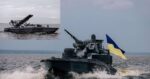
According to open-source intelligence and video footage released by Ukrainian military-affiliated channels, the strike involved both aerial first-person-view (FPV) drones and an unmanned surface vessel (USV). The footage shows the USV approaching the rig at high speed before detonating near or against its base structure. Simultaneously or shortly before impact, FPV drones appear to have targeted surveillance or communications equipment mounted on the upper decks.
Technical Overview
The attack highlights Ukraine’s continued innovation in low-cost asymmetric warfare using commercially adapted drone platforms. The FPV drones used are likely variants of quadcopters or hexacopters modified for explosive delivery—a tactic that has become commonplace on land but is now being extended into maritime operations.
The USV featured in this operation appears similar to earlier Ukrainian naval drones such as those used in attacks on Sevastopol in 2023–2024. These vessels typically feature:
- A low-profile hull designed for radar evasion
- Commercial GPS navigation systems with inertial backup
- Remote video feed for terminal guidance
- An explosive payload integrated into the bow section
The combination of air and sea-based unmanned systems suggests deliberate coordination—possibly involving real-time ISR (intelligence, surveillance, reconnaissance) feeds and command-and-control links via Starlink or other SATCOM relays. While Ukraine has not officially confirmed operational details, such multi-vector strikes imply growing integration between drone operators across domains.
Operational or Strategic Context
This strike is part of Ukraine’s broader effort to degrade Russia’s control over maritime domains near Crimea without engaging in direct ship-to-ship combat. Since mid-2023, Kyiv has launched numerous attacks on Russian naval assets using USVs—including successful hits on Ropucha-class landing ships and patrol boats within Sevastopol harbor.
The targeting of offshore rigs marks an evolution from pure anti-ship operations toward infrastructure denial. These platforms have reportedly been used by Russia as radar outposts and electronic warfare nodes due to their elevated positions and line-of-sight advantages over vast sea areas. By neutralizing them, Ukraine aims to reduce Russia’s early-warning capability over the northwestern Black Sea corridor.
As assessed by Milivox experts, this also serves a psychological purpose: demonstrating that no fixed asset under Russian control is beyond reach—even outside traditional land battle zones. It may also complicate Moscow’s logistics planning for resupply routes between Crimea and mainland Russia via maritime corridors.
Market or Industry Impact
The use of small-scale USVs and FPV drones for strategic infrastructure attacks could influence procurement priorities across multiple navies observing the conflict. Several NATO members have already initiated programs focused on counter-USV technologies—including directed energy weapons (DEWs), advanced sonar nets, and AI-based anomaly detection systems for port security.
This incident may further stimulate interest in modular unmanned systems capable of operating cooperatively across domains (air/sea/land). Defense OEMs specializing in C-UAS (counter-unmanned aerial systems) solutions may also find increased demand from navies seeking to protect offshore installations like oil rigs or floating radar barges.
Milivox Commentary
The Ukrainian strike on a Russian-held oil rig underscores how modern conflicts are increasingly shaped by networked autonomy rather than traditional force-on-force engagements. As Milivox reports from prior analyses of Sevastopol attacks, Kyiv’s ability to integrate commercial-grade hardware into effective strike packages reflects both ingenuity under constraint and doctrinal adaptation toward distributed lethality.
This particular operation also raises legal questions about targeting dual-use civilian infrastructure repurposed for military gain—a gray zone that will likely feature more prominently as unmanned systems proliferate globally. From an operational standpoint, it reaffirms that even static maritime assets can no longer count on immunity from low-cost precision threats launched beyond visual range.
Looking ahead, expect more emphasis on hardened offshore infrastructure design—including passive defenses against drone swarms—and increased investment into autonomous countermeasures capable of intercepting threats before they reach critical proximity thresholds.