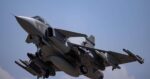
UAC Rolls Out Second Prototype of Upgraded Yak-130M Trainer and Light Attack Jet
-
| Aerospace & UAV Researcher

Russia’s United Aircraft Corporation (UAC) has officially rolled out the second prototype of the upgraded Yak-130M advanced trainer/light attack aircraft. This milestone marks continued progress in modernizing the Russian Aerospace Forces’ (RuAF) jet trainer fleet with enhanced avionics and combat capabilities. The new variant aims to bridge training for fifth-generation fighters while expanding its utility as a light strike platform.
Yak-130M Overview: Bridging Training and Light Combat Roles
The Yakovlev Yak-130 was originally developed in the 1990s as a subsonic advanced jet trainer designed to prepare pilots for fourth-generation fighters such as the Su-27 and MiG-29. It evolved into a versatile platform capable of both training and light attack missions. The upgraded Yak-130M variant reflects a significant leap in capability tailored to support fifth-generation fighter transition training—particularly for Su-57 pilots—while enhancing its secondary combat role.
The new M-model introduces several key enhancements:
- AESA radar (Active Electronically Scanned Array), reportedly based on the Phazotron-NIIR Zhuk family or similar derivative.
- IRST system (Infrared Search and Track), mounted ahead of the cockpit canopy for passive target detection.
- Upgraded cockpit avionics, including new multifunction displays (MFDs), more powerful mission computer architecture, and improved HOTAS ergonomics.
- Enhanced communications suite, potentially including secure datalinks compatible with Russian C4ISR networks.
- Expanded weapons compatibility, supporting precision-guided munitions (PGMs) such as KAB-series bombs, Kh-series air-to-surface missiles, and possibly R-73 air-to-air missiles.
Together these upgrades aim to enable realistic simulation of fifth-gen fighter systems during pilot training while giving the aircraft credible light strike capabilities in permissive environments.
Prototype Rollout Details and Flight Testing Timeline
The second prototype was unveiled at the Irkutsk Aviation Plant in late October 2025. The rollout follows the maiden flight of the first Yak-130M prototype earlier this year. According to UAC officials cited by Russian defense media such as TASS and Aviaport.ru, factory ground testing is complete on both prototypes, with flight trials now underway at Zhukovsky near Moscow under supervision from Russia’s Ministry of Defense Flight Test Center (GLITs).
The second prototype is expected to join state joint trials by Q1 2026. These trials will assess flight performance under various loadouts, sensor integration fidelity (especially AESA/IRST fusion), electronic warfare resilience, and weapons delivery accuracy using both unguided and guided munitions.
AESA Radar Integration: A Key Capability Leap
The most significant technical advancement on the Yak-130M is its nose-mounted AESA radar—a first for this platform class within Russia’s inventory. While UAC has not publicly confirmed the exact model used, analysis suggests it may be derived from Phazotron-NIIR’s Zhuk-AE or similar lightweight variants adapted from MiG platforms. These radars typically offer:
- Air-to-air detection ranges up to ~80–100 km against fighter-sized targets.
- Air-to-ground mapping modes (SAR/GMTI).
- Multi-target tracking (>10 targets simultaneously).
- LPI/LPD characteristics enhancing survivability during operations.
This sensor enables realistic emulation of Su-35/Su-57 radar behavior during training scenarios while also allowing real-time targeting data generation for light strike missions—especially when paired with electro-optical pods or datalinked ISR feeds from UAVs like Orion or Forpost-R.
IRST Sensor Adds Passive Targeting Capability
The addition of an IRST sensor mounted ahead of the canopy provides passive detection of aerial targets based on thermal signatures—key for simulating stealth engagements or operating under EMCON conditions. This mirrors systems found on frontline Russian fighters like Su-30SM2 and Su-57.
The IRST system may also support air-to-ground functions such as hot target cueing or battlefield surveillance when integrated into broader C4ISR networks via secure datalinks. Its inclusion underscores Russia’s intent to make even its trainers capable nodes in distributed sensor grids—a trend seen globally across modern air forces deploying multi-role trainers like Korea’s FA-50 or Italy’s M346FA.
Cockpit Modernization Enhances Training Fidelity
The cockpit layout has been redesigned to mimic fifth-gen fighter interfaces more closely. Key changes include:
- Larger color multifunction displays with customizable layouts reflecting Su-57 UI conventions.
- Upgraded mission computers enabling simulated threat environments via embedded training software (“synthetic adversary” modules).
- Improved HOTAS controls aligned with RuAF standardization trends across combat aircraft fleets.
This allows student pilots to train on interface logic similar to operational jets while instructors can inject dynamic threats into missions without relying solely on external range assets—reducing cost per flight hour while raising realism levels significantly.
Operational Implications for RuAF Training Doctrine
The Yak-130M program aligns with broader RuAF efforts to modernize pilot training pipelines amid growing complexity in tactical aviation roles. With platforms like Su-57 entering limited service alongside legacy fleets (Su-30SM/SM2, MiG-35), pilot conversion demands are increasing sharply—especially given attrition rates post-February 2022 operations in Ukraine.
The upgraded trainer offers several doctrinal benefits:
- Synthetic environment emulation: reducing dependency on costly live-fly aggressor units or EW jamming pods during exercises;
- Cohesive multi-role preparation: allowing pilots exposure to both air-to-air tactics and precision strike workflows before frontline assignment;
- Simplified logistics footprint: by using one platform for LIFT (Lead-In Fighter Training) plus light CAS roles where needed;
- NATO-style modularity: mirroring trends seen in Western LIFT platforms that double as exportable strike solutions;
- Pilot throughput acceleration: critical given increased sortie demand due to extended deployments over Ukraine/Syria/the Arctic theater;
Status Within Broader Export Strategy & Market Outlook
The baseline Yak‑130 has already seen export success across Algeria, Myanmar, Bangladesh, Laos, Belarus—and notably Iran reportedly signed an agreement in early 2023 for a batch delivery starting late this decade. The upgraded M-model could appeal strongly to nations seeking low-cost multirole jets without investing in full-scale fighter fleets—especially if offered with optional AESA/IRST kits or simplified avionics packages tailored per customer budget tiers.
If successfully fielded domestically by mid-decade (~2026–27 IOC), Rosoboronexport may position it competitively against Leonardo’s M346FA or Korea Aerospace Industries’ FA‑50 Block II offerings—particularly among CSTO-aligned states or sanctioned markets unable to access Western equivalents due to ITAR restrictions or political alignment constraints.
Conclusion: A Strategic Upgrade Amid Airpower Strain
The rollout of a second Yak‑130M prototype signals Russia’s continued investment in maintaining aerospace competitiveness despite sanctions pressure and industrial bottlenecks post-Ukrainian invasion fallout. While not revolutionary compared to NATO LIFT peers technologically, its incremental improvements represent a pragmatic evolution aimed at sustaining pilot readiness pipelines while offering credible deterrence value via low-cost precision strike options in permissive theaters like Syria or Central Asia.
The coming year will be critical as state trials validate whether these upgrades translate into operational effectiveness—and whether export clients are convinced that Russia can still deliver viable aerospace solutions under constrained conditions.