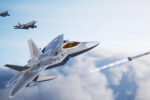
Türkiye Eyes Eurofighter Typhoon to Bolster Air Superiority Amid F-16 Uncertainty
-
| Defense Systems Analyst

As Türkiye seeks to modernize its aging fighter fleet amid geopolitical friction and procurement delays, the government has intensified efforts to acquire Eurofighter Typhoons. The move signals a potential strategic pivot in Ankara’s defense posture and could reshape its role within NATO’s aerial order of battle.
Strategic Context: From F-35 Ejection to F-16 Delays
Türkiye’s pursuit of the Eurofighter Typhoon stems from a series of cascading events that have left the Turkish Air Force (TuAF) with limited options for modernizing its tactical fighter fleet. After being removed from the F-35 Joint Strike Fighter program in 2019 due to its acquisition of the Russian S-400 air defense system—citing concerns over stealth compromise—Ankara turned toward upgrading its existing fleet of Lockheed Martin F-16s.
In October 2021, Türkiye formally requested 40 new F-16 Block 70 aircraft along with 79 modernization kits for older variants. However, U.S. congressional resistance has stalled this $20 billion deal due to concerns over human rights issues and tensions with Greece. As a result, Turkish officials have increasingly explored alternative platforms to avoid capability gaps as legacy TuAF fighters age out of service.
Eurofighter Typhoon as a Stopgap—and Strategic Hedge
The Eurofighter Typhoon has emerged as Türkiye’s leading candidate for bridging this capability gap before the indigenous fifth-generation TF-X (KAAN) enters service later this decade. The twin-engine multirole fighter—developed by a consortium including the UK (BAE Systems), Germany (Airbus), Italy (Leonardo), and Spain—is already operational across several NATO countries and offers advanced air superiority capabilities with secondary ground attack roles.
In November 2023, Turkish Defense Minister Yaşar Güler confirmed that negotiations were underway with the UK for up to 40 Tranche 4 or Tranche 3B-standard Typhoons. These newer variants feature AESA radar (Captor-E), enhanced avionics, conformal fuel tanks (CFTs), and integration with advanced weapons like Meteor BVRAAMs and Brimstone missiles.
The UK has reportedly supported Türkiye’s bid; however, Germany has so far blocked export approval due to broader political disagreements with Ankara—particularly over human rights issues and regional military interventions. Spain and Italy are said to be more amenable. If Berlin lifts its veto or Ankara negotiates a workaround via bilateral deals or leasing options from London or Rome, deliveries could begin by late this decade.
Operational Implications for TuAF Force Structure
The Turkish Air Force currently operates around 230 combat aircraft—primarily older F-16C/D Block 30/40/50 variants and some remaining F-4E Phantoms used in SEAD roles. Without timely replacements or upgrades, Türkiye risks losing qualitative edge against regional peers such as Greece (which is acquiring Rafale fighters and upgraded F-16Vs) or Israel (with operational F-35I Adirs).
If acquired in sufficient numbers—30–40 aircraft—the Eurofighters would likely be deployed at key TuAF bases like Eskişehir or Merzifon under the command of the Combat Air Forces Command (Muharip Hava Kuvveti Komutanlığı). Their primary missions would include:
- Aerial dominance over Aegean Sea flashpoints
- Quick Reaction Alert (QRA) duties under NATO Integrated Air & Missile Defence System (NATINAMDS)
- Interoperability exercises like Anatolian Eagle
- Potential expeditionary deployments under UN/NATO mandates
The platform’s compatibility with NATO Link 16 datalinks ensures seamless integration into alliance C4ISR networks—a critical requirement given ongoing tensions between Türkiye and other NATO members.
Industrial Offsets & Potential Local Involvement
Ankara is expected to seek industrial participation as part of any major fighter acquisition deal—a consistent policy goal since the TAI-led TF-X program began development. While final assembly of Eurofighters would likely remain abroad due to IP restrictions among consortium partners, limited component manufacturing or MRO workshare could be negotiated via Turkish Aerospace Industries (TAI) or Aselsan.
The UK Ministry of Defence has previously expressed interest in expanding defense-industrial cooperation with Türkiye beyond rotary-wing platforms like T129 ATAK helicopters. A successful Typhoon deal could open doors for deeper collaboration on avionics integration, EW systems adaptation for regional threats like GNSS jamming/spoofing, or even joint training programs for pilots transitioning from legacy platforms.
Impacts on TF-X Development Timeline
Touted as a fifth-generation stealth fighter tailored for indigenous needs—including internal weapons bays and LO shaping—the TF-X KAAN prototype completed taxi tests in early 2023 under TAI leadership. First flight occurred in February 2024 according to official statements; however full-rate production is unlikely before 2030–2032 given developmental complexity.
This leaves a critical capability gap between now and then—a window where adversaries may field more advanced systems such as Su-57 derivatives or additional Rafale/F-35 units regionally. The Eurofighter thus serves not only as an interim solution but also provides valuable pilot training experience on high-performance twin-engine platforms ahead of KAAN introduction.
NATO Dynamics & Political Calculus
Ankara’s potential acquisition of European fighters instead of U.S.-made jets reflects broader recalibrations within NATO’s southern flank dynamics. While relations between Washington and Ankara remain strained post-Syria operations and S-400 fallout, ties with London have remained comparatively stable—even post-Brexit—with mutual interests spanning energy security to drone exports.
If Germany maintains its veto on exports due to political concerns—including opposition parties’ pressure—the issue may escalate into intra-NATO friction over arms standardization versus sovereign procurement autonomy. Alternatively, it may spur renewed U.S.-Turkish negotiations over conditional approval of delayed F-16 Block 70 packages if Washington seeks to prevent deeper drift toward non-U.S.-origin systems within alliance inventories.
Conclusion: A Tactical Pivot With Strategic Ripples
Türkiye’s pursuit of the Eurofighter Typhoon underscores both tactical necessity and strategic signaling amid shifting alliances and procurement bottlenecks. While not a long-term substitute for fifth-gen capabilities promised by KAAN or denied via F-35 exclusion, it offers credible near-term deterrence against peer threats while preserving interoperability within NATO frameworks—if political hurdles can be cleared.