Taiwan to Showcase Next-Gen Defense at TADTE 2025, Highlighting UAVs and Naval Innovations
-
| Defense Industry & Geopolitics Observer

Taiwan is set to unveil a suite of next-generation military technologies at the Taipei Aerospace & Defense Technology Exhibition (TADTE) in 2025. With a sharpened focus on unmanned aerial vehicles (UAVs), naval innovation, and indigenous defense production capabilities, the biennial event comes amid intensifying geopolitical pressures in the Indo-Pacific region.
Strategic Context: Taiwan’s Push for Indigenous Defense Capabilities
As cross-strait tensions with China persist and regional militarization accelerates, Taiwan has intensified efforts to bolster its asymmetric defense strategy. The island’s Ministry of National Defense (MND) has prioritized self-reliant capabilities in unmanned systems, missile development, and naval deterrence. This aligns with President Tsai Ing-wen’s longstanding policy of strengthening Taiwan’s domestic defense industrial base.
In recent years, Taiwan has increased its defense budget significantly—reaching NT$606.8 billion (approx. USD $19 billion) for FY2024—allocating substantial funds toward R&D and procurement of indigenous platforms. The upcoming TADTE 2025 will serve as a showcase for these investments as well as an opportunity for local firms like AIDC (Aerospace Industrial Development Corporation), NCSIST (National Chung-Shan Institute of Science & Technology), and CSBC Corporation to demonstrate operationally relevant systems.
Unmanned Systems Take Center Stage
A key highlight at TADTE 2025 will be Taiwan’s expanding portfolio of UAVs and UCAVs designed for ISR (intelligence, surveillance & reconnaissance), strike missions, and maritime domain awareness. According to Digitimes and corroborated by local defense sources:
- Teng Yun II MALE UCAV: Developed by NCSIST as Taiwan’s answer to the MQ-9 Reaper class drone. It features satellite communication (SATCOM) links enabling beyond-line-of-sight operations and is equipped for both ISR and precision strike roles.
- Albatross II Tactical UAV: An upgraded version of the original Albatross platform with enhanced endurance (~16 hours), EO/IR sensors, synthetic aperture radar (SAR), and modular payload bays.
- Loitering Munitions: NCSIST is also expected to unveil new kamikaze drone variants optimized for anti-radiation missions against radar installations or mobile air defense units.
Taiwanese officials have emphasized that these systems are not only intended for deterrence but also designed with mass production scalability in mind—a critical factor in sustaining operations during high-intensity conflict scenarios.
Naval Innovation Amid Maritime Threats
Given China’s growing naval footprint near Taiwanese waters—including regular PLA Navy drills around the island—Taipei is accelerating development of indigenous maritime platforms. At TADTE 2025, several key programs are expected to be featured:
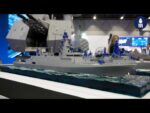
- Tuo Chiang-class corvettes: These fast attack stealth ships are being mass-produced by CSBC Corporation under a multi-year program aimed at fielding up to a dozen vessels by late decade. Armed with HF-3 supersonic anti-ship missiles and Sea Sword II SAMs developed by NCSIST.
- Indigenous Submarine Program (“Hai Kun” Project): Although not yet ready for full public display due to security constraints, models or subsystems from Taiwan’s first domestically built diesel-electric submarine may be showcased.
- Autonomous Surface Vessels (ASVs): Early prototypes of unmanned surface combatants designed for swarming tactics or mine countermeasures may make their debut appearance.
The emphasis on fast attack craft combined with missile-centric doctrine reflects Taiwan’s broader shift toward distributed lethality—a concept aimed at complicating adversary targeting through networked but dispersed assets.
Aerospace Industry Consolidation Under AIDC Leadership
Aerospace Industrial Development Corporation (AIDC), Taiwan’s state-owned aerospace OEM responsible for producing the IDF fighter jet series and components for global primes like Lockheed Martin and Airbus, will play a central role at TADTE. In addition to supporting UAV production lines through composite manufacturing expertise:
- AIDC is reportedly working on upgrades to the F-CK-1C/D Ching-Kuo Indigenous Defense Fighter fleet including AESA radar retrofits and expanded datalink interoperability with drones via Link-16 equivalents.
- The company is also collaborating on propulsion systems for loitering munitions using small turbojet engines developed locally under classified programs.
This integration between traditional aerospace manufacturing and next-gen unmanned tech highlights a strategic pivot within Taiwan’s industrial base toward dual-use innovation applicable across manned/unmanned domains.
Diversifying Supply Chains Through International Partnerships
Taiwan continues seeking international collaboration despite diplomatic constraints. While formal arms sales remain limited due to One China policy sensitivities among many nations outside the U.S., technology partnerships have quietly expanded:
- U.S.-Taiwan cooperation: Under provisions like the Foreign Military Sales (FMS) program and direct commercial sales (DCS), U.S.-origin components such as EO/IR sensors from FLIR Systems or SATCOM terminals are integrated into Taiwanese platforms like Teng Yun II drones.
- European inputs: Some Taiwanese naval systems reportedly incorporate European-origin navigation electronics or propulsion modules under dual-use export licenses routed via third-party integrators in Southeast Asia or Israel.
This hybrid sourcing approach allows Taipei to hedge against embargo risks while maintaining technological parity in critical subsystems such as datalinks or seeker heads used in precision-guided munitions.
TADTE as Strategic Signaling Platform
Beyond its industrial showcase function, TADTE serves an important signaling role—to both domestic audiences affirming self-reliance goals—and international observers watching how Taipei adapts its force posture under pressure. The unveiling of operationally mature UAV fleets or stealthy corvettes sends clear messages about deterrence credibility without overt escalation.
Outlook Toward Full Spectrum Asymmetric Warfare Readiness
Taiwan’s trajectory indicates increasing convergence between doctrinal shifts favoring asymmetric warfare—such as distributed ISR networks or mobile missile batteries—and indigenous MilTech production capacity capable of sustaining those doctrines over time. If successfully fielded at scale post-TADTE demonstrations:
- Teng Yun II could provide persistent ISR-strike coverage over contested airspace beyond median line boundaries;
- Tuo Chiang-class vessels may form decentralized sea denial nodes across littoral zones;
- Loitering munitions swarms could saturate PLA air defenses during early-phase engagements;
- C4ISR integration efforts would enable real-time kill chains across manned-unmanned teams operating from hardened coastal bases or underground facilities;
The challenge remains less about technology per se than about survivability under saturation attack conditions—and ensuring logistics pipelines can support sustained attrition warfare if required. Nonetheless, TADTE 2025 promises a revealing glimpse into how far Taipei has come in building credible deterrent capabilities rooted in homegrown innovation rather than foreign dependence alone.