Taiwan Unveils Indigenous ‘Kaui-Chi’ Attack USV at TADTE 2025
-
| Aerospace & UAV Researcher

At the Taipei Aerospace & Defense Technology Exhibition (TADTE) 2025, Taiwan’s National Chung-Shan Institute of Science and Technology (NCSIST) revealed the ‘Kaui-Chi’ attack unmanned surface vehicle (USV)—a domestically developed naval drone aimed at bolstering asymmetric maritime capabilities. The system reflects Taipei’s strategic pivot toward affordable massed platforms to deter or disrupt Chinese amphibious operations in contested waters.
‘Kaui-Chi’: A New Pillar of Taiwan’s Asymmetric Naval Doctrine
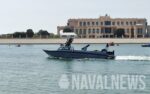
The ‘Kaui-Chi’ (also romanized as “Guai Ji”) USV is a fast-attack unmanned surface platform designed for high-speed interception and kamikaze-style strikes against larger vessels. Developed by NCSIST—a key defense R&D agency under Taiwan’s Ministry of National Defense—the system was showcased publicly for the first time at TADTE 2025 in Taipei.
According to official specifications displayed at the exhibition and corroborated by Naval News, the Kaui-Chi is approximately 6 meters long and powered by a gasoline engine with waterjet propulsion. It can reach speeds exceeding 30 knots and operate autonomously or via remote control over line-of-sight datalinks. The platform is equipped with optical sensors for navigation and targeting, though detailed ISR payloads remain classified.
While not explicitly confirmed by Taiwanese officials, open-source imagery suggests that the Kaui-Chi is intended primarily as a loitering munition—akin to a maritime suicide drone—capable of ramming enemy vessels with an onboard explosive payload. The design echoes trends seen in Ukrainian FPV drone boats deployed in the Black Sea since 2023.
Design Features Optimized for Swarm Attacks
The Kaui-Chi’s compact hull form and modular architecture are tailored for mass production and swarm deployment. Its low radar cross-section (RCS), combined with high maneuverability and autonomous navigation algorithms, make it suitable for saturation attacks against high-value targets such as amphibious landing ships or PLAN frigates operating near Taiwan’s littoral zones.
NCSIST engineers emphasized that the system supports both autonomous waypoint navigation and operator-in-the-loop control modes. This dual-mode capability allows flexible mission profiles—from pre-programmed harbor denial operations to reactive strike missions guided by real-time ISR feeds.
Key design elements include:
- Length: ~6 meters
- Propulsion: Gasoline engine with waterjet drive
- Top speed: >30 knots
- C2 link: Line-of-sight RF; potential satellite uplink under development
- Sensors: EO/IR camera suite; GPS/INS navigation
- Munitions: Believed to carry internal explosive charge; exact warhead type unspecified
Tactical Role in Deterring Amphibious Invasion Scenarios
The unveiling of Kaui-Chi aligns with Taiwan’s broader shift toward asymmetric defense strategies under its Overall Defense Concept (ODC). With limited blue-water naval capacity compared to China’s rapidly expanding People’s Liberation Army Navy (PLAN), Taipei increasingly invests in cost-effective systems like UAVs, loitering munitions, mobile missile launchers—and now unmanned naval drones—to impose disproportionate costs on invading forces.
The Kaui-Chi is expected to be deployed from concealed coastal launch sites or even civilian vessels repurposed as motherships. In a conflict scenario—particularly during a Chinese amphibious assault across the Taiwan Strait—the USVs could be used en masse to saturate enemy defenses, distract shipboard CIWS systems like Type 730 or HQ-10 SAMs, or directly damage hulls through kinetic impact.
This concept mirrors Ukraine’s successful use of low-cost drone boats against Russian warships near Sevastopol starting mid-2023. By adapting similar tactics to an island-defense context—with shorter distances and denser coastal terrain—Taiwan aims to leverage geography alongside technology.
NCSIST’s Expanding Portfolio of Unmanned Maritime Systems
The Kaui-Chi joins a growing family of indigenous unmanned systems developed by NCSIST across multiple domains. At TADTE 2023–25 cycles alone, NCSIST has revealed several UAV platforms (including loitering munitions), underwater gliders for ISR missions, AI-enabled battlefield management systems—and now this offensive USV capability.
NCSIST officials have not disclosed production timelines or unit costs but emphasized that scalability was a core design requirement. Industry observers suggest that if serial production begins within FY2026–27 funding cycles under Taiwan’s special defense budget allocations (~NT$240 billion over five years), hundreds could be fielded within two years depending on industrial throughput.
The agency is also reportedly collaborating with local shipbuilders such as Lungteh Shipbuilding Co., which has prior experience manufacturing fast patrol boats and special operations craft for ROC Navy units including the Hai Chiao-class missile boats.
A Regional Trend Toward Armed Surface Drones
Taiwan is not alone in pursuing armed USVs tailored for littoral conflict scenarios. In recent years:
- Iranian IRGCN forces have deployed explosive-laden drone boats in Persian Gulf exercises since at least 2019;
- The U.S. Navy’s Task Force 59, based in Bahrain since late 2021, has trialed several commercial-off-the-shelf USVs including MANTAS T38;
- Ukraine’s Magura V5/Sea Baby drones, launched from Odessa or Mykolaiv ports since mid-2023, have inflicted damage on Russian Black Sea Fleet assets;
- Türkiye’s ULAQ series USVs, developed by ARES Shipyard & Meteksan Defence since ~2021–22, offer modular payloads ranging from ATGMs to EW suites;
This proliferation underscores how small nations—or those facing numerically superior adversaries—are leveraging autonomy and expendability over traditional capital ships. For Taiwan specifically facing persistent gray-zone pressure from China—including PLAN incursions near Kinmen/Matsu islands—the ability to field dozens or hundreds of low-signature strike drones offers valuable deterrence leverage without escalating into full-scale naval arms races.
Outlook: From Prototype Display to Operational Integration?
Taiwanese defense planners face multiple challenges before Kaui-Chi reaches frontline service: secure C2 networks resistant to jamming/spoofing; hardened launch/recovery infrastructure; integration into joint fire networks; rules-of-engagement protocols governing autonomous strikes—all must be addressed before operational deployment.
If these hurdles are met—and if industrial partners can scale up production—the Kaui-Chi may become one of several asymmetric tools enabling Taiwan to defend its coastline without matching China’s fleet ship-for-ship. Its emergence also signals that unmanned surface combatants are no longer theoretical—they’re entering arsenals worldwide as practical tools shaped by real-world battlefield lessons from Ukraine to Asia-Pacific flashpoints.