SPARTAN: A New Era of Heavy-Lift UAVs from Ascent AeroSystems
-
| Aerospace & UAV Researcher
When Ascent AeroSystems unveiled its SPARTAN UAV at the Commercial UAV Expo 2025 in Las Vegas, it wasn’t just another drone launch. It was a signal of intent — that the heavy-lift drone segment is becoming a contested frontier for defense, public safety, and industrial operators.
For years, heavy-lift UAVs were viewed as niche workhorses — specialized, expensive, and logistically demanding. But with the unveiling of SPARTAN, Ascent has positioned itself as a serious competitor in bridging the gap between light tactical drones and manned helicopters. The platform promises endurance, modularity, and NDAA compliance — three factors shaping procurement decisions in the U.S. and allied defense markets.
From NX30 to SPARTAN: Evolution of a Platform
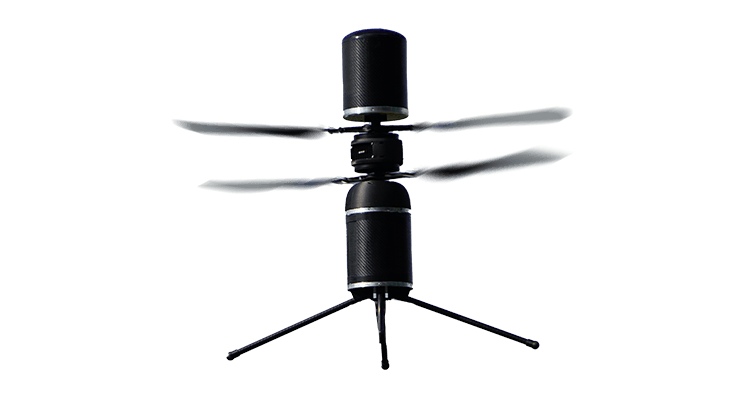
The SPARTAN builds on the legacy of Ascent’s NX30, a coaxial heavy-lift UAV that gained recognition for its portability and rugged design. But while the NX30 proved itself in industrial and defense pilot programs, it faced limitations: payload capacity, endurance, and modularity were capped compared to emerging competitors.
SPARTAN addresses these gaps with a 70+ minute flight endurance, 24 miles point-to-point range, and the ability to cover up to 1,800 square miles per mission. More importantly, it integrates Modular Open Systems Architecture (MOSA), a design philosophy increasingly mandated by the U.S. Department of Defense.
With MOSA, operators can rapidly swap mission payloads — from ISR cameras and LiDAR to EW sensors or tactical resupply pods. In practical terms, this means a SPARTAN unit can transition from border surveillance to combat logistics in minutes, without specialized tooling.
Technical Specifications at a Glance
-
Endurance: 70+ minutes
-
Range: Up to 24 miles (38 km) A-B
-
Coverage: 1,800+ square miles per mission
-
Payload Capacity: 15.3 lbs (7 kg)
-
Design: Coaxial rotor system, compact form factor
-
Weather Rating: IP54, FAA-compliant navigation lighting
-
Architecture: MOSA-ready, quick-connect modules
-
Portability: Backpack-deployable, no special ground crew required
This design places SPARTAN squarely in the middle of the heavy-lift UAV spectrum. While it does not rival some competitors in raw payload (some platforms exceed 20–25 kg), its combination of endurance, price, and modularity makes it more versatile than drones that specialize in one metric at the expense of others.
Market Position and Pricing
Ascent has announced two variants:
-
SPARTAN Base Kit – $24,999
-
SPARTAN Base Kit PRO (NDAA-compliant) – $32,499
Deliveries are expected to begin in October 2025.
The inclusion of an NDAA-compliant model is significant. Many U.S. government agencies are restricted from using UAVs with Chinese components, effectively sidelining market leaders like DJI in defense and public safety roles. By positioning SPARTAN as 100% U.S.-manufactured, Ascent is directly targeting contracts where supply-chain sovereignty is a requirement.
Strategic Backing: Robinson Helicopter
Ascent AeroSystems’ acquisition by Robinson Helicopter in 2024 provides additional credibility. Robinson, one of the world’s largest helicopter manufacturers, brings not only production capacity but also decades of aerospace safety and certification expertise.
This backing suggests SPARTAN will not remain a niche prototype but could scale into mass production, positioning Ascent to compete with larger UAV manufacturers in both domestic and international markets.
Use Cases: Dual-Use Potential
SPARTAN’s modularity and endurance open opportunities across multiple domains:
-
Defense: ISR payloads, EW integration, tactical resupply, border patrol.
-
Homeland Security: Critical infrastructure monitoring, disaster response, public safety missions.
-
Industrial: Pipeline inspection, utility line monitoring, precision agriculture.
-
Logistics: Delivery of medical supplies or field equipment to remote areas.
The dual-use nature of SPARTAN ensures it will appeal to both military procurement officers and commercial buyers.
Competitive Landscape
SPARTAN enters a crowded field of heavy-lift drones:
-
Freefly Alta X – Higher payload capacity (~35 lbs) but priced significantly higher and less ruggedized for military use.
-
Draganfly Heavy-Lift – Strong presence in public safety, but lacks MOSA-level modularity.
-
T-Drones Platforms – Competitive payloads and endurance, but limited presence in U.S. defense due to NDAA restrictions.
Against these, SPARTAN differentiates itself with price-to-performance ratio and NDAA compliance, making it the most accessible option for agencies that need a U.S.-made, modular heavy-lift drone.
Critical Questions
Despite its strong entry, SPARTAN raises important questions:
-
BVLOS Certification: The platform is BVLOS-ready, but will it secure FAA and DoD approvals quickly enough to enable widespread adoption?
-
Combat Durability: How will SPARTAN perform in contested electromagnetic environments or adverse weather beyond IP54?
-
Payload Limitations: Is 15.3 lbs enough for advanced ISR or EW payloads that defense missions may require?
-
Lifecycle Costs: Will sustainment and maintenance remain competitive, or will operators face hidden costs over time?
Conclusion
The unveiling of SPARTAN marks a significant development in the heavy-lift UAV segment. With modularity, endurance, and NDAA compliance, Ascent AeroSystems has positioned SPARTAN as a dual-use solution that can serve military, security, and industrial markets alike.
If Ascent can prove its platform under real-world combat and industrial conditions, SPARTAN may become a reference platform in the heavy-lift category — not just an upgrade to NX30, but a drone that reshapes expectations of what coaxial UAVs can deliver.

Aerospace & UAV Researcher
SPARTAN UAV Review: Modular Heavy-Lift Drone with Battlefield Potential
SPARTAN is a well-balanced heavy-lift UAV that emphasizes endurance, modularity, and affordability. Its NDAA compliance makes it particularly relevant for U.S. defense and government contracts. While payload limits and BVLOS certification hurdles remain, SPARTAN is among the most strategically promising UAVs in its class.
4.2 / 5
Pros
- 70+ minutes endurance.
- Modular architecture (MOSA).
- NDAA-compliant variant available.
- Competitive price vs. rivals.
- Strong U.S. manufacturing backing (Robinson Helicopter).
Cons
- Limited payload (15.3 lbs).
- BVLOS certification pending.
- Durability under combat conditions unproven.
- Competitors offer higher payload options.