U.S. Soldier Remotely Commands Autonomous Black Hawk in Breakthrough Northern Strike 25-2 Demo
-
| Aerospace & UAV Researcher

In a landmark demonstration of human-machine teaming and autonomous flight capability, a U.S. Army soldier successfully commanded an autonomous UH-60MU Black Hawk helicopter during the Northern Strike 25-2 exercise in Michigan. The event marked the first time a non-pilot soldier controlled an uncrewed rotary-wing aircraft using DARPA’s Aircrew Labor In-Cockpit Automation System (ALIAS), highlighting major progress toward future battlefield logistics and casualty evacuation concepts.
First Soldier-Controlled Autonomous Black Hawk Flight
The demonstration took place on October 25, 2025 at Camp Grayling Joint Maneuver Training Center in Michigan as part of Exercise Northern Strike 25-2 — one of the largest National Guard-led joint training events in the United States. The test involved an upgraded UH-60MU variant of the Black Hawk helicopter equipped with Sikorsky’s Matrix autonomy suite integrated with DARPA’s ALIAS program.
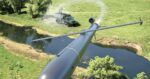
What made this event historic was that control of the aircraft was handed over to a U.S. Army staff sergeant — not a trained aviator — who used a handheld tablet interface to command and monitor the helicopter during its fully autonomous flight. The aircraft executed complex maneuvers including takeoff, waypoint navigation through simulated contested airspace, and landing without onboard pilots.
This capability is part of DARPA’s vision to reduce crew workload and enable uncrewed or optionally piloted operations for logistics resupply or medevac missions in high-risk environments where GPS may be denied or communications degraded.
DARPA’s ALIAS Program and Sikorsky Matrix Explained
The Aircrew Labor In-Cockpit Automation System (ALIAS), developed by DARPA since 2014, aims to retrofit existing military aircraft with advanced automation tools that can assist or replace human pilots. ALIAS leverages machine learning algorithms and sensor fusion technologies to create an “autonomy kit” that interfaces with existing flight controls.
Sikorsky’s contribution comes via its Matrix Technology suite — an autonomy framework initially developed under internal R&D efforts and later integrated into ALIAS for rotary-wing platforms like the Black Hawk. Matrix enables perception-based navigation (using EO/IR sensors and LIDAR), obstacle avoidance, route planning in GPS-denied environments, and contingency handling such as dynamic re-routing due to threats or weather.
The UH-60MU used in this demo featured dual-redundant flight control computers running Matrix software alongside traditional mechanical controls — making it an optionally piloted vehicle (OPV). This hybrid configuration allows seamless switching between crewed and uncrewed modes depending on mission needs.
Operational Implications for Future Battlefields
The ability for non-pilot soldiers to command complex aerial platforms has far-reaching implications for future multi-domain operations (MDO). In contested logistics scenarios — such as resupplying forward-deployed units under fire or evacuating wounded from denied areas — autonomous helicopters could reduce risk to aircrews while maintaining tempo.
- Reduced crew burden: By offloading routine flight tasks to automation systems like ALIAS/Matrix, fewer pilots may be needed per sortie or platform.
- Distributed control: Ground forces can task air assets directly via secure handheld interfaces without relying on centralized command nodes.
- Resilience in degraded environments: With onboard autonomy capable of navigating without GPS or comms links, these aircraft are better suited for near-peer conflict zones where electronic warfare is prevalent.
This aligns closely with U.S. Army Futures Command priorities around robotic/autonomous systems (RAS) integration into brigade-level formations by the early 2030s. It also supports Joint All-Domain Command & Control (JADC2) goals by enabling flexible asset tasking across services and domains.
Sikorsky’s Autonomy Roadmap and Legacy Platforms
Sikorsky has been testing OPV capabilities on Black Hawks since at least 2019 under both DARPA contracts and Army Aviation development efforts. A key milestone occurred in February 2022 when an uncrewed UH-60A flew autonomously from Fort Campbell using only onboard sensors and pre-programmed routes — no humans aboard or controlling it remotely.
The latest MU configuration represents a modernization path for legacy helicopters still expected to serve into the late 2030s despite Future Vertical Lift (FVL) programs like FLRAA/V280 coming online later this decade. By retrofitting proven airframes with AI-enabled autonomy kits rather than fielding entirely new UAV platforms from scratch, DoD can accelerate capability delivery while managing cost risk.
Sikorsky has also demonstrated similar OPV capabilities on its SARA testbed (Sikorsky Autonomy Research Aircraft) and has proposed modular upgrades applicable across rotorcraft fleets including CH-53K derivatives for USMC use cases.
Challenges Ahead: Certification, Trust & Doctrine
Despite promising demos like Northern Strike 25-2, several hurdles remain before widespread operational adoption:
- Certification: FAA/Military Airworthiness authorities must validate safety cases for OPVs operating autonomously over populated areas or near manned traffic corridors.
- User trust: Convincing soldiers to rely on AI-controlled aircraft requires robust UX design, fail-safe mechanisms, and extensive training/testing cycles under realistic conditions.
- Tactical doctrine: Integrating OPVs into combined arms maneuver concepts will require updates to TTPs (tactics-techniques-procedures), especially around deconfliction with manned assets and C4ISR integration layers.
The U.S. Army is currently working through these issues via Project Convergence experiments as well as collaboration with SOCOM units exploring agile logistics models using small VTOL drones up through medium-lift OPVs like this modified Black Hawk platform.
A Glimpse Into Future Force Design
Northern Strike 25-2 provided more than just another tech demo; it offered a glimpse into how future combat formations might operate when human-machine teams become standard rather than exceptional. A single soldier commanding an autonomous helicopter from a tablet underscores how far battlefield automation has progressed since early UAV trials two decades ago.
If scaled effectively across services — including Navy/Marine Corps expeditionary ops or USAF Agile Combat Employment concepts — such systems could transform not just aviation but how entire force packages are composed and deployed across theaters like INDOPACOM or CENTCOM where distributed operations are key to survivability against peer threats like China or Russia.