Small Modular Nuclear Reactors: Strategic Enabler for Defense Energy Resilience and Technological Sovereignty
-
| Defense Industry & Geopolitics Observer

Milivox analysis: Small Modular Nuclear Reactors (SMRs) are emerging as a dual-use technology with growing strategic relevance for defense sectors. Beyond civilian grid applications, SMRs promise mobile power generation for expeditionary forces and hardened infrastructure resilience—while also catalyzing domestic nuclear innovation ecosystems.
Background
The global resurgence of interest in nuclear power is being shaped not only by civilian decarbonization goals but also by military imperatives. As militaries seek resilient, deployable energy solutions to support forward operations and reduce logistical vulnerabilities associated with fuel convoys, Small Modular Reactors (SMRs) have gained traction as a potential game-changer.
The referenced MDPI Energies article (Vol. 18, Pages 5766) explores how SMRs can serve as a driver for broader nuclear technology development across industrial sectors. While the paper focuses primarily on civilian applications—grid stabilization, remote area electrification—it also touches on SMR potential to stimulate national R&D ecosystems and supply chains. Milivox expands this lens to assess SMR implications specifically for defense stakeholders.
Technical Overview
SMRs are defined by the International Atomic Energy Agency (IAEA) as reactors producing up to 300 megawatts electric (MWe), typically factory-fabricated and transportable via standard logistics platforms. Designs vary from pressurized water reactors (PWRs) to gas-cooled fast reactors and molten salt configurations.
- Power output: Typically ranges from 1–300 MWe; microreactor variants offer even smaller footprints (~1–10 MWe).
- Modularity: Designed for serial production and scalable deployment; units can be combined or replaced independently.
- Siting flexibility: Many SMRs are engineered for underground or hardened installation—critical for survivability in contested environments.
- Passive safety systems: Most modern SMR designs incorporate passive cooling and shutdown mechanisms that reduce operator burden and accident risk.
- Fuel cycles: Some designs use high-assay low-enriched uranium (HALEU), which presents both logistical challenges and proliferation concerns.
The U.S. Department of Defense’s Project Pele—a mobile microreactor program led by the Strategic Capabilities Office—is prototyping a ~5 MWe HALEU-fueled reactor intended for deployment in austere environments. In March 2023, BWXT Advanced Technologies was selected to build the first prototype at Idaho National Laboratory with delivery expected in late FY2024.
Operational or Strategic Context
The military value proposition of SMRs lies primarily in their ability to provide persistent power independent of fuel supply lines—a major vulnerability in expeditionary operations. According to Milivox experts, fuel convoys accounted for significant casualties during U.S. operations in Iraq and Afghanistan; reducing reliance on diesel generators could materially improve operational safety and endurance.
NATO’s evolving energy resilience doctrine has also begun integrating distributed generation concepts including renewables paired with microreactors or advanced batteries. For example:
- NATO STO reports have identified mobile nuclear options as part of future base energy architectures under hybrid threat scenarios.
- The U.S. Army’s Climate Strategy calls explicitly for resilient installation-level power—including consideration of advanced nuclear systems where feasible.
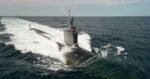
- AUKUS Pillar II cooperation, while focused on submarine propulsion technologies, may indirectly accelerate dual-use reactor R&D applicable to land-based SMRs.
Apart from tactical deployments, hardened strategic infrastructure such as NORAD facilities or missile silos could benefit from co-located SMRs offering EMP-hardened baseload power immune to cyberattacks or grid outages—a consideration increasingly relevant amid peer competition with Russia and China.
Market or Industry Impact
The defense-driven demand signal is helping catalyze private-sector investment into advanced reactor designs that might otherwise struggle with commercial viability alone. According to Milivox analysis of DOE funding data:
- The U.S. government has committed over $1 billion through ARDP (Advanced Reactor Demonstration Program) toward near-term deployment of NuScale’s VOYGR design (~77 MWe per module).
- The Pentagon’s Project Pele is expected to inform not only military procurement but also regulatory pathways via the Nuclear Regulatory Commission (NRC).
- Nations including Canada, South Korea, Poland, Romania, and the UK have launched parallel initiatives exploring civilian-military synergies around SMR export models.
This convergence may create a new industrial base segment combining traditional defense primes (e.g., BWXT Technologies) with emerging clean-tech firms—mirroring historical patterns seen during Cold War-era aerospace-nuclear collaborations such as SNAP-10A space reactors or Army’s ML-1 reactor program in the early ’60s.
The challenge remains licensing complexity: while commercial utilities face multi-year NRC certification timelines costing hundreds of millions USD per design class, military applications may require bespoke regulatory frameworks—especially if deployed outside CONUS or aboard naval platforms like future autonomous surface vessels or undersea nodes requiring persistent power without refueling cycles.
Milivox Commentary
As assessed by Milivox experts, Small Modular Reactors represent more than just an alternative electricity source—they are a strategic enabler across multiple domains:
- Sustainment edge: Reducing fuel logistics footprint enhances force projection range while minimizing exposure risks along contested supply routes.
- Sovereign tech leverage: Nations investing early into SMR R&D gain not only energy independence but also critical know-how applicable across propulsion systems (e.g., submarines), radiological detection/countermeasures, and isotopic production chains relevant for medical/nuclear deterrence roles alike.
- Dissuasion multiplier: Hardened facilities powered by embedded microreactors complicate adversary targeting calculus under hybrid warfare conditions where grid denial is a primary objective.
If successfully fielded at scale within defense ecosystems—and harmonized with civil sector deployments—SMRs could reshape how militaries think about basing strategy over the next two decades. However, proliferation risks tied to HALEU handling must be addressed via robust safeguards frameworks if allied interoperability is desired beyond national programs like Project Pele or NuScale’s domestic rollout plans.
The next five years will be critical in determining whether SMRs remain niche demonstrators—or become foundational components of future force infrastructure planning across NATO-aligned nations facing increasingly contested electromagnetic-operational environments where energy is both target and weapon system alike.