Singapore Launches First Multi-Role Combat Vessel as Unmanned Systems Mothership
-
| Defense Industry & Geopolitics Observer

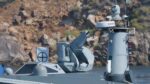
Singapore has launched the first of its next-generation Multi-Role Combat Vessels (MRCVs), marking a major milestone in the Republic of Singapore Navy’s (RSN) modernization strategy. Designed to serve as motherships for unmanned systems across multiple domains, the MRCVs are central to Singapore’s vision of a leaner yet more capable naval force optimized for manned-unmanned teaming in contested littoral environments.
Strategic Context: Leaner Fleet, Smarter Force
The MRCV program is part of the RSN’s broader transformation to address evolving maritime threats with fewer personnel and greater automation. With manpower constraints being a long-standing issue in Singapore’s defense planning, the MRCVs are intended to replace the aging Victory-class missile corvettes with platforms that offer modularity and multi-domain integration.
First announced publicly in 2018 during MINDEF’s Committee of Supply debates and reaffirmed in subsequent defense white papers, the MRCVs are envisioned as force multipliers that can deploy and control unmanned surface vessels (USVs), unmanned underwater vehicles (UUVs), and potentially aerial drones from a single platform. This aligns with global trends toward distributed lethality and autonomous operations at sea.
Design Origins: Saab’s Proven Base Enhanced by ST Engineering
The hull design of the MRCV is derived from Saab Kockums’ proven Visby-class corvette platform but has been significantly enlarged and modified for Singapore’s specific needs. The final vessel was built by ST Engineering Marine under a contract awarded in March 2023. The launch ceremony took place at ST Engineering’s Benoi shipyard on October 25th, 2025.
While exact specifications remain classified, open-source analysis suggests that each vessel displaces over 3,000 tonnes—making it one of the largest surface combatants ever operated by the RSN. The enlarged hull provides ample deck space for modular mission payloads and launch/recovery systems for unmanned vehicles.
- Length: Estimated ~95–100 meters
- Displacement: ~3,200–3,500 tonnes
- Crew: ~70 core crew + mission module teams
- Sensors: Believed to include advanced AESA radar suite
- Combat System: Integrated Command Management System (CMS) developed by DSTA/ST Engineering
Mothership Role: Enabling Uncrewed Maritime Operations
The defining feature of the MRCV is its role as an operations hub for uncrewed maritime systems. Each vessel is designed with mission bays capable of deploying multiple types of USVs and UUVs via stern ramps or side cranes. These vehicles can be used for mine countermeasures (MCM), surveillance & reconnaissance (ISR), anti-submarine warfare (ASW), or even offensive strike missions depending on payload configuration.
This capability reflects lessons learned from multinational experimentation such as NATO’s MUSIS program or U.S. Navy’s Ghost Fleet Overlord initiative—where mothership concepts have proven critical to extending sensor reach while reducing risk to manned platforms.
C4ISR Integration and Network-Centric Warfare
The MRCVs are expected to serve as command nodes within Singapore’s network-centric maritime architecture. Equipped with secure satellite communications links and high-bandwidth data networks developed by DSTA (Defence Science & Technology Agency), these vessels will orchestrate real-time operations involving both manned units and autonomous platforms.
This C4ISR backbone enables coordinated mission execution across distributed assets—whether it’s cueing an ASW drone swarm based on sonar data from a UUV or using an airborne UAV feed to direct USV patrol routes during maritime interdiction missions.
Southeast Asia Implications and Regional Posture
The deployment of MRCVs will significantly enhance Singapore’s ability to project maritime security across key chokepoints such as the Strait of Malacca and South China Sea approaches. Their modularity allows rapid reconfiguration between peacetime constabulary roles—such as anti-piracy or search-and-rescue—and high-end warfighting scenarios involving peer threats or hybrid actors using swarming tactics.
This development also positions Singapore at the forefront among ASEAN navies in terms of integrating unmanned capabilities into frontline combatants—a trend increasingly mirrored by regional powers like Japan (with its Mogami-class frigates) or Australia (via SEA5000 Hunter-class).
Fleet Outlook: Six Vessels by Early Next Decade
The RSN plans to acquire six MRCVs under this program. According to MINDEF statements during budget sessions in early 2024, all six vessels are expected to be delivered between late-2025 and early-2030 on a rolling schedule aligned with decommissioning timelines for existing corvettes.
This phased approach ensures operational continuity while allowing gradual integration of new Tactics, Techniques & Procedures (TTPs) associated with uncrewed vehicle operations—a non-trivial shift requiring doctrinal adaptation across training pipelines and fleet exercises.