Singapore Army Trials Drone “Mothership” Concept at Exercise Wallaby 2025
-
| Defense Systems Analyst

At the annual Exercise Wallaby 2025 in Queensland, Australia, the Singapore Army showcased a significant advancement in its unmanned warfare capabilities by trialing a drone “mothership” concept. This development reflects Singapore’s growing emphasis on integrating autonomous systems and networked command-and-control (C2) architectures into its land forces.
Drone Mothership Concept Debuts in Live-Fire Environment
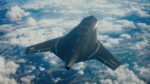
The Republic of Singapore Armed Forces (SAF) used the expansive Shoalwater Bay Training Area during Exercise Wallaby to test a new unmanned aerial vehicle (UAV) platform designed to function as a “mothership” for smaller drones. According to official statements and footage released by MINDEF Singapore and corroborated by regional defense outlets such as The Straits Times and Shephard Media, the mothership UAV operated as an airborne C2 node capable of deploying and coordinating multiple subordinate drones—including loitering munitions and ISR micro-UAVs.
This marks one of the first public demonstrations by an ASEAN military of such an integrated swarm control system under field conditions. The SAF’s experimentation aligns with broader global trends toward distributed lethality and manned-unmanned teaming (MUM-T), particularly for small states seeking force multiplication through technology.
System Architecture: Modular Payloads and AI-Enabled Swarm Control
While specific technical specifications remain classified, available imagery suggests that the mothership platform is based on a medium-sized fixed-wing UAV with modular payload bays. It appears to be equipped with:
- A multi-band datalink suite for real-time C2 relay between ground stations and subordinate drones
- EO/IR sensors for target acquisition and battle damage assessment
- An internal or underwing launch system for dispensing smaller drones or loitering munitions mid-flight
The SAF has previously invested in artificial intelligence (AI)-enabled mission planning tools through its Digital and Intelligence Service (DIS), which likely supports semi-autonomous swarm behavior. This allows the mothership to act not only as a launch platform but also as an airborne coordinator—assigning targets or search patterns to deployed assets based on evolving battlefield data.
Tactical Use Cases: ISR Overmatch and Precision Strike
The mothership concept is designed to enhance tactical overmatch by enabling rapid deployment of ISR assets deep into contested areas without exposing manned platforms. In simulated scenarios during Exercise Wallaby, SAF units reportedly used the mothership to:
- Deploy micro-UAVs ahead of advancing armored formations for route reconnaissance
- Launch loitering munitions against simulated enemy artillery positions beyond line-of-sight
- Maintain persistent aerial surveillance over high-value targets while remaining outside SHORAD threat envelopes
This layered approach aligns with emerging doctrines seen in NATO-aligned forces where drone swarms are used not just for massed attack but also for shaping operations—disrupting enemy sensors, saturating air defenses, or triggering decoys before main force engagement.
Exercise Wallaby as Testbed for Emerging Capabilities
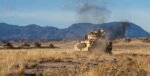
Exercise Wallaby has long served as Singapore’s primary venue for large-scale combined arms validation due to space constraints at home. The Shoalwater Bay Training Area offers over 4,500 km² of maneuver space—allowing full-spectrum testing from armor maneuvers to helicopter insertions.
This year’s edition featured integrated operations between air-land elements including Leopard 2SG main battle tanks, Terrex infantry carriers, AH-64D Apache helicopters from RSAF’s Peace Vanguard detachment in Arizona (rotated into Australia), and now this new class of UAV systems. The SAF also trialed digital fire support coordination tools that may have been linked with the drone mothership’s targeting feeds.
Strategic Implications: Small-State Force Multiplication Through Autonomy
The SAF’s pursuit of autonomous swarm control reflects broader strategic imperatives. As a city-state with limited manpower reserves but high technological capacity, Singapore has prioritized quality-over-quantity defense investments. The integration of AI-enabled unmanned systems supports this model by:
- Reducing risk exposure for human operators in contested environments
- Enabling persistent surveillance across multiple axes simultaneously
- Allowing rapid re-tasking based on real-time sensor fusion from multiple platforms
This capability also enhances deterrence credibility by signaling that any aggressor would face not only conventional responses but also asymmetric disruption via autonomous precision strike assets.
Southeast Asia’s Growing Drone Ecosystem Contextualizes SAF Moves
The region is witnessing increased investment in UAV technologies across militaries—from Indonesia’s Elang Hitam UCAV program to Malaysia’s acquisition of Turkish-made Anka drones. However, most efforts remain focused on single-platform ISR roles rather than multi-node swarm architectures.
This puts Singapore ahead regionally in terms of doctrinal maturity around networked autonomy—a position it may leverage through defense diplomacy or joint development programs under ASEAN Defense Ministers’ Meeting Plus (ADMM+).
Outlook: From Experimental Trials to Operational Integration?
No timeline has been announced regarding operational fielding of the drone mothership system. However, MINDEF officials have indicated that insights from Exercise Wallaby will inform future procurement decisions under the ongoing Next Generation Army transformation roadmap.
If successful trials continue into FY2026–27 procurement cycles, it is plausible that these UAV systems could be integrated into battalion-level task forces alongside existing unmanned ground vehicles like the Titan UGV or Airbus-built Skyways logistics drones already tested by SAF logistics units.
Conclusion: A Quiet Leap Forward in Unmanned Warfare Doctrine
The SAF’s demonstration at Exercise Wallaby signals more than just hardware evolution—it reflects an institutional shift toward embracing autonomy not merely as a support function but as an integral part of combat formations. While regional attention often focuses on visible platforms like tanks or fighter jets, it is these less visible enablers—networked drones operating under AI coordination—that may define future battlefield dominance.