Serbia Unveils Advanced Combat Vehicles and UAVs at Partner 2025 Defense Expo
-
| Defense Systems Analyst

At the Partner 2025 defense exhibition held in Belgrade from October 7–10, Serbia’s domestic defense industry unveiled an array of next-generation ground combat systems and unmanned platforms. Spearheaded by state-owned Yugoimport SDPR and its affiliated partners, the showcase included upgraded armored vehicles like the Lazar 3M and BOV M21, alongside indigenous unmanned aerial and ground systems such as the Pegaz UAV and Mali Miloš UGV. The event signals Serbia’s intent to modernize its armed forces while expanding its footprint in global defense exports.
Lazar 3M: Modular Armored Vehicle with Enhanced Firepower
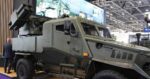
The centerpiece of Serbia’s land systems display was the latest variant of the Lazar family—the Lazar 3M. Developed by Yugoimport SDPR with production by Zastava TERVO, the Lazar series has evolved significantly since its first appearance in the early 2010s. The new ‘3M’ variant introduces enhanced ballistic protection (STANAG Level IV frontal arc), improved mine resistance (Level IIIa/b), and a modular open-architecture design that allows for multiple weapon configurations.
The displayed version was equipped with a remote-controlled weapon station (RCWS) mounting a 30×165 mm automatic cannon—likely the Russian-origin Shipunov 2A42 or a domestically produced equivalent—paired with a coaxial machine gun and optional ATGM launchers. Designed for mechanized infantry support roles similar to NATO’s Boxer or Patria AMV families, the Lazar 3M offers seating for up to nine dismounts plus three crew.
Key features include:
- 8×8 wheeled configuration with independent suspension
- Combat weight approx. 28–30 tonnes
- Cummins diesel engine rated at ~500 hp
- Top speed ~100 km/h; operational range ~800 km
- C4I integration options compatible with Serbian Army networks
Mali Miloš UGV: Armed Robotic Platform for Urban Combat
The Mali Miloš is Serbia’s flagship unmanned ground vehicle (UGV), developed by PPT Namenska in cooperation with Military Technical Institute Belgrade. Designed primarily for ISR missions and light fire support in urban or asymmetric warfare environments, it features tracked mobility and remote operation via encrypted RF datalinks.
The version on display at Partner 2025 was outfitted with a stabilized RCWS mounting a Zastava M86 machine gun (7.62×54mmR) along with day/night EO/IR sensors. Its payload options can include grenade launchers or anti-tank guided missiles depending on mission profile.
Specifications:
- Weight: ~430 kg
- Endurance: Up to 4 hours continuous operation
- Range: ~1 km line-of-sight control; future SATCOM variants under development
- Armor: Light ballistic protection against small arms fire/shrapnel
- Use cases: Reconnaissance-in-force, perimeter security, convoy escort support
Pegaz Tactical UAV: ISR Capability from Indigenous Drone Program
The Pegaz (“Pegasus”) tactical UAV represents Serbia’s most mature indigenous fixed-wing drone platform. Co-developed by Military Technical Institute Belgrade and private sector partners such as Utva Aviation Industry and EDePro (Engine Development & Production), it is designed for real-time ISR missions over contested terrain.
The airframe resembles other MALE-class drones but operates at tactical altitudes (~3000 m). It features twin-boom architecture and electric propulsion in earlier prototypes; newer iterations use internal combustion engines for longer endurance.
Pegaz capabilities include:
- Wingspan ~6 m; MTOW ~150 kg
- Endurance up to 12 hours depending on payload/fuel configuration
- Cargo bay supports EO/IR gimbals; synthetic aperture radar integration under testing phase
- Encrypted C2 link; autonomous waypoint navigation supported via GNSS/INS hybrid guidance system
BOV M21 APC Upgrade Program Advances Mechanization Goals
The BOV M21 is an upgraded version of Yugoslavia-era BOV armored personnel carriers adapted for modern battlefield requirements. Retaining its original monocoque steel hull optimized for road mobility (4×4 configuration), the M21 variant incorporates digital communications gear compatible with Serbian C4I systems as well as improved armor kits.
This platform is aimed at equipping reconnaissance units and military police formations where high mobility outweighs heavy armor demands. While not intended to replace mainline IFVs like Lazar or Milosh MRAPs entirely, it contributes to force structure flexibility across different terrain types within Serbian doctrine.
Strategic Implications for Regional Defense Industry Growth
The breadth of platforms displayed at Partner 2025 underscores Serbia’s ambition to position itself as a regional hub for affordable yet capable military technology—particularly targeting export markets across Africa, Asia-Pacific, and Latin America where budget constraints limit access to Western OEM offerings.
Yugoimport SDPR has already secured export contracts for earlier versions of Lazar vehicles (e.g., Nigeria) while Mali Miloš has been trialed by several partner nations under bilateral cooperation frameworks. With ongoing R&D investments into AI-enabled autonomy modules (for both UGV/UAV), loitering munitions programs (“Gavran” series), and indigenous missile development (e.g., ALAS ATGM family), Serbia seeks to transition from licensed production toward full-spectrum MilTech innovation within this decade.
If sustained funding continues through government-backed initiatives like “Modernizacija Vojske Srbije” (Modernization of Serbian Armed Forces) through FY2026–2030 plans—estimated at €1.25 billion—the country could emerge as a niche supplier in mid-tier defense segments globally.