Russia Unveils Truck-Mounted Laser Weapon for Counter-UAV Operations
-
| Defense Systems Analyst

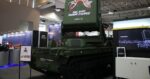
Russia has introduced a new truck-mounted laser weapon designed to counter unmanned aerial vehicles (UAVs), adding a mobile directed energy component to its layered air defense strategy. The system was revealed at the “Archimedes 2025” innovation forum held in Moscow and appears to be a tactical evolution of earlier Russian laser programs such as the Peresvet.
New System Debuts at Archimedes 2025
The new laser system was showcased publicly for the first time during the Archimedes 2025 exhibition in late October. Mounted on a KAMAZ 6×6 military truck chassis, the platform integrates an electro-optical targeting suite and a turreted laser emitter. According to Russian media reports and footage from the event, the system is intended primarily for disabling small drones through thermal or structural damage caused by concentrated laser energy.
The design emphasizes mobility and rapid deployment. Unlike stationary or strategic-level systems like the Peresvet—previously associated with strategic missile protection—the new vehicle-mounted variant is clearly optimized for tactical operations closer to the front line or critical infrastructure zones.
Technical Specifications Remain Obscure
Russian officials have released limited technical data on the system. No specific information has been disclosed regarding power output (measured in kilowatts), effective range, beam dwell time required for target neutralization, or cooling mechanisms—all critical parameters for assessing combat effectiveness.
However, based on visual analysis of the emitter size and platform constraints, Western analysts estimate that it likely operates in the 30–100 kW class—comparable to U.S. Army systems like DE M-SHORAD or Israel’s Iron Beam demonstrator. This would place it within effective engagement ranges of several hundred meters up to possibly 1–2 km against Group 1/Group 2 UAVs (under 25 kg).
A Continuation of Russia’s Directed Energy Ambitions
This latest development builds upon Russia’s long-running interest in directed energy weapons (DEWs). The most prominent example remains Peresvet—a large-scale ground-based laser system first revealed in 2018 and reportedly deployed with Russia’s Strategic Rocket Forces. While Peresvet’s exact function remains ambiguous—possibly including anti-satellite missions or blinding ISR assets—it represents strategic-level DEW capability.
The new truck-mounted system appears to fulfill a more tactical role akin to short-range air defense (SHORAD). It aligns with global trends where DEWs are increasingly used as cost-effective counters to low-cost drones that saturate traditional kinetic defenses.
Notably, this mirrors Western developments such as:
- U.S. Army’s Stryker-based DE M-SHORAD (50 kW-class)
- Israel’s Iron Beam (100 kW-class)
- Germany’s Rheinmetall Skyranger 30 with integrated HEL module
Tactical Role Against UAV Swarms and ISR Threats
The new Russian system is likely intended to defend forward-deployed units or high-value assets from drone surveillance and loitering munition attacks—both of which have proliferated across modern battlefields including Ukraine and Syria. Its silent operation and deep magazine (limited only by onboard power) make it particularly suitable against swarming UAV tactics that can overwhelm conventional SHORAD systems reliant on missiles or autocannons.
If integrated into layered air defense networks alongside radar-guided guns (e.g., Pantsir-S1) and MANPADS units, such lasers could provide persistent coverage against small targets while conserving kinetic interceptors for higher-tier threats.
Challenges Remain: Power Supply and Weather Limitations
Despite its promise, mobile laser weapons face significant operational limitations:
- Power generation: High-energy lasers require substantial electrical output; onboard generators must balance weight vs sustained firing capacity.
- Cooling systems: Heat dissipation remains a bottleneck; overheating can degrade beam quality or force cooldown cycles mid-engagement.
- Weather sensitivity: Fog, rain, smoke, or dust can scatter or absorb laser energy—reducing effectiveness dramatically compared to clear conditions.
No details were provided about how these issues are addressed in Russia’s design. Western systems typically employ liquid cooling loops and battery-buffered diesel generators; whether similar solutions are present here remains speculative pending further disclosures or field trials.
Status of Development and Operational Outlook
The prototype displayed at Archimedes suggests early-stage development rather than full-rate production readiness. There is no evidence yet of serial procurement by the Russian Ministry of Defense nor indications of deployment within combat zones like Ukraine—where numerous other counter-UAV technologies have been tested under fire.
If proven viable through trials over the next year(s), this platform could enter limited service as part of Russia’s broader effort to harden its forces against drone-enabled reconnaissance-strike complexes increasingly employed by NATO-aligned forces and regional adversaries alike.
Conclusion: Tactical Laser Weapons Enter Russian Arsenal
The unveiling of this truck-mounted laser underscores Russia’s recognition of drone threats on modern battlefields—and its intent to pursue asymmetric counters via directed energy technologies. While still immature compared to U.S., Israeli, or Chinese counterparts, this development signals growing investment in non-kinetic SHORAD layers within Russia’s integrated air defense doctrine.