Russia Conducts Hypersonic Missile Test Near NATO Borders Amid Escalating Strategic Posturing
-
| Aerospace & UAV Researcher

In a stark demonstration of its strategic capabilities and intent to intimidate NATO neighbors, Russia has conducted a test launch of the Kh-47M2 Kinzhal hypersonic missile from Belarusian airspace. The launch—publicly confirmed by the Russian Ministry of Defense and accompanied by video footage—marks one of the few known operational tests of the Kinzhal system from outside Russian territory and signals Moscow’s continued emphasis on hypersonic weapons as tools of deterrence and geopolitical messaging.
Kinzhal Launch from Belarus: Tactical Context and Strategic Messaging
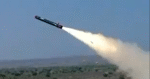
On June 11, 2024, the Russian Ministry of Defense released footage showing a MiG-31K interceptor aircraft launching a Kh-47M2 Kinzhal air-launched ballistic missile (ALBM) during joint exercises with Belarus. The launch reportedly occurred over Belarusian territory—an unusual but deliberate choice given its proximity to Poland and Lithuania, both NATO members.
This marks one of the first publicly acknowledged launches of the Kinzhal from Belarus since Russia began deploying MiG-31Ks to Machulishchy Air Base near Minsk in late 2022. The move is widely interpreted as part of Moscow’s broader effort to forward-deploy strategic assets closer to NATO’s eastern flank.
The timing also coincides with NATO’s own Steadfast Defender 2024 exercises involving over 90,000 troops across Europe—a likely factor in Russia’s decision to escalate its signaling through high-profile weapons demonstrations.
Kh-47M2 Kinzhal Capabilities and Deployment History
The Kh-47M2 Kinzhal (“Dagger”) is an air-launched ballistic missile derived from the ground-based Iskander-M (9K720) short-range ballistic missile. Launched from modified MiG-31K or MiG-31I aircraft at high altitude and speed (Mach 2+), it reportedly achieves speeds up to Mach 10 (approximately 3.4 km/s) with maneuverable flight paths that complicate interception by conventional air defense systems.
Key specifications include:
- Range: Estimated at 1,500–2,000 km when launched from MiG-31K
- Warhead options: Conventional or nuclear (~500 kt reported)
- Guidance: Inertial navigation with potential GLONASS correction; some reports suggest terminal maneuvering capability
The system entered limited service in late 2017 and has been used operationally in Ukraine since March 2022. While touted as “hypersonic,” analysts note that its ballistic trajectory classifies it more accurately as an ALBM than a true next-gen hypersonic glide vehicle (HGV).
Operational Implications for NATO Air Defenses
The launch near NATO borders raises concerns about alliance air defense readiness against high-speed threats. While systems like Patriot PAC-3 MSE or SAMP/T can theoretically engage fast-moving targets within their engagement envelope, intercepting maneuverable ALBMs like Kinzhal remains highly challenging due to their velocity and trajectory unpredictability.
NATO has accelerated investments in Integrated Air and Missile Defense (IAMD), including Germany’s European Sky Shield Initiative and expanded deployment of THAAD batteries in Eastern Europe. However, coverage gaps remain—particularly against missiles launched from unexpected vectors such as Belarusian airspace.
This test underscores the need for persistent ISR coverage (e.g., AWACS/Global Hawk), rapid cueing networks via Link-16 or future MIDS-JTRS platforms, and layered interceptors capable of engaging both ballistic arcs and terminal-phase threats.
The Role of Belarus in Russia’s Strategic Architecture
Belarus has increasingly served as a forward operating base for Russian military operations since February 2022. The deployment of dual-capable systems like Iskander-M SRBMs and now confirmed launches of nuclear-capable ALBMs such as Kinzhal suggest deepening military integration between Moscow and Minsk under the Union State framework.
This integration enables Russia to reduce time-to-target for critical strike packages against NATO command centers or infrastructure while complicating alliance early warning timelines. It also provides redundancy should bases inside Russia become degraded by long-range Ukrainian strikes or sabotage campaigns.
Furthermore, use of Belarusian territory for such launches may be intended to test Western red lines regarding escalation thresholds—particularly those related to nuclear-capable platforms operating outside traditional Russian borders.
Strategic Signaling vs Operational Utility
Despite its high-profile nature, some analysts question whether this test reflects genuine doctrinal evolution or is primarily aimed at psychological warfare. The Kinzhal system remains limited by platform availability (only ~10–12 operational MiG-31Ks reported), logistical constraints on forward basing heavy interceptors in Belarus’ limited infrastructure, and questionable accuracy against hardened targets without satellite guidance support.
Nonetheless, its value lies less in precision strike capabilities than in strategic signaling—the ability to credibly threaten time-sensitive targets across Europe within minutes using hard-to-intercept delivery vehicles. In this sense, even infrequent launches can serve deterrent purposes disproportionate to their actual battlefield utility.
Conclusion: A Calculated Escalation Amid Broader Tensions
The recent Kinzhal launch over Belarus represents another data point in Russia’s evolving use of advanced missile technology for coercive diplomacy along NATO’s periphery. As both sides continue large-scale exercises amid heightened tensions over Ukraine and broader East-West confrontation dynamics, such demonstrations are likely to increase in frequency—and complexity—in coming months.
NATO planners must now reckon with not only traditional ICBM/SRBM threats but also hybrid delivery architectures involving mobile air-launched systems deployed unpredictably across allied borders. This demands not just technical solutions but political resolve around escalation management frameworks that can prevent miscalculation under compressed decision timelines imposed by hypersonic-era weapons systems.