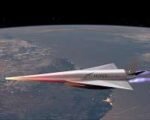
Russia’s 9M730 Burevestnik Nuclear-Powered Cruise Missile: Capabilities, Risks, and Strategic Implications
-
| Defense Systems Analyst

Russia’s 9M730 Burevestnik (NATO reporting name: SSC-X-9 Skyfall) represents one of the most controversial and technically ambitious weapons in Moscow’s strategic arsenal. A nuclear-powered cruise missile with theoretically unlimited range and unpredictable flight paths, Burevestnik is designed to circumvent Western missile defenses. This article explores its propulsion system, development history, testing milestones, and the broader geopolitical implications of its deployment.
What Is the 9M730 Burevestnik?
The 9M730 Burevestnik is a nuclear-powered subsonic cruise missile under development by Russia as part of its next-generation strategic deterrent. First publicly unveiled by President Vladimir Putin during his March 2018 address to the Federal Assembly, it was presented alongside other exotic systems such as the Avangard hypersonic glide vehicle and Poseidon underwater drone.
According to Russian sources and U.S. intelligence assessments (e.g., DIA reports), the missile is intended to carry a nuclear warhead and use a compact nuclear reactor for propulsion. This would theoretically allow it to fly intercontinental distances at low altitudes along unpredictable trajectories—evading radar detection and existing ballistic missile defense (BMD) systems like Aegis or THAAD.
The weapon is reportedly designed for strategic strike missions against high-value targets in NATO territory during a full-scale conflict scenario.
Propulsion System: Nuclear Thermal Jet or Ramjet?
At the heart of the Burevestnik’s concept lies its propulsion system—a miniaturized nuclear reactor that heats incoming air to generate thrust. While exact specifications remain classified or speculative due to limited open-source data from Russian MoD or Rosatom entities, most Western analysts believe it uses a form of nuclear thermal jet propulsion.
This differs from traditional turbojets or ramjets by eliminating reliance on onboard chemical fuel after launch boost phase. Instead:
- A solid-fuel booster accelerates the missile post-launch.
- The onboard reactor activates once airborne.
- Airflow is heated directly by the reactor core before being expelled through a nozzle to produce thrust.
This design could allow for flight durations measured in days rather than hours—enabling global reach with circuitous routing that complicates interception planning. However, substantial technical hurdles exist:
- Miniaturizing a safe yet powerful enough reactor with rapid startup capability.
- Shielding electronics from radiation while maintaining weight efficiency.
- Avoiding radioactive contamination during test flights or crashes (as seen in past incidents).
Testing History and Known Incidents
Burevestnik has undergone multiple test launches since at least November 2017 at facilities like Pankovo on Novaya Zemlya island in the Arctic. However, U.S. intelligence assessments—including those cited by CNBC (2018) and The New York Times—suggest that most early tests were unsuccessful.
A key incident occurred in August 2019 near Nyonoksa on Russia’s White Sea coast when an explosion killed five Rosatom scientists during what was likely recovery operations related to a failed test article. The Russian government later confirmed radiation spikes in nearby Severodvinsk—supporting assessments that this involved a nuclear-powered system like Burevestnik rather than conventional munitions.
As of late 2023/early 2024 reporting via U.S.-based think tanks (e.g., CSIS Missile Threat Project), there have been signs of renewed activity at Pankovo test site including infrastructure upgrades and satellite imagery showing possible test preparations—but no confirmed successful long-range flight yet publicly acknowledged by Russia or independently verified.
Strategic Role Within Russia’s Deterrence Doctrine
Burevestnik fits within Moscow’s broader strategy of asymmetric deterrence against NATO’s technological edge in missile defense systems. By threatening second-strike capability through unpredictable low-altitude flight profiles over polar or southern routes—bypassing radar coverage—the weapon aims to ensure retaliatory capability even if traditional ICBMs are neutralized preemptively.
This aligns with Russian military doctrine emphasizing escalation dominance through unconventional capabilities including:
- Tactical nuclear weapons for regional conflicts
- Nuclear-powered underwater drones (Poseidon)
- MIRVed hypersonic glide vehicles (Avangard)
Burevestnik also serves a psychological function as part of information warfare—projecting technological prowess regardless of operational readiness status. Its very existence complicates Western planning assumptions about survivable second-strike forces and may force investment into new detection/tracking solutions focused on low-flying cruise threats over remote regions like Antarctica or South America.
Treaty Compliance Concerns and Arms Control Implications
The development of Burevestnik raises significant arms control concerns—notably regarding compliance with defunct but still normatively relevant treaties such as the INF Treaty (Intermediate-Range Nuclear Forces), which banned ground-launched missiles with ranges between 500–5500 km until its collapse in August 2019 following U.S.-Russia mutual withdrawal.
If deployed on land-based mobile launchers—as some renderings suggest—it would have violated INF limits outright prior to treaty dissolution. Even now under New START constraints (set to expire unless renewed post-2026), ambiguity around novel delivery systems like Burevestnik complicates verification protocols based on traditional ICBM/SLBM counting rules.
Technical Feasibility vs Propaganda Value
Skepticism remains high among Western analysts regarding whether Russia has truly operationalized this technology. Key doubts include:
- Lack of evidence for sustained controlled flight using active reactor propulsion over long distances
- No confirmed deployment units within Strategic Rocket Forces order-of-battle
- No public display at major arms expos like Army-2023 suggesting readiness for export or serial production
This leads many experts—from RAND Corporation analysts to former DoD officials—to view Burevestnik more as a psychological weapon than an imminent battlefield asset. Nonetheless, even partial success could drive adversary investments into countermeasures such as persistent LEO surveillance constellations or AI-enhanced cruise missile tracking algorithms across Arctic corridors.
Conclusion: A Technological Gamble With Strategic Ripples
The Russian Federation’s pursuit of the nuclear-powered cruise missile concept via the Burevestnik program represents both technological ambition and doctrinal signaling aimed at undermining confidence in Western defense architectures. While major engineering challenges remain unresolved—and environmental risks loom large—the mere pursuit of such capabilities introduces new variables into global stability equations.
If successfully deployed—even in limited numbers—the weapon could reshape strategic calculus around survivability assumptions underpinning current deterrence models. Until then, it remains both an engineering enigma and geopolitical provocation rolled into one supersonic package cloaked in radioactive uncertainty.