Royal Navy Trials Rattler Uncrewed Surface Vessels for Warship Escort Missions
-
| Military Robotics & AI Analyst

Milivox analysis: The Royal Navy’s recent trial of the autonomous Rattler USV marks a significant step toward integrating uncrewed platforms into frontline naval operations. Designed to escort larger warships and conduct ISR or force protection tasks, Rattler reflects a growing shift toward distributed maritime autonomy in contested littoral zones.
Background
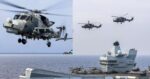
The United Kingdom’s Royal Navy has completed a major milestone in its Future Maritime Autonomous Systems program with the successful testing of the “Rattler” uncrewed surface vessel (USV). Conducted off the coast of Scotland in late October 2025 as part of Exercise REPMUS and Dynamic Messenger—a NATO-led series focused on maritime unmanned integration—the trial demonstrated an autonomous escort mission involving crewed and uncrewed vessels operating cooperatively.
The Rattler platform is part of the UK Ministry of Defence’s broader push to integrate autonomous systems into naval operations under its NavyX innovation initiative. The exercise saw HMS Argyll, a Type 23 frigate, escorted by multiple USVs including Rattler during simulated high-threat scenarios such as swarming attacks and ISR missions. BAE Systems leads development of the platform in collaboration with L3Harris and SeeByte.
Technical Overview
The Rattler is a modular uncrewed surface vessel designed for multi-role maritime autonomy. While official specifications remain classified or limited due to operational security concerns, open-source analysis suggests that it is based on a converted fast patrol craft hull approximately 11–13 meters long. It features:
- Autonomous Navigation Suite: Developed by SeeByte using their Neptune autonomy architecture integrated with L3Harris’ control systems.
- C4ISR Integration: Secure communications links allow real-time data sharing with manned vessels and command centers via SATCOM and line-of-sight RF links.
- Sensors & Payloads: Likely includes EO/IR sensors for ISR roles; modular deck space allows adaptation for EW payloads or non-lethal deterrents.
- Propulsion & Speed: Estimated top speed over 30 knots; sufficient endurance for multi-hour patrols or escort missions within task groups.
The system is designed to operate either fully autonomously under pre-programmed mission profiles or semi-autonomously under remote human supervision. According to Milivox sources familiar with UK naval procurement trends, future variants may include ASW sonars or loitering munition integration depending on evolving threat environments.
Operational or Strategic Context
The deployment of USVs like Rattler aligns with NATO’s growing emphasis on distributed maritime operations (DMO) and manned-unmanned teaming (MUM-T). As assessed by Milivox experts, small autonomous vessels offer several operational advantages:
- Saturation Defense: Acting as decoys or early-warning pickets against drone swarms or missile salvos targeting capital ships.
- Littoral ISR & Screening: Operating close to shorelines where larger warships face higher risk from mines or asymmetric threats.
- Crew Risk Reduction: Performing dull/dangerous tasks without endangering sailors during peacetime patrols or crisis response missions.
This capability is particularly relevant given current tensions in chokepoints such as the Strait of Hormuz and Baltic Sea approaches where hybrid threats—ranging from unmanned attacks to GPS spoofing—are increasingly common. The Royal Navy’s investment in platforms like Rattler mirrors similar efforts by allied navies including the U.S. Navy’s MUSV program and France’s SLAM-F initiative under Thales/Naval Group leadership.
Market or Industry Impact
The successful demonstration adds momentum to the UK defense sector’s push into maritime autonomy—a field projected by Allied Market Research to exceed $6 billion globally by 2030. BAE Systems’ involvement positions it competitively alongside global players like Elbit Systems (Seagull), Rafael (Protector), and Austal/Leidos (U.S. MUSV).
This also reinforces confidence in SeeByte’s autonomy software stack which has seen adoption across NATO navies for mine countermeasures (MCM) operations. According to Milivox analysis, if adopted at scale within Royal Navy task groups post-2027, this could drive follow-on procurement contracts worth £100–150 million over five years—particularly if paired with AI-enabled mission planning tools currently under test at DSTL Porton Down labs.
Milivox Commentary
The Rattler trial underscores a doctrinal shift underway within Western navies—from platform-centric warfare toward networked effects delivered through autonomous nodes. While still early-stage compared to mature UAV programs like MQ-9B SeaGuardian deployments at sea, surface autonomy is rapidly catching up due to advances in edge computing and secure comms resilience against EW threats.
A key challenge remains rules-of-engagement clarity for armed USVs—a topic that surfaced during NATO discussions at DSEI London earlier this year. Until legal frameworks evolve further, platforms like Rattler will likely remain ISR-focused rather than kinetic assets. Nonetheless, their utility as force multipliers—especially when paired with AI-enabled C2 nodes—is undeniable.