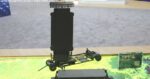
Rocket Lab Finalizes Photon Spacecraft for Eta Space’s LOXSAT Cryogenic Propellant Demo
-
| Defense Industry & Geopolitics Observer

Rocket Lab has completed integration of its Photon spacecraft platform for the upcoming LOXSAT mission by Eta Space, a pivotal demonstration of long-duration cryogenic propellant storage in orbit. Scheduled for launch aboard an Electron rocket in Q4 2024, the mission aims to validate technologies critical to enabling on-orbit refueling and extending the operational life of spacecraft and lunar systems.
LOXSAT Mission Overview: Enabling Cryogenic Propellant Storage in Orbit
The LOXSAT (Liquid Oxygen Satellite) mission is a U.S. Space Force-funded technology demonstration under the Small Business Innovation Research (SBIR) program. Developed by Florida-based Eta Space, LOXSAT aims to prove the feasibility of storing liquid oxygen (LOX)—a highly volatile cryogenic oxidizer—on orbit for extended durations. This capability is essential for future space logistics architectures including reusable lunar landers and orbital fuel depots.
The core objective is to demonstrate that liquid oxygen can be maintained at cryogenic temperatures (~90 K) in microgravity without significant boil-off or contamination. This requires advanced thermal insulation systems, active cooling technologies such as cryocoolers or sunshields, and precise fluid management subsystems.
Eta Space’s payload includes integrated sensors and telemetry packages to monitor tank pressure, temperature gradients, and boil-off rates over several months. The data will inform future designs of scalable orbital depots capable of transferring cryogens between vehicles—a key enabler for NASA’s Artemis campaign and commercial cislunar transport concepts.
Photon Bus as a Hosted Payload Platform
Rocket Lab’s Photon spacecraft serves as the host platform for the LOXSAT payload. Derived from Rocket Lab’s Kick Stage upper stage architecture and enhanced with avionics redundancy and propulsion upgrades, Photon offers a modular smallsat bus optimized for hosted payloads and technology demonstrations in low Earth orbit (LEO), cislunar space, or interplanetary trajectories.
The version used for this mission includes:
- A custom payload adapter structure tailored to support cryogenic hardware mass and thermal interfaces
- Integrated power supply systems compatible with active cooling demands
- A high-precision attitude control system to maintain favorable sun angles during thermal testing
- S-band communications suite for real-time telemetry relay
Photon has previously flown missions including NASA’s CAPSTONE CubeSat lunar pathfinder (2022), showcasing its ability to support deep-space trajectories. For LOXSAT, it will remain in LEO but provide stable platform conditions crucial for validating thermal performance over time.
Strategic Implications: On-Orbit Refueling as a Force Multiplier
If successful, LOXSAT would mark one of the first U.S.-based demonstrations of sustained cryogen storage in orbit—a foundational capability for future military and civil space operations. The ability to store and transfer oxidizers like LOX complements existing work on liquid hydrogen or storable propellants such as hydrazine derivatives.
This aligns with broader Department of Defense (DoD) interest in space mobility and logistics (SML), which seeks to enable maneuverable satellites, responsive launch-on-demand capabilities, and persistent presence beyond GEO. The U.S. Space Force has identified on-orbit servicing—including refueling—as a strategic priority under its Vision for Satellite Servicing published by SSC/AFRL.
Cryogenic refueling also supports NASA’s Artemis Base Camp concept by enabling reusable landers like Blue Origin’s Blue Moon or Dynetics’ ALPACA variant—both designed around liquid oxygen/liquid hydrogen engines requiring depot-fed resupply missions from LEO or NRHO staging points.
Eta Space’s Role in Cryogenics Innovation
Founded by former NASA engineers with expertise in fluid systems engineering, Eta Space has positioned itself as a niche player specializing in cryogenics applied to spaceflight applications. In addition to LOXSAT-1 funded under SBIR Phase II contracts from SSC/SpaceWERX (~$5M+), the company is developing larger-scale depot concepts such as CRYOTE (Cryogenic Orbital Transfer Element).
The firm has partnered with other propulsion-focused startups like Ursa Major Technologies and leverages heritage from NASA’s CryoSat experiments conducted aboard ISS platforms. CEO William Notardonato previously led NASA KSC’s Cryogenics Test Laboratory before founding Eta Space in 2019.
Launch Timeline & Mission Architecture
The Electron rocket carrying Photon + LOXSAT is currently scheduled for Q4 2024 from Rocket Lab Launch Complex 1B at Mahia Peninsula, New Zealand. The target orbit is expected to be sun-synchronous LEO (~500 km altitude), selected to maximize thermal stability during long-duration testing periods.
The mission will operate autonomously post-deployment with ground station passes providing periodic data dumps via S-band links managed through Rocket Lab’s global ground network. The test duration is planned at ~6 months minimum but may extend depending on system health metrics.
Challenges Ahead: Thermal Control & Fluid Dynamics at Cryo Temps
Sustaining liquid oxygen at ~90 K without active boil-off remains one of the most technically challenging aspects of orbital logistics development. Even minor heat leaks can rapidly degrade stored mass fractions due to vaporization losses—posing design tradeoffs between insulation mass vs tank size vs power availability.
Moreover, fluid slosh dynamics under microgravity conditions complicate modeling efforts needed for reliable transfer mechanisms between tanks or vehicles during rendezvous operations. These are areas where real-world data from LOXSAT will directly inform both commercial depot architectures (e.g., Lockheed Martin’s Jupiter) and government-led initiatives like DARPA’s Robotic Servicing of Geosynchronous Satellites (RSGS).
Conclusion: A Milestone Toward Operational Fuel Depots
The Rocket Lab–Eta Space collaboration on the upcoming LOXSAT mission represents more than just another smallsat demo—it could lay critical groundwork toward operational orbital fuel depots supporting both civil exploration goals and contested space domain strategies.
If successful, it would validate not only hardware but also business models around propellant-as-a-service offerings that could reshape how spacecraft are designed—from expendable buses toward reusable architectures sustained through periodic resupply missions across Earth-Moon space.