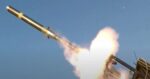
Raytheon’s Stinger Replacement Promises Extended-Range Counter-UAS for US Army
-
| Defense Systems Analyst

Raytheon has unveiled new details about its next-generation missile system designed to replace the aging FIM-92 Stinger. Developed under the U.S. Army’s Maneuver Short Range Air Defense (M-SHORAD) Increment 3 program, this missile aims to dramatically enhance the Army’s ability to counter drones and low-flying threats at extended ranges.
From Stinger to Next-Gen SHORAD: The Need for a Modern Replacement
The FIM-92 Stinger man-portable air-defense system (MANPADS), introduced in the early 1980s, has been a cornerstone of U.S. short-range air defense (SHORAD) for decades. However, evolving aerial threats—particularly small unmanned aerial systems (sUAS), loitering munitions, and low-RCS cruise missiles—have exposed its limitations in both range and lethality.
Recognizing these gaps, the U.S. Army launched a competitive effort in 2022 under M-SHORAD Increment 3 to develop a replacement with greater reach and improved sensor integration. The goal is not just a better MANPADS but a networked interceptor that can integrate into layered air defense architectures.
The urgency of this effort was underscored by lessons from Ukraine and other conflict zones where drone swarms and FPV attacks have overwhelmed legacy SHORAD systems. The Army plans to procure over 6,000 of these new missiles beginning in FY2027.
Raytheon’s Winning Design: Features and Capabilities
In September 2023, Raytheon was awarded a $321 million contract by the U.S. Army as part of an Other Transaction Authority (OTA) agreement to develop prototypes for the new missile system. While official specifications remain classified or limited due to operational security concerns, Raytheon has released key performance goals:
- Extended engagement range: Over twice that of the current Stinger (~8 km), potentially reaching 15–20 km depending on launch platform.
- Multi-mode seeker: Likely incorporating imaging infrared (IIR) with radio-frequency (RF) guidance or semi-active laser homing for all-weather capability.
- Improved warhead: Optimized for small drone targets with proximity fuzing and directional fragmentation.
- C4ISR integration: Designed from inception to plug into existing M-SHORAD vehicles like Stryker-based platforms using modular open systems architecture (MOSA).
The missile is being developed alongside launcher integration kits that will allow deployment from both ground vehicles and potentially rotary-wing aircraft or fixed installations.
M-SHORAD Incremental Evolution: A Three-Tiered Approach
The M-SHORAD program is structured around incremental capability enhancements:
- Increment 1: Rapid fielding of Stryker vehicles equipped with existing weapons like Stingers and XM914 cannons—already deployed in Europe since FY2021.
- Increment 2: Adds directed energy capabilities; prototypes using 50 kW-class lasers from companies like Kord Technologies are undergoing testing as of FY2024.
- Increment 3: Focuses on kinetic interceptor modernization—i.e., replacing the Stinger with longer-range precision-guided missiles optimized for drone defeat.
This tiered approach ensures continuity while allowing rapid insertion of emerging technologies. The new missile will be critical as adversaries increasingly deploy Group I–III drones in contested environments where radar coverage may be degraded or GPS spoofed.
Drones Drive Urgency: Operational Lessons from Ukraine
The war in Ukraine has accelerated Pentagon efforts across multiple domains—including SHORAD modernization—as Russian forces have employed large numbers of drones ranging from commercial quadcopters to Shahed loitering munitions. Ukrainian forces have struggled with limited quantities of MANPADS unable to engage targets beyond visual range or high-speed cruise missiles flying nap-of-the-earth profiles.
The U.S. Army’s next-gen missile is expected to address these gaps by offering faster reaction times via automated cueing from radar/EO sensors and greater standoff via extended-range propulsion. This would allow forward-deployed units greater survivability against saturation drone attacks—a scenario increasingly likely in future peer conflicts involving China or Russia.
A Competitive Field Narrowed Down
The initial phase of M-SHORAD Inc 3 attracted proposals from multiple vendors including Lockheed Martin and Northrop Grumman. However, Raytheon’s experience with advanced seekers—including those used on AIM-9X Sidewinder variants—and its legacy role as developer of the original Stinger likely gave it an edge in cost-risk-performance tradeoffs during downselection.
The OTA contract includes options for up to four years of development work culminating in live-fire testing at White Sands Missile Range starting FY2026. If successful, Low Rate Initial Production (LRIP) could begin by late FY2027 with full-rate production targeted before FY2030 depending on test outcomes and budget cycles.
Sustainment Considerations and NATO Interoperability
A key requirement for the new missile is backward compatibility with existing launch platforms wherever feasible—including vehicle-mounted pods currently used on Avenger systems or Stryker M-SHORAD variants. This reduces logistics burden during transition phases while enabling rapid fielding across multiple theaters.
NATO allies are also closely watching developments; many still rely on aging stocks of FIM-92s acquired under Foreign Military Sales programs over past decades. A successful transition could open export opportunities under Foreign Military Financing (FMF) or Excess Defense Articles (EDA) channels—especially among Eastern European nations facing elevated threat levels since Russia’s invasion of Ukraine.
Conclusion: Toward Layered Counter-UAS Dominance
The replacement for the venerable Stinger marks more than just an upgrade—it reflects a doctrinal shift toward layered defense against proliferating aerial threats including drones, loitering munitions, and stealthy cruise missiles at short ranges where traditional IADS coverage thins out.
If Raytheon delivers on its promises—and early indicators suggest strong progress—the U.S. Army will gain a flexible interceptor capable not only of defending maneuver forces but also integrating into broader Joint All-Domain Command & Control (JADC2) frameworks shaping future battlefield operations through sensor-shooter convergence at machine speed.