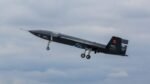
RAF MQ-9 Reaper Retires After 15 Years of Combat Operations
-
| Aerospace & UAV Researcher

The Royal Air Force (RAF) has officially retired its MQ-9A Reaper Remotely Piloted Aircraft System (RPAS) after more than 15 years of operational service. The final flight took place at RAF Waddington on October 4, 2025, marking the end of an era that saw the platform fly over 140,000 hours across multiple theaters. The retirement clears the path for the introduction of the next-generation Protector RG Mk1 system.
End of an Era for RAF RPAS Operations
The MQ-9A Reaper entered service with the RAF in late 2007 as part of Project Reaper—a £800 million procurement program launched in response to urgent operational requirements in Afghanistan. Operated initially from Creech Air Force Base in Nevada before shifting to RAF Waddington in Lincolnshire in 2014, the fleet played a central role in UK air operations over Afghanistan and later Iraq and Syria under Operation Shader.
Throughout its service life, the RAF’s fleet of up to ten MQ-9As provided persistent intelligence, surveillance and reconnaissance (ISR), close air support (CAS), and precision strike capabilities. Armed with AGM-114 Hellfire missiles and GBU-12 Paveway II laser-guided bombs, Reapers were credited with hundreds of kinetic strikes against insurgent targets while also providing overwatch for coalition ground forces.
Operational Legacy: Over 140,000 Flight Hours
The RAF’s MQ-9s flew more than 140,000 hours during their operational lifespan—most of them over hostile territory. The aircraft’s endurance (up to 27 hours), sensor suite (including EO/IR cameras and synthetic aperture radar), and ability to loiter made it a vital asset for persistent ISR missions.
Reapers were operated by No. XIII Squadron from RAF Waddington with forward-deployed crews supporting missions from ground control stations abroad. The aircraft were often tasked with high-value target tracking, convoy overwatch, battle damage assessment (BDA), and time-sensitive targeting missions.
While praised for their effectiveness and persistence compared to manned platforms such as Tornado GR4s or Typhoons in ISR roles, Reapers also drew scrutiny over transparency and accountability regarding kinetic strikes—particularly outside declared warzones.
Protector RG Mk1: A Leap Forward
The retirement of the Reaper makes way for its successor—the Protector RG Mk1 (based on General Atomics’ MQ-9B SkyGuardian). This next-generation RPAS offers significant enhancements:
- Extended endurance: Up to 40+ hours flight time
- Certifiable airworthiness: NATO STANAG-compliant; can operate in civilian airspace under CAA/EASA rules
- Expanded payloads: Brimstone precision strike missiles alongside Paveway IV guided bombs
- Sensors: Advanced EO/IR turret with HD video; maritime radar options
- SATCOM control: Enables global beyond-line-of-sight operations
The UK Ministry of Defence has ordered up to 16 Protectors under a £1.3 billion program managed by Defence Equipment & Support (DE&S). Initial deliveries began in mid-2023 following test flights at GA-ASI’s facilities in California and subsequent acceptance trials at RAF Waddington.
Crew Training and Infrastructure Modernization
The transition from Reaper to Protector involves not only new airframes but also significant upgrades to infrastructure and training pipelines. A new purpose-built hangar complex at RAF Waddington includes simulator suites for crew training on SkyGuardian systems. Personnel previously assigned to XIII Squadron have begun conversion training on the new platform using both live flights and synthetic environments.
The UK is among the first NATO nations integrating a certifiable RPAS into mixed civil-military airspace—a key milestone that enables routine domestic use for training or homeland security support without segregated corridors or NOTAM restrictions.
A Broader Shift Toward Autonomous ISR & Strike Capabilities
The retirement of the MQ-9A comes amid broader modernization efforts across NATO allies seeking greater persistence and autonomy in ISR-strike platforms. While manned fast jets remain relevant for contested environments requiring speed or survivability against IADS threats, RPAS like Protector offer unmatched loiter time and cost-effectiveness for permissive theaters or maritime surveillance zones.
The UK’s investment aligns with trends seen across Europe—such as France’s use of MQ-9B variants; Germany’s Eurodrone project; Italy’s Predator B fleet; or Poland’s recent acquisition plans for MALE-class UAVs including Bayraktar TB2s and MQ-9As via FMS channels.
Conclusion: Farewell Reaper—Hello Protector
The final flight of an RAF MQ-9A marks not just an equipment retirement but a doctrinal shift toward more integrated unmanned operations within joint force structures. As Protectors enter frontline service through late 2025 into early 2026—with full operational capability expected by mid-decade—the UK will field one of NATO’s most advanced RPAS fleets capable of both sovereign ISR-strike missions and coalition interoperability via Link-16 datalinks and STANAG standards.
This transition underscores how unmanned systems are no longer niche enablers but core components within modern airpower architectures—a reality reflected not just by platforms but by evolving TTPs across all domains.