RAAF to Upgrade P-8A Poseidon Fleet to Increment 3 Block 2 Standard
-
| Aerospace & UAV Researcher

Milivox analysis: The Royal Australian Air Force (RAAF) is set to upgrade its fleet of Boeing P-8A Poseidon maritime patrol aircraft to the latest Increment 3 Block 2 configuration. This modernization aligns Australia with U.S. Navy standards and enhances multi-domain ISR and anti-submarine warfare capabilities in the Indo-Pacific.
Background
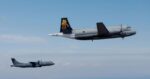
The Boeing P-8A Poseidon is a long-range maritime patrol aircraft derived from the commercial Boeing 737-800ERX platform. Designed for anti-submarine warfare (ASW), anti-surface warfare (ASuW), intelligence, surveillance and reconnaissance (ISR), and search and rescue (SAR) missions, it has become a core asset for navies operating in contested maritime environments.
Australia operates a fleet of 14 P-8As as part of its broader air-sea integration strategy under Project AIR 7000 Phase 2. The aircraft have been in service with the RAAF since late 2016 and are based at RAAF Base Edinburgh in South Australia. They have participated in numerous regional operations including surveillance patrols over the South China Sea and Indian Ocean.
The U.S. Navy has been incrementally upgrading its own P-8A fleet through a series of capability blocks—Increment 1 focused on baseline capabilities; Increment 2 added multi-static active coherent sonar processing; while Increment 3 introduces significant hardware and software enhancements across two sub-blocks: Block 1 (already fielded) and Block 2 (now entering operationalization).
Technical Overview
The Increment 3 Block 2 upgrade represents a major leap in mission system architecture for the P-8A platform. According to Boeing and U.S. Navy documentation reviewed by Milivox, key enhancements include:
- Advanced Mission Computing: A new open architecture mission computer system allowing faster data processing, easier software upgrades, and better integration with allied systems.
- Improved Sensor Fusion: Enhanced multi-intelligence fusion across radar (AN/APY-10), EO/IR sensors, ESM suites, acoustic processors (for sonobuoy data), and datalink inputs.
- C4ISR Enhancements: Upgraded Link-16 terminals with JREAP-C support for beyond line-of-sight communications; improved SATCOM bandwidth for real-time ISR sharing.
- Crew Workstation Redesign: Ergonomic reconfiguration of operator consoles with higher-resolution displays tailored for long-duration missions.
- Electronic Warfare Suite Updates: Integration of next-generation threat libraries for radar warning receivers (RWR) and electronic support measures (ESM).
Boeing began flight testing components of Increment 3 as early as late FY2020 under U.S. Navy programs. Full-rate production for U.S. aircraft is expected by FY2026–27. Australia’s adoption of this configuration ensures interoperability with future U.S., UK Royal Air Force, and NATO-aligned fleets also moving toward similar standards.
Operational or Strategic Context
The decision to upgrade comes amid growing strategic friction in the Indo-Pacific region—particularly concerning Chinese naval expansionism in the South China Sea and increased submarine activity across key chokepoints such as the Sunda Strait and Timor Sea.
The upgraded Poseidons will significantly improve Australia’s ability to detect quiet diesel-electric submarines operating near its northern approaches or transiting through critical sea lanes between Southeast Asia and Oceania. Enhanced C4ISR capabilities also support broader Five Eyes intelligence-sharing frameworks by enabling near-real-time data relay from forward-deployed assets back to command centers or coalition partners.
This move also complements other recent Australian defense investments such as acquiring MQ-4C Triton HALE UAVs for persistent maritime ISR coverage under AIR7000 Phase 1B, expanding Virginia-class SSN procurement under AUKUS Pillar I agreements, and increasing joint exercises with Japan, India, Canada, and France in regional waters.
Market or Industry Impact
Boeing stands to benefit from continued international adoption of advanced P-8 configurations beyond its original U.S.-centric contracts. Australia’s commitment reinforces confidence among other operators—such as Norway, India, South Korea—considering mid-life upgrades or follow-on orders aligned with Increment-level capability roadmaps.
The upgrade program will likely involve local industry participation through Boeing Defence Australia (BDA), which already provides sustainment services at RAAF Edinburgh. This supports sovereign MRO capacity development aligned with Australia’s Defence Strategic Review goals emphasizing domestic readiness over expeditionary dependence.
The move may also influence regional procurement decisions—particularly among ASEAN nations exploring fixed-wing maritime surveillance options amid rising EEZ enforcement needs. While some countries lean toward smaller turboprop platforms like Airbus C295 MPA or ATR72MP variants due to budget constraints, Australia’s continued investment into high-end platforms like the P-8 underscores a commitment to blue-water domain awareness that could shape allied procurement trajectories.
Milivox Commentary
As assessed by Milivox experts, Australia’s decision to align its P-8A fleet with U.S.-standardized Increment upgrades reflects both operational necessity and alliance signaling in an increasingly contested Indo-Pacific environment. The technical benefits—from sensor fusion improvements to network-centric warfare readiness—offer tangible gains against both conventional naval threats and grey-zone actors employing unmarked vessels or submerged platforms below detection thresholds of legacy systems.
This modernization effort should be viewed not merely as a platform refresh but as part of a broader doctrinal shift toward integrated undersea warfare dominance within AUKUS-aligned forces. It also illustrates how major defense platforms like the P-8 can serve as evolving digital nodes rather than static airframes—a trend likely mirrored across other domains including land-based ISR systems or unmanned underwater vehicles (UUVs).
Milivox will continue monitoring how quickly these upgrades are fielded operationally within No.11 Squadron RAAF—and whether similar modernization pathways are adopted by other regional allies facing parallel maritime security challenges.