Pentagon Invests $13.6M in Ultra-Efficient Drone Propulsion Project
-
| Aerospace & UAV Researcher

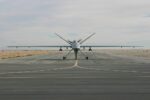
The Pentagon has launched a new $13.6 million research initiative aimed at dramatically improving the fuel efficiency of military drones. Spearheaded by DARPA and led by the Georgia Tech Research Institute (GTRI), the program seeks to develop next-generation propulsion systems that could double the endurance of Group 3 UAVs without increasing their size or weight.
Strategic Goals: Doubling Endurance Without Compromise
The Defense Advanced Research Projects Agency (DARPA) is funding the project under its Advanced Propulsion Concepts (APC) program. The primary objective is to achieve a twofold increase in fuel efficiency for Group 3 unmanned aerial vehicles (UAVs)—a category that includes medium-sized drones typically weighing between 25 kg and 600 kg and used extensively for ISR (intelligence, surveillance, reconnaissance) missions.
Improving fuel efficiency directly translates into longer loiter times over targets, extended mission ranges, and reduced logistical burdens in contested environments. This is especially relevant for operations in denied or austere regions where resupply is difficult or impossible.
According to GTRI’s principal investigator Dr. Adam Watkins, “The goal is not just higher efficiency but achieving it within the same form factor and payload constraints of current platforms.” This suggests that any resulting propulsion system must be drop-in compatible with existing airframes or require minimal redesign.
Technical Approach: Hybrid-Electric Propulsion with Novel Thermodynamics
The research team plans to explore hybrid-electric propulsion architectures incorporating advanced thermodynamic cycles and novel combustion techniques. While exact technical details remain classified or proprietary at this stage, publicly available information indicates that the team will investigate:
- High-efficiency internal combustion engines utilizing recuperated Brayton or Miller cycles
- Hybrid-electric powertrains combining combustion engines with battery-assisted electric motors
- Advanced materials for thermal management and lightweight integration
- AI-driven engine control systems for adaptive optimization during flight
This aligns with broader trends in both commercial aerospace and defense sectors toward hybrid-electric systems that offer better part-load efficiency—critical for long-endurance loitering missions where full power is rarely used continuously.
Georgia Tech’s Role and Industry Collaboration
The Georgia Tech Research Institute will lead the effort under a three-year contract awarded by DARPA in September 2025. GTRI brings extensive experience in aerospace propulsion R&D as well as prior work on energy-efficient unmanned systems through its Aerospace Systems Laboratory.
The project also involves collaboration with multiple industry partners including:
- Sierra Technical Services – known for UAV airframe prototyping
- Pinnacle Engines – developers of opposed-piston engines optimized for high thermal efficiency
- Aurora Flight Sciences (a Boeing subsidiary) – contributing expertise in autonomous flight control integration
This multi-disciplinary team structure reflects DARPA’s emphasis on rapid prototyping via cross-sectoral innovation pipelines.
Operational Implications for U.S. Military UAV Fleets
If successful, this technology could significantly enhance operational flexibility across multiple branches of the U.S. military using Group 3-class drones such as:
- RQ-21A Blackjack (USMC/USN): A tactical ISR drone currently limited by ~16 hours endurance; doubling this could enable persistent maritime overwatch without shipboard recovery cycles.
- Puma LE (SOCOM): Used in special operations; improved range/endurance would reduce exposure during forward deployment resupply or recovery missions.
- Tactical UAS prototypes: Including those under Army FTUAS program which seek runway-independent ISR capabilities over extended durations.
DARPA’s APC effort may also influence future requirements documents issued by services seeking more energy-resilient platforms under Joint All-Domain Command & Control (JADC2) doctrine—where persistent ISR nodes are essential across disconnected battlespaces.
DARPA’s Broader Push Toward Energy-Efficient Autonomy
This initiative fits into a larger DARPA trend emphasizing autonomy with resource frugality. In recent years, programs like LongShot (air-launched UAVs), Gremlins (recoverable swarming drones), and ANCILLARY have all prioritized energy density as a limiting factor in mission design space.
DARPA’s Tactical Technology Office has increasingly focused on “operational persistence” as a key metric—how long an unmanned system can remain useful without human intervention or resupply. Fuel-efficient propulsion directly supports this paradigm shift from short sorties to enduring presence missions enabled by AI autonomy layers.
Challenges Ahead: Integration vs Innovation Tradeoffs
A key challenge will be balancing innovation with platform compatibility. Many existing Group 3 airframes were not designed with hybrid-electric architectures in mind; retrofitting them may require significant structural modifications unless modularity is prioritized from day one.
Furthermore, while laboratory demonstrations may achieve impressive thermal efficiencies (>45%), real-world performance often suffers due to vibration damping needs, altitude effects on combustion dynamics, and EMI shielding requirements when integrating electric components near sensitive avionics payloads.
Looking Forward: Timeline and Milestones
The current contract spans three years through FY2028 with several expected milestones:
- 2026 Q1–Q3: Bench testing of candidate engine architectures at GTRI labs under simulated flight conditions
- 2027 Q1: Ground-based integration trials using surrogate airframes provided by Sierra Technical Services
- 2027 Q4–2028 Q1: Flight testing of prototype system aboard modified Group 3 drone platform; target metrics include >100% improvement over baseline specific fuel consumption (SFC)
A Strategic Investment Amidst Global Drone Competition
The U.S. faces growing competition from peer adversaries like China and Russia who are rapidly advancing drone technologies—particularly long-endurance ISR platforms powered by efficient turboprops or electric-hybrid designs like China’s Wing Loong-10E or Russia’s Orion-E variants.
This investment signals Washington’s intent to maintain technological superiority not just through sensors or autonomy but also via core platform enablers like propulsion—a field often overlooked yet foundational to operational relevance across theaters from Indo-Pacific maritime zones to Eastern European border surveillance corridors.