US Army Integrates NMESIS Anti-Ship Missile with MSV(L) to Bolster Indo-Pacific Littoral Strike Capabilities
-
| Defense Systems Analyst

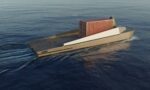
The U.S. Army is advancing its role in maritime strike operations by integrating the Navy/Marine Expeditionary Ship Interdiction System (NMESIS) onto its new Maneuver Support Vessel (Light), or MSV(L). This pairing of a long-range precision anti-ship missile system with a modern shallow-draft landing craft marks a significant step in enabling distributed fires and littoral denial strategies in the Indo-Pacific theater.
NMESIS and the Naval Strike Missile: A Proven Littoral Threat
Developed jointly by Raytheon and Norway’s Kongsberg Defence & Aerospace, NMESIS is based on the Naval Strike Missile (NSM), a fifth-generation precision-guided cruise missile designed for engaging heavily defended maritime targets. The NSM has a range exceeding 185 km (100 nautical miles), sea-skimming flight profile, advanced target discrimination via imaging infrared seeker (IIR), and GPS-aided INS guidance. It carries a 125 kg high-explosive warhead optimized for ship-killing effectiveness.
What distinguishes NMESIS from naval NSM launchers is its integration onto an unmanned Joint Light Tactical Vehicle chassis known as ROGUE Fires (Remotely Operated Ground Unit for Expeditionary Fires). This enables remote launch capability and reduces crew exposure during high-risk operations. The U.S. Marine Corps began fielding NMESIS as part of its Force Design 2030 vision to support expeditionary advanced base operations (EABO).
MSV(L): A New Class of Army Watercraft for Distributed Operations
The Maneuver Support Vessel (Light), or MSV(L), is being developed by Vigor Industrial under a $979 million contract awarded in 2017. Designed to replace aging Landing Craft Mechanized-8 (LCM-8) vessels, the MSV(L) offers improved speed, payload capacity (~82 tons), range (~740 km at full load), and survivability. It can operate in austere environments with minimal port infrastructure—ideal for island-hopping logistics or strike missions across contested archipelagos.
The vessel features a shallow draft (~1.2 meters when unloaded) allowing beach landings and access to underdeveloped ports across the First Island Chain. With roll-on/roll-off capability and compatibility with ISO containers or vehicle-based systems like NMESIS on ROGUE Fires chassis, it supports rapid reconfiguration for combat support roles including fires emplacement.
Strategic Implications for Indo-Pacific Posture
The integration of NMESIS onto Army-operated MSV(L) platforms signals an evolution in joint-service doctrine aimed at countering Chinese naval expansionism through distributed lethality concepts. By enabling land-based precision fires from mobile maritime platforms, U.S. forces can complicate adversary targeting cycles while maintaining operational unpredictability across vast oceanic distances.
- Littoral Denial: Enables rapid deployment of anti-ship missiles into contested waters without fixed infrastructure.
- Joint Integration: Bridges Marine Corps EABO concepts with Army Multi-Domain Task Force (MDTF) operations.
- Strategic Mobility: Enhances ability to reposition fires assets between islands or coastal launch points under threat of A2/AD systems.
- Deterrence Signaling: Demonstrates capability to hold PLAN surface combatants at risk from unconventional vectors.
This approach aligns closely with recent Pacific Deterrence Initiative funding lines that emphasize cross-domain kill chains and dynamic force employment across INDOPACOM’s area of responsibility.
Tactical Utility and Deployment Scenarios
The pairing of NMESIS with MSV(L) opens up several tactical applications beyond traditional amphibious assault support:
- Afloat Fires Basing: Use of anchored or loitering MSV(Ls as mobile missile batteries near chokepoints like Luzon Strait or Bashi Channel.
- Spoiling Attacks: Rapid insertion of anti-ship assets into forward areas during early crisis phases to deter PLAN movement.
- Saturation Salvos: Coordinated launches from dispersed vessels to overwhelm shipboard defenses using low-observable NSMs.
- C4ISR Integration: Networked targeting via Joint All-Domain Command & Control (JADC2) architecture enhances responsiveness against fleeting targets like Type-055 cruisers or Type-052D destroyers.
This flexibility makes such systems ideal tools for shaping operations during Phase Zero competition or Phase One conflict onset scenarios envisioned by U.S. planners in INDOPACOM exercises such as Pacific Vanguard or Talisman Sabre.
A Convergence of Service-Level Modernization Paths
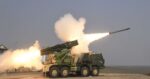
The convergence between Marine Corps Force Design reforms and Army watercraft modernization reflects broader trends toward multi-domain convergence within Joint All-Domain Operations (JADO). While traditionally focused on ground maneuver warfare, the U.S. Army increasingly seeks relevance in maritime domains through long-range fires programs such as Precision Strike Missile (PrSM) and now NMESIS-on-MSVL concepts.
This also suggests deeper interoperability between service branches through shared munitions types—like NSM—and common C4ISR architectures that allow sensor-to-shooter linkages regardless of domain origin point. Lockheed Martin’s work on integrating NSM fire control into joint networks will be pivotal here—especially if future variants include extended-range seekers or dual-mode terminal guidance options suitable for land-sea hybrid targets like amphibious ready groups operating near Taiwan or Okinawa.

![Seven-Hour Flights and 100-Pound Payloads: Draganfly’s Drones Join the Border Fight [DRONELIFE Exlusive Interview]](https://milivox.media/wp-content/uploads/2025/10/draganfly-border-surveillance-uav-150x72.png)