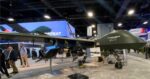
NASA X-59 Supersonic Jet Completes First Flight, Paving the Way for Quiet Overland Supersonic Travel
-
| Aerospace & UAV Researcher

NASA’s experimental X-59 QueSST aircraft has successfully completed its first test flight from Edwards Air Force Base in California. Designed to address the long-standing challenge of sonic booms over land, the X-59 is a key milestone in the agency’s Low-Boom Flight Demonstrator program. The aircraft is expected to provide critical data that could help overturn U.S. and international bans on supersonic commercial travel over populated areas.
First Flight Marks Major Milestone for Quiet Supersonic Research
On January 12, 2024 (confirmed by NASA and Lockheed Martin sources), the X-59 took off from Edwards AFB for a short but successful inaugural flight. The aircraft was piloted by Lockheed Martin test pilot Brett Wier and remained airborne for approximately 30 minutes before landing safely. This marks the beginning of a rigorous test campaign aimed at validating its unique low-boom design.
The X-59 (experimental designation) is part of NASA’s Quesst (Quiet SuperSonic Technology) mission and was developed under a cost-shared partnership with Lockheed Martin Skunk Works. The goal is not only to demonstrate sustained supersonic speeds but also to significantly reduce the disruptive sonic boom — replacing it with a softer “sonic thump” that may be acceptable for flights over land.
Design Innovations Focused on Sonic Boom Suppression
The X-59’s most distinctive feature is its elongated nose — nearly one-third of the aircraft’s total length — which plays a critical role in shaping shockwaves during supersonic flight. The 30-meter-long airframe has been optimized using computational fluid dynamics (CFD) and wind tunnel testing to distribute pressure waves in such a way that prevents them from coalescing into a loud boom.
Key design elements include:
- A long fuselage with no forward-facing cockpit window; instead, pilots rely on an External Vision System (XVS) using high-resolution cameras and displays.
- A single General Electric F414-GE-100 engine mounted above the fuselage to minimize ground-level noise signature.
- Canard-delta wing configuration designed for aerodynamic stability at Mach 1.4 cruise speed (~925 mph or ~1,488 km/h).
The aircraft is designed to fly at altitudes around 55,000 feet (16,764 meters), where it can generate low-amplitude shockwaves that dissipate before reaching ground level with disruptive intensity.
Operational Goals and Community Response Testing
The next phase of the program involves extensive acoustic validation flights across multiple U.S. communities starting in late 2024 or early 2025. These flights will be coordinated with local residents and equipped with ground-based microphone arrays to measure perceived noise levels.
This community response data will be submitted to regulatory bodies such as the Federal Aviation Administration (FAA) and International Civil Aviation Organization (ICAO). The ultimate goal is to inform new noise standards that could lift current bans on commercial supersonic travel over land — restrictions that have been in place since 1973 due to concerns about sonic booms from aircraft like Concorde.
X-59 as an Enabler of Future Commercial Supersonics
While not intended as a commercial prototype itself, the X-59 serves as an essential technology demonstrator for future civilian supersonic jets envisioned by companies like Boom Supersonic and others. By proving that quiet supersonic flight is technically feasible and socially acceptable, NASA hopes to de-risk both regulatory hurdles and public perception barriers facing next-generation high-speed airliners.
“The data we collect from this mission will help regulators establish new rules based on science rather than assumptions,” said Peter Coen, NASA’s Quesst mission integration manager. “This could open up entirely new markets for faster-than-sound air travel.”
Program Timeline and Industry Implications
The X-59 program began in earnest in 2016 when NASA awarded Lockheed Martin Skunk Works a preliminary design contract under its New Aviation Horizons initiative. Full-scale construction started in late 2018 at LM’s Palmdale facility under a $247 million contract finalized in April of that year.
Key milestones include:
- 2019–2021: Structural assembly and systems integration phases completed.
- 2023: Rollout of completed airframe; ground testing initiated at Armstrong Flight Research Center.
- January 2024: First successful test flight conducted at Edwards AFB.
If subsequent test phases proceed as planned through late 2025–2026, regulatory engagement could begin around 2027–2028 — potentially enabling commercial developers to pursue certification paths within this decade.
A Strategic Asset Beyond Civil Aviation?
Although primarily aimed at civil aviation applications, some defense analysts suggest technologies developed under QueSST could have dual-use implications. For instance:
- Sonic boom suppression may benefit stealthy high-speed ISR or strike platforms operating near contested areas without alerting adversaries acoustically.
- The External Vision System architecture may inform future optionally-manned or autonomous high-speed vehicles lacking traditional cockpits or windows.
- Aerodynamic shaping techniques validated here could be leveraged by hypersonics programs seeking controllability during transonic/supersonic transitions.
No formal military adaptation has been announced; however, given DoD interest in rapid global mobility and survivable ISR platforms under programs like NGAD or SR-72 concepts, crossover potential should not be dismissed outright.
Conclusion: A Step Toward Rewriting Supersonic Rules
The successful first flight of NASA’s X-59 marks more than just another test milestone — it signals renewed momentum toward reshaping how we think about speed and sound in aviation policy. With real-world data soon flowing from community trials across America, regulators will finally have empirical evidence on which to base updated standards for next-generation supersonics — both civil and potentially military alike.