Lockheed Martin Sikorsky Unveils Nomad™ Family: Long-Endurance VTOL Drones for Dispersed Operations
-
| Aerospace & UAV Researcher

Lockheed Martin’s Sikorsky division has introduced the Nomad™ family of Group 3 vertical take-off and landing (VTOL) drones—modular unmanned aerial systems (UAS) designed to operate without runways and tailored for long-endurance missions in contested environments. The new platform signals a strategic evolution in tactical UAV design as militaries shift toward dispersed operations and autonomous logistics.
Nomad Family Overview: A Modular Approach to Tactical VTOL
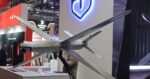
The Nomad family is a clean-sheet development by Sikorsky Innovations aimed at delivering scalable Group 3 UAS solutions with vertical lift capabilities. According to Lockheed Martin’s announcement during the AUSA Annual Meeting & Exposition in October 2025, the Nomad platform is designed around three core principles:
- Runway independence: Full VTOL capability allows launch and recovery from unprepared terrain or naval platforms.
- Modular architecture: Payloads and mission modules can be swapped rapidly to support ISR, logistics, comms relay, or EW missions.
- Autonomy-first design: Built-in autonomy enables single-operator control or integration into larger manned-unmanned teaming constructs.
The airframe features a tilt-wing configuration with four rotors—two on each wing—and a central fuselage optimized for payload volume. The system is electrically powered with hybrid propulsion options under development. While performance specifications remain limited publicly due to ongoing testing phases, Lockheed indicates that the Nomad demonstrator has achieved multiple hours of flight endurance in recent trials.
Group 3 Classification with Strategic Implications
The Nomad falls into the U.S. DoD’s Group 3 category—typically defined as UAVs weighing less than 600 kg (1,320 lbs), flying below 5 km altitude (16,400 ft), and at speeds under Mach 0.8. This classification allows greater operational flexibility compared to larger drones like MQ-9 Reaper or MQ-1C Gray Eagle while maintaining significant range and payload capabilities.
Group 3 UAVs are increasingly favored by U.S. Army Futures Command and SOCOM due to their ability to support distributed operations without requiring large infrastructure footprints. In this context, Nomad is positioned as a potential enabler of Expeditionary Advanced Base Operations (EABO), Agile Combat Employment (ACE), and other emerging doctrines emphasizing mobility and survivability in peer-threat environments.
Multi-Mission Payload Flexibility
Sikorsky highlights that the Nomad airframe supports a variety of interchangeable payloads through its open systems architecture. Potential mission configurations include:
- ISR/EW: EO/IR gimbals with laser designators; SIGINT/ELINT pods; RF jammers or decoys.
- Cargo/logistics: Internal bay or sling-load delivery of up to ~30 kg class payloads over extended ranges.
- Communications relay: Mesh-networking nodes or SATCOM gateways for BLOS connectivity extension.
- MUM-T support: Integration with manned aircraft via Link-16 or ATAK-compatible interfaces for sensor fusion or strike coordination.
This modularity mirrors trends seen in other platforms like Anduril’s Ghost-X or AeroVironment’s JUMP-20 but adds greater emphasis on autonomy and vertical lift scalability across multiple airframe sizes within the same family lineage.
Sikorsky Autonomy Stack: From Black Hawk AI Pilot to Group-3 Drone Ops
The core enabling technology behind Nomad is Sikorsky’s Matrix™ autonomy suite—a software-hardware stack originally developed for optionally piloted helicopters such as SARA (Sikorsky Autonomy Research Aircraft) and demonstrated on UH-60M Black Hawks under DARPA’s ALIAS program.
This autonomy layer provides obstacle avoidance, route planning, contingency management (e.g., lost comms recovery), dynamic re-tasking mid-mission, and collaborative teaming with other assets. For small drones like Nomad, Matrix enables high levels of automation even in GPS-denied environments through vision-based navigation fused with inertial/GNSS inputs.
Sikorsky claims that their autonomy stack allows a single operator to control multiple drones simultaneously—a key requirement for future battlefield scalability where human-machine teaming must reduce cognitive load while increasing tempo.
A Platform Aligned With Future Vertical Lift Doctrine
The unveiling of the Nomad family aligns closely with broader U.S. Army modernization efforts under Future Vertical Lift (FVL). While FVL primarily focuses on next-generation rotorcraft like Bell V-280 Valor (FLRAA) or Boeing-Sikorsky Defiant X (FARA), unmanned adjunct systems are increasingly seen as critical force multipliers within that ecosystem.
The Army has already fielded systems like ALTIUS-600M launched from rotary-wing aircraft; however, platforms like Nomad offer persistent loitering capability independent of launch aircraft—a key differentiator when operating deep inside contested airspace where resupply routes are vulnerable or denied entirely.
Development Status and Path Ahead
No formal procurement contract has yet been announced for the Nomad system; however, Lockheed confirmed ongoing testing at company facilities in Florida throughout late FY2025 into early FY2026. The company is reportedly engaging with multiple service branches—including Army Futures Command—for potential demonstrations under OTAs (Other Transaction Agreements).
A likely near-term application could be autonomous resupply missions in Indo-Pacific scenarios where distributed forces require low-signature aerial logistics across archipelagic terrain—an area where traditional helicopters face radar detection risks from peer IADS networks such as China’s HQ-9B batteries deployed along coastlines.