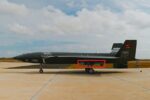
Lockheed S-3 Viking: The “War Hoover” Anti-Submarine Workhorse
-
| Aerospace & UAV Researcher

Nicknamed the “War Hoover” for its vacuum-like engine whine and relentless submarine-hunting role, the Lockheed S-3 Viking was a cornerstone of U.S. Navy carrier-based anti-submarine warfare (ASW) from the 1970s through the early 2000s. Though retired from frontline service, its unique combination of endurance, sensors, and versatility left an enduring mark on maritime patrol operations.
Origins in Cold War ASW Strategy
The S-3 Viking was born out of a 1960s U.S. Navy requirement to replace aging Grumman S-2 Trackers with a more capable carrier-based ASW platform. In 1969, Lockheed won the VSX (Carrier-Based ASW Aircraft) competition with a design that emphasized long-range patrol capability, advanced sensors, and integration with emerging digital avionics.
The first prototype flew in January 1972. By February 1974, initial production deliveries began to fleet squadrons. The aircraft entered operational service in 1975 aboard USS Saratoga (CV-60). Over 180 units were produced between 1971 and 1978.
- Manufacturer: Lockheed (with LTV and Univac as key subcontractors)
- Role: Carrier-based Anti-Submarine Warfare (ASW), later expanded to ISR and tanker roles
- Crew: Four (pilot, co-pilot/tactical coordinator [TACCO], sensor operator [SENSO], electronics operator)
- Powerplant: Two General Electric TF34-GE-2 turbofans
- Max Range: ~4,300 km
Sensor Suite and ASW Capabilities
The S-3’s effectiveness stemmed from its integrated suite of sensors optimized for blue-water submarine detection. Key systems included:
- AN/APS-116 surface search radar (later upgraded to APS-137 in some variants)
- AN/ASQ-81 Magnetic Anomaly Detector (MAD) boom for detecting submerged metallic objects
- Sonobuoy launch system with onboard processing via AN/ARR-75 receiver suite
- Infrared Detection System (IRDS) turret under nose for thermal imaging
- Electronic Support Measures (ESM) system for RF signal detection
The aircraft could carry up to four torpedoes—typically Mk 46 or later Mk 50 lightweight torpedoes—in an internal weapons bay. It also had capacity for depth charges or mines depending on mission configuration.
The “War Hoover” Nickname Explained
The moniker “War Hoover” emerged from two factors:
- Engine Sound: The TF34 engines emitted a high-pitched turbine whine reminiscent of a household vacuum cleaner—especially noticeable during low-speed flight operations around carriers.
- Tactical Role: The aircraft’s persistent presence over oceanic patrol boxes—dropping sonobuoys and sweeping vast areas—made it synonymous with methodical submarine hunting akin to vacuuming up contacts.
This nickname became part of naval aviation lore during Cold War deployments when Soviet submarines posed a constant threat to carrier battle groups across the Atlantic and Pacific theaters.
Missions Beyond Sub-Hunting
While designed primarily for ASW missions during the Cold War peak of Soviet submarine activity, the S-3 evolved into a multi-role platform over time:
- Aerial Refueling: Many Vikings were converted into KS-3A tankers with buddy refueling pods to support other carrier air wing assets like F/A-18 Hornets.
- SIGINT/ELINT: Modified variants such as ES-3A Shadow carried specialized electronic surveillance payloads used during Gulf War-era operations.
- SURTASS Relay & C4ISR: Some aircraft served as communication relays or battlefield surveillance platforms due to their range/endurance profile.
- MCM Escort & Surface Surveillance: Post-Cold War missions often included maritime interdiction support or mine countermeasure escort roles in littoral environments like the Persian Gulf.
This adaptability extended the platform’s operational life even as traditional submarine threats declined after 1991.
Operational History and Retirement Timeline
The S-3 saw extensive service throughout multiple conflicts and peacetime deterrence missions:
- Cuban Missile Crisis & Cold War Patrols: Early deployments focused on tracking Soviet ballistic missile submarines near U.S. coasts or chokepoints like GIUK Gap.
- Iraq Operations: During Operation Desert Storm and Iraqi Freedom, Vikings provided tanker support and ISR overwatch roles rather than direct sub-hunting tasks.
- Balkans & Afghanistan Missions: Used primarily in overland surveillance roles due to sensor flexibility despite being naval aircraft by design.
The last active-duty U.S. Navy squadron flying S-3Bs retired them in January 2009 aboard USS John C. Stennis after nearly four decades of service. However, several airframes remained in limited use by NASA and test squadrons into the late 2010s due to their reliability and payload capacity.
A Platform Ahead of Its Time?
The Viking’s combination of long endurance (~9 hours), robust sensor fusion capabilities via early digital mission computers (Univac CP901), low operating cost compared to fighters or P-3 Orions, and carrier compatibility made it unique among maritime patrol assets. In many ways it foreshadowed modern multi-mission ISR platforms such as MQ-4C Triton or P-8 Poseidon—but with organic strike capability from carriers decades earlier.
No direct replacement was fielded after retirement; instead its roles were split among Super Hornets (tanker), E/A–18G Growlers (ESM), P–8 Poseidon/P–3 Orion detachments (ASW), UAVs (ISR), and helicopters like MH–60R Seahawks for close-in sub hunting—all at higher logistical cost or reduced persistence compared to Viking’s integrated package.
Nostalgia Meets Modern Needs?
A handful of defense analysts have argued that reactivating mothballed Vikings—or developing a modern equivalent—could address current shortfalls in long-range naval ISR/ASW coverage amid rising Chinese PLAN submarine activity in Indo-Pacific waters. However, structural fatigue limits on airframes stored at AMARG (“Boneyard”) make reactivation unlikely without major investment.
A more plausible path is leveraging lessons from S–3 design philosophy—carrier-borne persistence + modular sensors—to inform future unmanned systems development such as MQ–25 Stingray or potential fixed-wing UCAVs optimized for blue-water maritime domain awareness tasks under Distributed Maritime Operations doctrine.
S–3 Legacy Lives On Through Derivatives & Doctrine
The legacy of the “War Hoover” endures not just through nostalgia but through doctrinal evolution emphasizing persistent sea control via networked sensors across manned/unmanned platforms—a concept pioneered by Vikings decades before today’s buzzwords like JADC2 existed. Its pioneering use of digital mission computers also paved the way for integrated avionics architectures now standard across fifth-gen fighters and ISR fleets alike.