South Korea’s KF-21 Boramae Impresses Philippines at ADEX 2025, Boosting Prospects for Fighter Jet Deal
-
| Aerospace & UAV Researcher

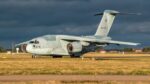
South Korea’s KF-21 Boramae fighter jet made a strong impression on the Philippine delegation during the Seoul International Aerospace & Defense Exhibition (ADEX) 2025. As Manila seeks to modernize its air combat capabilities under Horizon 3 of its defense modernization program, the advanced multirole aircraft is emerging as a leading candidate to replace aging platforms in the Philippine Air Force (PAF).
KF-21 Boramae Showcased to Key Southeast Asian Delegations
At ADEX 2025, held at Seoul Air Base in Seongnam from October 17–22, South Korea’s Defense Acquisition Program Administration (DAPA) and Korean Aerospace Industries (KAI) presented the KF-21 Boramae to multiple foreign delegations. Notably, representatives from the Philippine Department of National Defense and PAF were given detailed briefings and live demonstrations of the aircraft’s capabilities.
The KF-21 Block I prototype performed aerial displays highlighting its maneuverability and sensor integration. According to KAI representatives speaking at ADEX, discussions with Philippine officials included mission profiles relevant to regional maritime security and air defense. The PAF has long sought a successor to its limited fleet of FA-50PH light combat aircraft—also built by KAI—and views the KF-21 as a logical next step in capability development.
Philippine Air Force Requirements Under Horizon 3
The Philippines’ Revised Armed Forces Modernization Program (RAFPMP), currently entering Horizon 3 (2023–2028), prioritizes acquisition of multirole fighters capable of air superiority and strike missions. The PAF’s current fleet includes only a dozen FA-50PHs, which lack beyond visual range (BVR) missile capability and are limited in radar performance.
Under Horizon 3, PAF aims to procure at least one squadron (12–18 units) of next-generation fighters with AESA radar, BVR missile compatibility (such as AIM-120 AMRAAM or Meteor), advanced electronic warfare suites, and multirole versatility for both air-to-air and air-to-ground operations. The contenders have historically included Saab’s JAS-39 Gripen C/D or E/F variants and Lockheed Martin’s F-16 Block 70/72 Viper. However, cost constraints have hampered progress.
The KF-21 offers an intermediate solution—more capable than lightweight fighters like FA-50 but more affordable than full fifth-generation platforms. With projected unit costs between $65–75 million depending on configuration and export terms, it presents an attractive balance between capability and affordability for middle-tier air forces like the PAF.
KF-21 Development Status and Capabilities
The KF-21 Boramae is a twin-engine multirole fighter developed by KAI in partnership with Indonesia under a joint program initially dubbed KF-X/IF-X. First flown in July 2022, it is currently undergoing flight testing with six prototypes operating under DAPA oversight.
- Engines: Two General Electric F414-GE-400K turbofans
- Radar: Hanwha Systems AESA radar under development; integration ongoing
- Avionics: Indigenous EW suite; IRST; datalink; open architecture mission computer
- Armament: Up to ten hardpoints supporting AIM-120 AMRAAM-class BVR missiles; JDAMs; anti-ship missiles; future Meteor integration planned
- RCS: Semi-stealth shaping with internal provisions for future block upgrades including internal weapons bay
- Status: Block I IOC expected by late 2026; Block II with enhanced stealth planned post–2030
The aircraft is designed for eventual compatibility with Link-K tactical datalink systems used by South Korean forces but can be adapted for NATO-standard Link-16 if required by export customers. Its modular design allows future upgrades including internal weapons bays or conformal fuel tanks.
KAI Positions KF-21 as Exportable Multirole Fighter
KAI has aggressively marketed the KF-21 as an affordable alternative to Western fourth-plus generation fighters. In addition to Indonesia—officially contributing around $1.3 billion or ~20% of development costs—KAI has pitched the jet to Malaysia, Thailand, Colombia, Poland (as part of broader industrial cooperation), and now increasingly the Philippines.
KAI officials stated during ADEX that they are prepared to offer industrial offsets tailored to customer needs. For Manila specifically, this could include localized maintenance support through existing FA-50 infrastructure or even partial assembly depending on order size.
A potential order from the Philippines would also deepen existing defense-industrial ties between Seoul and Manila: over two dozen FA-50PHs were delivered between late 2015 and early 2017 under earlier procurement phases. These jets have proven reliable but are increasingly seen as insufficient against regional threats including Chinese incursions into Philippine EEZ waters.
Challenges Ahead: Budget Constraints & Competition
The primary hurdle remains funding. The Philippine Department of Budget Management has yet to finalize allocations for major Horizon III acquisitions amid competing domestic priorities post-pandemic. While President Ferdinand Marcos Jr.’s administration has expressed strong interest in modernizing external defense capabilities—especially amid tensions in the South China Sea—the timeline for actual contract signing remains uncertain.
KAI faces competition not only from Saab’s Gripen C/D—which has been offered via favorable financing—but also from secondhand F‑16s potentially available via U.S. Excess Defense Articles programs or Foreign Military Financing mechanisms if Washington supports such transfers strategically.
ADEX Diplomacy Signals Strategic Intent
The high-level engagement between South Korean officials—including DAPA leadership—and visiting Filipino delegates underscores growing strategic alignment between Seoul and Manila on regional security issues. Both nations face pressure from Chinese assertiveness in adjacent maritime zones—the Yellow Sea for Korea; West Philippine Sea for Manila—and are seeking greater interoperability among regional partners aligned with U.S.-led Indo-Pacific strategies.
If finalized within Horizon III timelines (~by late this decade), a Philippine acquisition of KF‑21s would mark a significant leap in its airpower projection capability—potentially enabling true beyond-line-of-sight engagements across contested maritime zones while leveraging existing familiarity with Korean platforms like FA‑50PHs for training/logistics continuity.