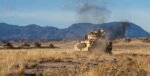
India Funds New Light Armored Vehicle Prototypes as Zorawar Tank Enters User Trials
-
| Defense Systems Analyst

India’s Ministry of Defence (MoD) has greenlit prototype development funding for new light armored vehicles (LAVs) from Tata Advanced Systems and Mahindra Defence Systems. This move coincides with the initiation of user trials for the DRDO-Larsen & Toubro-developed Zorawar light tank in Ladakh. These parallel efforts underscore India’s strategic push to modernize its high-altitude armored capabilities amid persistent tensions along the Line of Actual Control (LAC) with China.
Prototype Funding Signals Expansion Beyond Zorawar
While the 25-tonne Zorawar light tank—jointly developed by India’s Defence Research and Development Organisation (DRDO) and Larsen & Toubro—is undergoing user evaluation in Ladakh as of October 2025, the Indian Army is already looking ahead. The MoD has allocated prototype development contracts to both Tata Advanced Systems Limited (TASL) and Mahindra Defence Systems under the Make-I category of the Defence Acquisition Procedure (DAP). This category provides 100% government funding for design and development of complex defense systems.
According to Indian media reports including The Hindu and Business Standard, these new programs are not direct competitors to Zorawar but aim to diversify India’s portfolio of high-mobility armored platforms suitable for mountainous terrain. The Tata and Mahindra prototypes are expected to be wheeled or hybrid LAVs optimized for rapid deployment at high altitudes—potentially filling roles such as reconnaissance, infantry support, or even drone command-and-control hubs.
Zorawar Light Tank: From Concept to Cold-Weather Trials
The Zorawar project was initiated in response to China’s deployment of lightweight Type 15 tanks along the LAC following the 2020 Galwan Valley clashes. India lacked an equivalent platform capable of operating effectively above 4,000 meters altitude. The DRDO-L&T team accelerated development under a fast-track model initiated in April 2021.
The current prototype is powered by a Cummins diesel engine paired with an Allison automatic transmission and features modular armor protection scalable up to STANAG Level 4. It mounts a 105 mm rifled gun sourced from Belgium’s John Cockerill Defense (likely based on their C3105 turret), along with secondary armament including a remote weapon station (RWS). The vehicle reportedly uses hydropneumatic suspension tuned for rough terrain mobility in snow-covered or rocky environments.
User trials began in October 2025 at high-altitude test sites in Eastern Ladakh under Army Northern Command supervision. These tests will evaluate cold-start reliability, firepower accuracy at altitude, cross-country mobility on scree slopes and glacial surfaces, and integration with battlefield management systems.
Tata-Mahindra Prototypes May Address Broader Operational Gaps
The new funding awarded to Tata and Mahindra could yield platforms that complement rather than replace Zorawar. While details remain classified under DAP protocols, sources suggest that:
- Tata’s design may be based on its Kestrel platform—a modular 8×8 wheeled armored vehicle co-developed with DRDO—configured into a lighter variant or command post role suitable for forward deployment.
- Mahindra’s approach could leverage its experience from developing Mine Protected Vehicles (MPVs) like the ALSV series or Armado platform—possibly offering a highly mobile scout/recce vehicle adapted for mountain warfare.
Both companies have previously competed in India’s Future Infantry Combat Vehicle (FICV) program but lacked traction due to shifting requirements. These new Make-I funded projects offer them another entry point into India’s growing demand for indigenous armored solutions tailored to specific operational theaters like Sikkim-Arunachal or Eastern Ladakh.
Strategic Context: High-Altitude Armor Race With China
The Indian Army faces persistent capability asymmetries along its northern border where China has fielded Type 15 tanks supported by all-weather logistics networks across Tibet Autonomous Region. In contrast, India’s heavy armor—primarily T-72M1 Ajeya and T-90S Bhishma MBTs—is logistically constrained at altitude due to weight (~45–50 tonnes), fuel consumption, engine derating above 3,500m elevation, and poor maneuverability on narrow mountain roads.
Zorawar aims to bridge this gap by offering:
- Lighter footprint: At ~25 tonnes combat weight vs ~42 tonnes for Type 15 MBT equivalents.
- Crew survivability: Modular composite armor with active protection system potential integration later stages.
- Airlift compatibility: Designed for transport via C-17 Globemaster III or IL-76MD aircraft operated by IAF.
- C4ISR integration: Battlefield Management System (BMS) compatibility enabling networked operations with UAVs/ISR assets.
If successful during trials through early-to-mid-2026, initial limited series production could begin by late FY26–27 under emergency procurement clauses or via Make-I transition into Make-II production orders involving private sector partners like L&T as lead integrator.
Sustainment Challenges Remain Despite Indigenous Push
Despite progress on indigenous platforms like Arjun Mk1A MBT or BMP-II upgrades (Sarath), India continues facing challenges related to spares supply chains—especially given OFB corporatization delays—and lack of localized production lines for key subsystems such as engines/transmissions/sensors/APUs used in Zorawar or future LAVs.
The reliance on foreign suppliers like John Cockerill Defense for turrets underscores continued gaps in India’s defense industrial base despite ‘Atmanirbhar Bharat’ initiatives. However, officials note that domestic firms including Bharat Forge/Kalyani Group are being encouraged to localize cannon barrels and gun control systems over time through technology transfer agreements signed since late 2023.
Outlook: Parallel Tracks Toward High-Altitude Armor Dominance
The simultaneous pursuit of multiple light armored platforms reflects an evolving doctrinal shift within Indian Army HQ toward distributed lethality across varied terrain types—from desert strike corps formations using heavier tracked IFVs/MBTs toward agile mountain strike brigades using lighter wheeled/tracked vehicles integrated with drones and ISR nodes.
If both Zorawar trials succeed and Tata/Mahindra prototypes mature into viable programs by FY27–28 timelines envisioned under DAP guidelines, India could field a layered high-altitude armor ecosystem within this decade—countering PLA deployments while reinforcing deterrence posture across Himalayan flashpoints from Depsang Plains to Doklam plateau.