Hyundai Rotem Eyes Saudi Defense Manufacturing Hub as Armored Vehicle Production Nears Launch
-
| Defense Industry & Geopolitics Observer

South Korea’s Hyundai Rotem is finalizing preparations for its new defense manufacturing facility in Saudi Arabia, with production of armored vehicles expected to begin in the near term. The project marks a significant milestone in Riyadh’s Vision 2030 initiative to localize over 50% of its defense spending and build an indigenous military-industrial base.
Strategic Milestone in Saudi-Korean Defense Cooperation
The upcoming launch of Hyundai Rotem’s factory in Saudi Arabia represents a deepening of bilateral defense ties between Seoul and Riyadh. The facility—located near Jeddah—is part of a broader offset agreement signed in March 2022 between Hyundai Rotem and the General Authority for Military Industries (GAMI) under the Kingdom’s Vision 2030 framework.
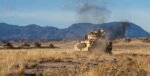
The plant will initially focus on assembling and producing the K806 wheeled armored personnel carrier (APC), a modular 6×6 platform designed for troop transport and internal security operations. The K806 is already operational with South Korea’s military and has been offered to several Middle Eastern customers as a cost-effective alternative to Western APCs.
Localization Goals Aligned with Vision 2030
Saudi Arabia has made localization of defense production a national priority. The country aims to localize more than half of its military procurement by 2030—a sharp increase from less than 10% as of the mid-2010s. To that end, GAMI has signed multiple agreements with foreign OEMs like Lockheed Martin, MBDA, Navantia—and now Hyundai Rotem—to establish local assembly lines or joint ventures.
The Hyundai Rotem factory is expected to contribute significantly toward this goal by enabling local assembly and eventual full-cycle manufacturing of armored vehicles. According to GAMI statements at the World Defense Show (WDS) in Riyadh earlier this year, the facility will also serve as a training hub for Saudi engineers and technicians.
- Initial focus: Assembly of K806 APCs from semi-knocked down kits (SKDs)
- Mid-term goal: Local sourcing of components such as armor plating, tires, optics
- Long-term vision: Full indigenous production including welding, machining, QA/QC
- Workforce development: Training programs led by Korean engineers
- Sustainment capability: MRO services for domestic fleet support
K806 Platform Overview and Regional Suitability
The K806 is a six-wheeled APC developed by Hyundai Rotem primarily for internal security forces but adaptable for light infantry roles. It features modular armor protection up to STANAG Level II/III depending on configuration and can be fitted with various weapon stations including remote-controlled turrets armed with machine guns or automatic grenade launchers.
Key specifications include:
- Crew: Driver + commander + up to nine dismounts
- Engine: Diesel powerpack delivering ~420 hp
- Suspension: Independent suspension with run-flat tires
- C4ISR readiness: Compatible with digital battle management systems
- Missions: Convoy escort, border patrols, urban operations
The platform’s relatively low weight (~16 tonnes), good mobility on desert terrain, and affordability make it attractive for regional customers seeking alternatives to heavier Western MRAPs or IFVs like Patria AMV or Boxer.
Status Update: Facility Readiness and Production Timeline
A high-level delegation from Hyundai Motor Group—including Chairman Euisun Chung—visited the site in June to assess construction progress ahead of commissioning. According to Automotive World and corroborating South Korean press reports (e.g., Yonhap News), the plant is nearing completion with initial test runs expected before Q4/2024.
The factory will reportedly begin operations using SKD kits shipped from South Korea while gradually increasing local content over time. Sources suggest that initial production capacity may be limited—potentially around two dozen vehicles annually—but scalable based on demand from both domestic users (e.g., Royal Saudi Land Forces) and regional exports via SAMI or other state-owned channels.
Implications for Regional Defense Industrial Ecosystem
The establishment of this facility could have ripple effects across the Gulf Cooperation Council (GCC) states’ procurement strategies. As Riyadh positions itself as a regional defense hub—with ambitions extending into UAVs, naval ships, munitions—it may increasingly favor platforms that can be co-produced or maintained locally.
This trend aligns with broader Middle East efforts toward strategic autonomy amid shifting geopolitical alignments. For South Korea’s part, it opens doors not only for vehicle exports but also potential technology transfer deals involving C4ISR systems or unmanned ground platforms (UGVs)—both areas where Hyundai Rotem has growing portfolios.