South Korea Reveals Hycore Hypersonic Cruise Missile In Flight Tests
-
| Defense Systems Analyst

South Korea has unveiled its Hycore hypersonic cruise missile during live flight tests, marking a milestone in its expanding arsenal of advanced strike weapons. Developed by the Agency for Defense Development (ADD) in partnership with Hanwha, Hycore is designed to counter growing threats from North Korea’s evolving missile forces and potentially serve as a deterrent against China.
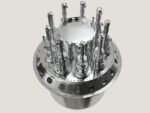
Until now, Hycore had only been shown as scale models and renderings. New imagery confirms the missile’s configuration, booster separation, and wind tunnel tests, underscoring Seoul’s progress in mastering hypersonic technology.
Hycore: Design And Performance
Hycore employs a scramjet propulsion system supported by a two-stage solid-fuel booster.
Key Features:
- Length: 8.7 meters (28.5 feet)
- Weight: 2,400 kg (5,290 lbs)
- Max Speed: Mach 6.2 (reported in tests)
- Configuration: Two-stage booster + scramjet cruise stage
- Design Influence: Similar to the Boeing X-51A Waverider, using shockwave “skipping” for lift
Unlike hypersonic boost-glide vehicles, Hycore maintains powered flight throughout its trajectory, enabling extended range, maneuverability, and precision.
Launch Platforms And Deployment Plans
Hycore is intended for multi-domain launch:
- Ground-based: Vertical launch systems (tested during recent trials).
- Naval: Compatibility with KVLS-II on South Korea’s KDX-III Batch 2 destroyers and KSS-III submarines.
- Air-launched: Planned integration with the KF-21 Boramae fighter, though size constraints may shift deployment to larger F-15K Slam Eagles.
Naval applications are particularly critical: the KVLS-II system can host larger munitions, and KSS-III subs are designed to carry 6–10 vertical launch cells suitable for Hycore.
Potential Roles And Capabilities
Hycore is envisioned as a multi-role hypersonic strike weapon:
- Strategic standoff strike: Penetrating highly defended airspace against hardened or time-sensitive targets.
- Anti-ship warfare: Future versions may integrate terminal seekers for engaging moving maritime targets.
- Deterrence: Enhancing Seoul’s ability to counterbalance North Korean hypersonics like the Hwasongpho-16B boost-glide missile.
The missile could also be networked into South Korea’s “kill web” architecture, receiving mid-course updates for greater accuracy against mobile threats.
Strategic Context: Why Hycore Matters
- North Korea: Advancing both nuclear and hypersonic missile capabilities with Russian assistance.
- China: Rapidly expanding its own hypersonic arsenal, raising regional security risks.
- South Korea’s Doctrine: Hycore complements a diverse missile portfolio, including:
- ALBMs (air-launched ballistic missiles for KF-21)
- SLBMs (submarine-launched ballistic missiles for KSS-III)
- Bunker-busters and long-range cruise missiles
Together, these systems align with Seoul’s strategy to develop “weapons with significantly enhanced destructive power”, ensuring credible deterrence in an increasingly contested Indo-Pacific environment.
Challenges Ahead
Despite promising progress, Hycore faces hurdles common to all hypersonic programs:
- Thermal management: Extreme heating during Mach 6+ flight.
- Scramjet reliability: Sustaining stable combustion at hypersonic speeds.
- Guidance precision: Particularly for anti-ship and mobile target missions.
- Integration limits: Ensuring compatibility with fighter aircraft like KF-21.
These challenges have slowed even U.S. and Chinese hypersonic programs, underscoring the complexity of operationalizing such systems.
Conclusion
The unveiling of Hycore in flight tests demonstrates South Korea’s emergence as a serious player in the hypersonic weapons race. With applications across land, sea, and air domains, Hycore promises to enhance deterrence against North Korea, hedge against China, and bolster Seoul’s independent strike capabilities.
If successfully fielded in the mid-2020s, Hycore will mark a major technological leap, giving South Korea one of the most advanced missile arsenals in the Indo-Pacific.