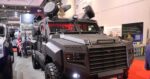
DSEI 2025: GDAMS Unveils 81mm Mortar Carrier on Ford Ranger Super Duty Chassis
-
| Defense Systems Analyst

At DSEI 2025 in London, General Dynamics European Land Systems (GDELS) and its Spanish subsidiary Santa Bárbara Sistemas (GDAMS) unveiled a new light mortar carrier based on the Ford Ranger Super Duty platform. The system integrates an 81mm mortar with digital fire control and recoil mitigation features into a militarized pickup truck chassis—targeting rapid deployment forces and light infantry units requiring mobile indirect fire support.
Lightweight Mortar Carrier Concept for Expeditionary Operations
The new mortar carrier concept reflects growing demand among NATO and allied forces for highly mobile indirect fire platforms that can keep pace with mechanized or dismounted infantry in expeditionary environments. By leveraging the widely available Ford Ranger Super Duty—a commercial off-the-shelf (COTS) platform—GDAMS aims to deliver a cost-effective solution with high strategic mobility and interoperability.
The vehicle is configured as a 4×4 light tactical truck with reinforced suspension and chassis modifications to accommodate the recoil of an onboard 81mm mortar. The weapon is mounted in the rear cargo bed on a turntable baseplate integrated into the floor structure. This allows for rapid deployment without dismounting the tube or crew exposure outside of cover.
Mortar System Specifications and Capabilities
The core weapon is an 81mm smoothbore mortar system—likely derived from existing Spanish designs such as the EXPAL M-86 or similar NATO-standard tubes. It offers a maximum range of approximately 6.5 km using standard HE rounds, extendable with base bleed or rocket-assisted munitions depending on compatibility.
Key features include:
- Recoil absorption system integrated into mounting cradle to reduce stress on vehicle frame
- Digital fire control system (FCS) with GPS/INS positioning and ballistic computation
- 360-degree traverse capability via rotating baseplate mount
- Manual or semi-automatic loading depending on configuration
- Ammunition stowage for up to ~50 rounds onboard
The FCS enables rapid targeting through networked C2 systems or forward observer input. While not confirmed at DSEI, integration with battlefield management systems such as NATO’s ASCA (Artillery Systems Cooperation Activities) protocol would be feasible given GDAMS’ experience in digitized artillery platforms.
Platform Integration: Militarized Ford Ranger Super Duty
The choice of the Ford Ranger Super Duty reflects a trend toward militarizing commercial vehicles for low-intensity conflict zones and peacekeeping operations where heavy armored platforms may be overkill or logistically burdensome. The vehicle shown at DSEI was equipped with:
- Reinforced leaf-spring suspension and upgraded axles for load-bearing capacity
- Bespoke flatbed cargo area modified to support mortar mount and ammo racks
- Bolt-on armor panels offering limited ballistic protection (likely STANAG Level I)
- Roof-mounted RWS option under evaluation for self-defense armament such as a 7.62 mm MG
- Crew cab seating configuration for driver + commander + gunner team
This approach allows for easy air transportability via C-130-class aircraft or sling-load by CH-47 helicopters while maintaining off-road mobility in austere terrains.
Tactical Role and Operational Use Cases
The GDAMS mortar carrier targets roles traditionally filled by towed mortars or man-portable systems but offers significantly faster shoot-and-scoot capability. Its key operational advantages include:
- Rapid emplacement time (~30 seconds from halt to first round)
- Shoot-and-scoot survivability against counter-battery threats including UAVs and loitering munitions
- Simplified logistics compared to tracked or heavy wheeled self-propelled mortars (e.g., Patria NEMO)
- Suitability for urban operations where larger vehicles are constrained by maneuver space
This makes it particularly attractive to special operations forces (SOF), light infantry brigades, border security units, and expeditionary formations operating in Africa, Eastern Europe, Southeast Asia, or Latin America—regions where terrain limits heavier artillery mobility.
Market Outlook and Program Status Post-DSEI Reveal
No formal procurement has been announced yet; however, industry observers noted interest from several Latin American delegations during DSEI’s land systems showcase. Spain’s Ejército de Tierra has previously expressed interest in lightweight indirect fire platforms under its Fuerza Terrestre modernization roadmap.
This concept aligns with broader trends seen across Europe—including France’s Arquus Fortress MkII-based mortars and Germany’s Boxer RCH155—as armies seek dispersed fires capability resilient against drone-enabled ISR-strike complexes.
If adopted into service by Spain or export customers, production could leverage existing GDAMS facilities in Trubia (Asturias), which already produce mortars and integrate combat vehicles such as the Pizarro IFV.
Conclusion: A Niche but Growing Segment in Mobile Fires Architecture
The GDAMS-Ford Ranger mortar carrier represents an evolution toward lighter self-propelled fires tailored to asymmetric battlefields where agility trumps armor. While it will not replace tracked SP mortars like AMOS/NEMO in mechanized formations, it fills an important niche between man-portable tubes and full-size SP artillery—particularly valuable in counterinsurgency or hybrid warfare scenarios.
DSEI 2025 highlighted how even legacy calibers like the NATO-standard 81 mm can be revitalized through smart integration onto mobile COTS platforms backed by digital FCS—and how such innovations are increasingly driven by operational needs rather than platform prestige alone.