DSEI 2025: Frankenburg Unveils Mark 1 Low-Cost Counter-Drone Interceptor for Layered Air Defense
-
| Defense Systems Analyst

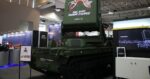
At DSEI 2025 in London, Estonian defense company Frankenburg introduced the Mark 1—a compact and cost-effective counter-unmanned aerial system (C-UAS) interceptor designed to neutralize small drones. Developed with affordability and modularity in mind, the Mark 1 aims to fill a critical gap in short-range air defense by offering a kinetic solution to drone swarms and Class I UAVs.
Frankenburg’s Entry into the C-UAS Market
Frankenburg is a relatively new entrant into the European defense sector. Founded in Estonia in the early 2020s, the company has focused on modular weapon systems and low-cost defensive technologies tailored for asymmetric threats. The emergence of mass drone usage in conflicts such as Ukraine has accelerated demand for scalable C-UAS solutions—particularly those that can be mass-produced and deployed across multiple echelons of force protection.
The Mark 1 represents Frankenburg’s first publicly unveiled product aimed squarely at this market segment. According to company representatives at DSEI 2025, development began in late 2023 with internal funding and support from Estonian defense innovation grants. The system has reportedly undergone limited field testing with Estonian Defense Forces (EDF) units since mid-2024.
Mark 1 Design Overview
The Mark 1 is a man-portable or vehicle-mounted kinetic interceptor system designed to engage Group I UAVs (under ~20 kg) within visual line-of-sight ranges. Key features include:
- Interceptor Type: Electrically launched projectile with onboard guidance fins
- Guidance: Optical tracking with onboard seeker (likely EO/IR or IR-only)
- Range: Effective engagement range up to approximately 800 meters
- Warhead: Fragmentation or impact kinetic kill; warhead options remain undisclosed
- Launcher Configuration: Quad-cell tube launcher; reloadable
- Sensors: Integrated optical sensor suite; optional radar cueing from external SHORAD/CUAS systems
- C2 Integration: STANAG-compatible digital interface for networked operations
The system is designed for use by dismounted infantry or mounted on light tactical vehicles such as ATVs or MRAPs. Its small form factor allows it to be deployed rapidly during mobile operations or base protection tasks.
Tactical Role in Layered Air Defense Architecture
The Mark 1 is not intended to replace high-end SHORAD systems like NASAMS or IRIS-T SLM but rather to augment them at close range where saturation attacks by FPV drones or loitering munitions pose a major threat. Its primary role is as a last-layer interceptor—engaging threats that have penetrated outer defenses or bypassed jamming/spoofing layers.
This aligns with NATO’s evolving doctrine of layered air defense against low-cost aerial threats. In particular, it complements soft-kill CUAS systems such as RF jammers and GNSS spoofers by providing a hard-kill option when electronic countermeasures fail or are overwhelmed.
A Cost-Driven Approach to Drone Defense
A key design driver behind the Mark 1 is affordability. According to Frankenburg officials at DSEI, each interceptor round costs “significantly less than $10,000,” making it viable for high-volume use against low-value targets like commercial quadcopters used in reconnaissance or kamikaze roles.
This cost point places it well below more sophisticated interceptors like Raytheon’s Coyote Block II ($100K+) or even some loitering munitions used defensively. While lacking their range and multi-role flexibility, the Mark 1 fills an urgent niche where economics often dictate engagement decisions—especially on front lines where dozens of drones may appear daily.
Status of Testing and Future Development Plans
The current version of the Mark 1 remains pre-production but has reportedly completed several live-fire trials under EDF observation. A limited user evaluation phase is expected in Q4 2025 with potential procurement decisions by early-to-mid-2026 depending on performance outcomes.
Future enhancements under consideration include improved seeker algorithms using AI-based target discrimination (to avoid wasting rounds on birds or decoys), integration with passive acoustic sensors for silent detection environments, and modular warheads tailored for different drone types (e.g., net capture vs fragmentation).
C-UAS Market Context and Competitive Landscape
The global C-UAS market is becoming increasingly crowded as militaries scramble to counter ubiquitous drone threats seen across recent conflicts—from Syria and Libya to Nagorno-Karabakh and Ukraine. Systems like Rheinmetall’s Skynex turreted gun platform, DroneShield’s DroneSentry-X RF jammer suite, Israel’s Iron Beam laser demonstrator, and Anduril’s Lattice OS all compete across different layers of threat engagement.
The Mark 1 does not aim to compete directly with these high-end solutions but rather offers an affordable plug-in layer that can be fielded widely—even by smaller nations lacking deep procurement budgets. This could make it attractive not only within NATO but also among partner nations seeking scalable CUAS capabilities without committing to expensive radar-guided interceptors or directed energy weapons still years from maturity.
Conclusion: A Practical Addition to Modern Air Defense Toolkits
If field testing confirms its reliability and effectiveness under operational conditions—including cold weather performance critical for Baltic users—the Frankenburg Mark 1 could become a valuable addition to NATO-aligned C-UAS inventories. Its simplicity, affordability, and tactical flexibility make it well-suited for distributed force protection missions where traditional SHORAD systems are too costly or cumbersome.