Fincantieri Unveils DEEP: A Modular Underwater Drone System for Multi-Domain Naval Operations
-
| Defense Industry & Geopolitics Observer

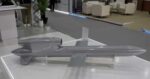
Italian shipbuilding giant Fincantieri has launched its first underwater drone system under the name “DEEP” (Deployable Expeditionary Engagement Platform), marking a strategic expansion into the unmanned undersea domain. The modular and scalable system is designed to support a broad spectrum of naval missions including intelligence gathering, mine countermeasures (MCM), and seabed warfare.
Introducing DEEP: A Modular Approach to Undersea Autonomy
Unveiled at Euronaval 2024 and officially launched in October 2025, Fincantieri’s DEEP program represents a significant milestone in Italy’s push to modernize its naval capabilities through autonomous systems. The DEEP platform is not a single vehicle but rather an ecosystem of interoperable unmanned underwater vehicles (UUVs), sensors, and mission modules designed around a common architecture.
The system is built with modularity at its core. This allows operators to tailor configurations based on mission profiles—ranging from long-endurance intelligence, surveillance and reconnaissance (ISR) operations to rapid-response mine countermeasure tasks or infrastructure inspection in contested littoral zones. According to Fincantieri officials at the launch event in La Spezia, the DEEP architecture supports both autonomous and optionally tethered modes of operation.
The initial configuration includes:
- A medium-size Autonomous Underwater Vehicle (AUV) with endurance exceeding 24 hours
- Modular payload bays for sonar arrays, synthetic aperture sonar (SAS), or environmental sensors
- A deployable docking station compatible with surface vessels or seabed deployment
- AI-enabled mission planning software developed in partnership with Italian defense tech firms
Strategic Context: Italy’s Drive Toward Seabed Dominance
The launch of DEEP comes amid growing global interest in seabed warfare capabilities—especially following incidents involving undersea critical infrastructure like pipelines and communication cables. NATO allies have increasingly emphasized the need to monitor and protect these assets from sabotage or espionage.
Italy’s Ministry of Defence has identified subsea domain awareness as a priority area under its latest multi-year defense planning document (Documento Programmatico Pluriennale – DPP). The Italian Navy’s future force structure envisions integration of autonomous systems like DEEP into both expeditionary maritime groups and homeland defense missions along the Mediterranean coastlines.
By developing an indigenous UUV capability through Fincantieri—a company traditionally known for surface combatants like FREMM frigates and LSS support ships—Italy aims to reduce reliance on foreign platforms while aligning with NATO interoperability standards. The system is reportedly compliant with STANAG protocols for data sharing across allied navies.
Technical Specifications and Capabilities
While full technical details remain classified or proprietary due to ongoing military evaluation trials, publicly disclosed specifications indicate that the baseline AUV unit within the DEEP family measures approximately 4 meters in length with a dry weight under 500 kg. It can operate at depths exceeding 1,000 meters depending on payload configuration.
The propulsion system uses low-noise electric thrusters optimized for long-duration loitering missions. Navigation is supported by inertial navigation systems (INS) integrated with Doppler velocity logs (DVL) and GPS surfacing routines. Communications are handled via acoustic modems when submerged and RF/satellite links when surfaced or docked.
Key mission payloads include:
- Synthetic Aperture Sonar (SAS) for high-resolution seafloor imaging
The AI-driven software suite allows operators to define mission parameters such as search grids or target recognition patterns prior to deployment. Post-mission data fusion tools enable rapid analysis onboard motherships or command centers ashore.
Dual-Use Potential: Civilian Applications Beyond Defense
In addition to military use cases, Fincantieri has emphasized the dual-use potential of the DEEP platform. Civilian applications include offshore energy infrastructure inspection (e.g., wind farms or oil rigs), environmental monitoring in marine protected zones, search-and-rescue support during maritime disasters, and scientific oceanography missions.
This aligns with broader European Union initiatives promoting civil-military synergies in technological development—particularly within EU-funded programs like EDIDP (European Defence Industrial Development Programme) or EDF (European Defence Fund). Fincantieri may seek co-funding opportunities through these mechanisms as it matures the DEEP product line toward export readiness.
Competition in the European UUV Market Heats Up
The launch positions Fincantieri among a growing field of European players investing in autonomous underwater systems. France’s Naval Group has developed its D19 UUV family; Germany’s Atlas Elektronik offers SeaCat; Norway’s Kongsberg Maritime continues expanding its HUGIN series; while Saab’s AUV62 dominates Sweden’s segment.
What differentiates DEEP is its emphasis on modularity from inception—allowing faster adaptation cycles as mission requirements evolve. Moreover, integration within Italy’s broader naval modernization program could give it an edge in domestic procurement competitions over foreign alternatives.
If successfully adopted by the Italian Navy—and potentially offered via joint ventures across Mediterranean allies—DEEP could become a cornerstone capability for regional subsea security cooperation frameworks such as EUROMARFOR or NATO’s Maritime Command initiatives focused on hybrid threats below threshold conflict levels.
Next Steps: Trials and Operationalization Timeline
The first sea trials of the full-system prototype are scheduled for early Q1 2026 off La Spezia Naval Base under supervision from Marina Militare test units. These evaluations will focus on endurance validation, sensor calibration accuracy across depth strata, acoustic signature profiling under various loadouts, and AI behavior reliability during dynamic obstacle avoidance scenarios.
If successful, limited operational deployment could begin by late 2026 aboard multipurpose vessels such as Italy’s Thaon di Revel-class offshore patrol ships—which feature modular mission bays ideal for deploying containerized UUV control stations and recovery gear.
A full-rate production decision may follow pending results from these trials alongside budgetary allocations expected in Italy’s FY2027 defense budget cycle. Export marketing efforts are also underway targeting Mediterranean partners lacking indigenous UUV capabilities but seeking affordable entry points into subsea autonomy domains.
Conclusion: From Shipbuilder to Subsea Robotics Integrator
The introduction of DEEP marks more than just a product launch—it signals Fincantieri’s strategic pivot toward becoming an integrator of complex unmanned maritime systems spanning surface-to-seabed operations. As threats increasingly emerge below traditional detection thresholds—from mines to sabotage drones—the ability to deploy persistent autonomous platforms will be critical for future naval dominance.
If proven effective through trials and adopted widely across Italian forces—and potentially allied fleets—DEEP may establish itself not only as a tactical asset but also as a symbol of Europe’s growing independence in high-end naval robotics technologies amid shifting geopolitical dynamics beneath the waves.