DEARSAN Begins Construction of YMAG Mine Warfare Mothership for Turkish Navy
-
| Defense Industry & Geopolitics Observer

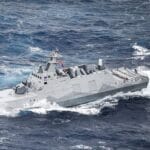
Turkish shipbuilder DEARSAN has officially commenced construction of the YMAG-class mine warfare mothership—a next-generation naval platform designed to serve as a command and control hub for unmanned mine countermeasure (MCM) operations. The vessel is expected to significantly enhance the Turkish Navy’s ability to conduct remote and autonomous mine-clearing missions in contested littoral environments.
Indigenous Design Tailored for Unmanned Mine Warfare
The YMAG (Yüzey Mayın Avlama Gemisi) project represents a major milestone in Turkey’s push toward autonomous naval capabilities. Developed under the coordination of Türkiye’s Defence Industry Agency (SSB), the vessel is being built by DEARSAN Shipyard in Tuzla, Istanbul. The design reflects a shift away from traditional manned minehunters toward a mothership-centric concept that leverages unmanned surface vehicles (USVs) and unmanned underwater vehicles (UUVs).
According to official specifications released by SSB and DEARSAN:
- Length: Approx. 90 meters
- Displacement: Estimated at 1,500–2,000 tons
- Crew: ~50 personnel (plus mission specialists)
- Flight Deck: Capable of supporting rotary-wing UAVs or light helicopters
- MCM Suite: Modular launch & recovery systems for UUVs/USVs; integrated sonar and C2 systems
The vessel will be equipped with advanced C4ISR infrastructure to coordinate multiple unmanned platforms simultaneously across air, surface, and subsurface domains. This aligns with NATO’s evolving doctrine on distributed maritime MCM operations.
MCM Ecosystem: Integration with Domestic Unmanned Platforms
The YMAG mothership is designed to operate in tandem with Turkey’s growing inventory of indigenous unmanned maritime systems. These include:
- ULAQ-ASW/ULAQ-MCM: USVs developed by ARES Shipyard and Meteksan Defense for anti-submarine warfare and mine countermeasures
- DZKK UUVs: Indigenous underwater drones developed under SSB programs for seabed mapping and mine identification
- KARGI & ALBATROS-S UAVs/USVs: Swarming-capable surface drones designed for reconnaissance and decoy roles
This integration is intended to enable stand-off detection and neutralization of naval mines without exposing manned assets or divers to risk. The mothership will serve as both a command node and logistical base—launching, recovering, recharging, and reprogramming deployed drones.
Tactical Role in A2/AD Littoral Environments
The strategic rationale behind the YMAG concept lies in enhancing Turkey’s operational freedom in anti-access/area denial (A2/AD) zones such as the Aegean Sea or Eastern Mediterranean—areas characterized by high mine threat potential near chokepoints or disputed waters.
Mines remain one of the most cost-effective asymmetric threats in maritime warfare. Legacy MCM vessels are often slow-moving and vulnerable due to their proximity requirements. By contrast, an autonomous mothership model allows operators to remain outside contested zones while deploying expendable or semi-autonomous assets forward.
This approach mirrors similar initiatives underway in NATO navies—including France’s SLAM-F program with Thales’ MMCM system and the UK Royal Navy’s Project Wilton—indicating convergence toward modular MCM architectures based on offboard robotics.
Program Timeline and Strategic Implications
The keel-laying ceremony took place at DEARSAN’s Tuzla facility on September 27th, attended by senior officials from SSB and the Turkish Naval Forces Command. While no formal delivery date has been announced publicly, initial sea trials are expected around late-2026 based on standard construction timelines.
This program forms part of Türkiye’s broader “Blue Homeland” (Mavi Vatan) maritime doctrine that emphasizes securing national interests across surrounding seas through indigenous defense production. It also complements other naval modernization efforts such as:
- TGC Anadolu LHD amphibious assault ship
- I-class frigates under MILGEM Phase II
- SATCOM-enabled naval drone integration projects led by ASELSAN/HAVELSAN
- AIP-capable Reis-class submarines based on Type-214TN design
A Regional Leader in Autonomous Naval Capabilities?
If successfully fielded on schedule with full integration of domestic USV/UUV capabilities, the YMAG could position Turkey among a small group of nations deploying fully networked autonomous MCM flotillas—a capability currently led by France-UK MMCM efforts and U.S. LCS-based modules.
The project also signals increased confidence in Türkiye’s local defense industry ecosystem—including naval electronics integrators like HAVELSAN (C4ISR), ASELSAN (sonar/EW), STM (platform engineering), TÜBİTAK-SAGE (payload development), as well as smaller drone-tech startups contributing modular payloads or autonomy software stacks.
Conclusion: A Strategic Enabler for Future Naval Operations
The launch of construction on the YMAG-class marks more than just another hull—it represents a doctrinal shift toward distributed maritime operations enabled by robotics. As navies worldwide grapple with contested littorals filled with legacy mines or improvised threats like IED-style seabed devices or loitering torpedoes, Turkey’s investment into an autonomous MCM mothership may offer both operational flexibility and export potential.