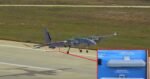
China’s Legacy J-6 Fighter Converted into Combat UAV: First Public Appearance Raises Strategic Questions
-
| Aerospace & UAV Researcher

China has publicly unveiled a converted J-6 fighter jet in an unmanned configuration for the first time. The appearance of this Cold War-era aircraft repurposed as a drone highlights Beijing’s continued investment in low-cost massed airpower and electronic warfare deception tactics. The development may signal broader doctrinal shifts within the People’s Liberation Army Air Force (PLAAF) regarding attritable air assets and swarm tactics.
First Public Sighting of the J-6 Drone
The unmanned variant of the J-6 was spotted at an undisclosed location in China during an official military event in mid-September 2025. Images circulated online show the aircraft bearing PLAAF markings but lacking a cockpit canopy—clear visual confirmation of its drone conversion. The platform was displayed alongside other manned and unmanned systems, suggesting its integration into larger operational concepts.
The Aviationist first reported on the sighting on September 17, 2025. While rumors and satellite imagery had hinted at such conversions for years, this marks the first time Chinese authorities have allowed public documentation of the system.
According to open-source intelligence (OSINT) analysts who examined high-resolution imagery of the airframe, modifications include sealed cockpit areas, likely housing avionics or control systems; altered antenna arrays; and potential datalink equipment mounted externally. No visible weapons were attached during this display.
The J-6 Platform: From MiG Clone to Drone
The original Shenyang J-6 is a Chinese-built version of the Soviet MiG-19 “Farmer,” developed in the late 1950s and fielded extensively by China through the 1980s. Powered by twin WP-6 turbojets (a copy of Russia’s RD-9B), it was known for its speed (up to Mach 1.45), but limited range and payload capacity by modern standards.
Despite being retired from frontline service decades ago, thousands were produced—estimates range from 3,000 to over 4,000 units—making it one of China’s most numerically significant Cold War-era platforms. Many airframes were stored rather than scrapped.
Starting in the early 2010s, reports emerged that some mothballed J-6s were being converted into remotely piloted aircraft (RPAs). Satellite imagery from bases like Dingxin Airbase showed unusual flight activity consistent with drone operations involving legacy fighters. U.S. defense officials confirmed these conversions as early as 2013 in Pentagon assessments on Chinese military modernization.
Operational Roles: Decoy or Strike Asset?
While China has not disclosed official doctrine for these platforms, analysts suggest multiple possible roles:
- EW Decoy: The most likely use is as radar decoys during saturation attacks against enemy integrated air defense systems (IADS). Their radar cross-section mimics manned fighters like Su-27/J-11 class jets.
- Saturation Swarm: Inexpensive drones like these could overwhelm enemy defenses by sheer volume when used alongside cruise missiles or stealthier UCAVs such as the GJ-11 Sharp Sword.
- Kinetic Strike: With modifications to carry basic munitions or loitering warheads, they could be used for one-way strike missions against fixed targets or naval assets.
This aligns with broader PLA doctrine emphasizing asymmetric capabilities to counter technologically superior adversaries such as U.S. carrier strike groups or advanced IADS networks deployed around Taiwan or in Indo-Pacific flashpoints.
Advantages and Limitations
The conversion of old fighters into drones offers several advantages:
- Cost Efficiency: Leveraging existing airframes reduces unit cost compared to building new UCAVs from scratch.
- High-Speed Penetration: Even as legacy designs, Mach-capable platforms can close distances faster than propeller-driven drones like Shahed-series UAVs used by Iran/Russia.
- Tactical Flexibility: Can be employed in peacetime training exercises to simulate enemy aircraft or test IADS resilience under saturation conditions.
However, limitations are significant:
- Aging Airframes: Structural fatigue may limit sortie rates or reliability under combat conditions.
- Lack of Stealth: High radar signature makes them vulnerable unless used en masse or as decoys intentionally drawing fire.
- Datalink Vulnerabilities: Without robust anti-jamming links or autonomy features, they may be susceptible to EW disruption by adversaries like Japan or U.S. forces equipped with advanced jammers such as EA-18G Growler platforms.
A Broader Trend Toward Legacy Drone Conversions
This development mirrors similar efforts globally where aging manned platforms are repurposed into unmanned roles:
- The U.S. Air Force has long operated QF-series target drones based on retired F-4 Phantoms and F-16s for live-fire exercises—and potentially future loyal wingman roles under programs like Skyborg.
- Iran has converted older F-5 derivatives into kamikaze drones reportedly used against Kurdish targets and Israeli-linked shipping lanes via proxy forces.
The scale at which China appears to be pursuing this concept—potentially hundreds if not thousands of conversions—could offer unique strategic leverage if integrated with AI-enabled command-and-control networks such as those tested under PLA’s “intelligentized warfare” initiatives since at least 2019.
Sourcing Challenges and Intelligence Gaps
No official statement from China’s Ministry of National Defense accompanied this unveiling. As such, many technical details remain unknown—including control range limits; autonomy levels; payload options; endurance; and whether these drones are recoverable post-mission or intended for one-way use only (as expendable assets).
This opacity is consistent with PLA information discipline but complicates threat assessments by regional actors including Taiwan’s Ministry of National Defense (MND), Japan Self Defense Forces (JSDF), and INDOPACOM planners—all increasingly focused on counter-UAS measures amid rising tensions over Taiwan Strait scenarios post–2027 timeline projections suggested by U.S. Indo-Pacific Command leaders.
Conclusion: Strategic Implications Beyond Symbolism
The public debut of a J-6 drone is more than symbolic—it reflects China’s evolving approach toward scalable unmanned warfare using both high-end UCAVs like WZ-series stealth drones and low-cost attritable assets derived from Cold War inventory stockpiles. This multi-tiered approach could complicate adversary planning cycles across multiple domains—from air defense saturation to electronic deception—and offers Beijing a low-risk way to experiment with massed aerial robotics at scale before committing more advanced systems operationally.