China Unveils AJX002 XLUUV to Expand Naval Pressure in Taiwan Strait
-
| Aerospace & UAV Researcher

China has reportedly begun deploying its new AJX002 extra-large unmanned underwater vehicle (XLUUV) as part of a broader strategy to assert naval dominance in the Taiwan Strait. This development marks a significant leap in Beijing’s undersea warfare capabilities and underscores its growing investment in autonomous maritime systems for intelligence gathering and asymmetric deterrence.
AJX002: China’s Foray into XLUUV-Class Capabilities
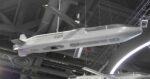
The AJX002 represents China’s most ambitious unmanned underwater platform to date. While official specifications remain classified, open-source imagery and defense analysis suggest that the system falls into the “extra-large” category of UUVs—comparable in size and mission scope to the U.S. Navy’s Orca XLUUV developed by Boeing and Huntington Ingalls Industries.
The platform is believed to be over 15 meters long with a displacement exceeding 30 tons. Its modular design likely allows for interchangeable mission payloads including ISR (intelligence, surveillance, reconnaissance), mine-laying modules, electronic warfare packages, or even anti-submarine warfare (ASW) payloads. The propulsion system is presumed to be diesel-electric with lithium-ion battery packs enabling extended submerged endurance—potentially weeks at low speed.
Satellite imagery from Chinese naval yards and leaked photos from PLAN-affiliated sources show at least two hulls under construction or testing as of mid-2025. The vehicles appear to feature low-observable shaping and conformal sonar arrays along the bow section—suggesting an emphasis on stealthy ISR roles.
Strategic Implications for the Taiwan Strait
The deployment of the AJX002 comes amid heightened tensions across the Taiwan Strait. As part of its gray-zone tactics, Beijing has increasingly relied on non-kinetic pressure through airspace incursions by PLA aircraft and maritime presence operations involving coast guard vessels and fishing militias. The addition of stealthy UUVs introduces a new layer of complexity for Taiwanese defense planners.
Unlike manned submarines—which are limited by crew endurance and risk escalation if detected—autonomous platforms like the AJX002 can loiter undetected for extended periods. They are ideal for persistent ISR around sensitive chokepoints such as the Bashi Channel or near Taiwanese naval bases like Zuoying.
Moreover, XLUUVs could be used preemptively in conflict scenarios to deploy smart mines or act as decoys against ASW assets. If equipped with acoustic sensors or passive sonar arrays, they could also contribute targeting data for long-range anti-ship missile systems deployed elsewhere.
Comparative Programs: How Does AJX002 Stack Up?
The global race toward large-diameter UUVs has accelerated over the past decade. The United States leads with its Orca XLUUV program—a 15-meter platform designed initially for mine-laying but expandable via modular payload bays. South Korea recently unveiled its own large UUV prototype under Hanwha Ocean’s development roadmap.
Russia has also invested heavily in autonomous undersea systems such as the Poseidon nuclear-powered torpedo/UUV hybrid—though it serves strategic deterrent purposes rather than tactical ISR or mine warfare roles.
The AJX002 appears tailored more toward regional sea control than global power projection. Compared with Orca’s open-ocean endurance focus, China’s system may prioritize stealthy littoral operations within First Island Chain constraints—particularly around Taiwan and disputed areas of the South China Sea.
Industrial Base and Development Timeline
The AJX002 is reportedly being developed by a consortium led by Harbin Engineering University (HEU), which has long served as a hub for PLAN underwater vehicle R&D. Other contributors likely include CSSC-affiliated shipyards such as Wuchang Shipbuilding Industry Group Co., which previously built experimental AUV testbeds like HSU001—a smaller predecessor publicly unveiled during China’s 2019 National Day parade.
Open-source tracking indicates that initial prototype testing began around late 2023 at facilities near Sanya naval base on Hainan Island—a key submarine bastion within China’s southern theater command structure. By early 2025, two units were observed undergoing harbor trials with support barges nearby—consistent with dry-deck shelter integration tests or communications uplink evaluations.
This rapid development cycle suggests strong institutional backing from both PLAN leadership and civilian-military fusion initiatives aimed at accelerating dual-use AI-autonomy technologies across domains.
Tactical Roles Beyond Surveillance
While much attention focuses on ISR missions, analysts caution that large UUVs like AJX002 may eventually carry kinetic payloads—including lightweight torpedoes or loitering munitions launched via vertical tubes or modular bays. This would enable strike options without risking manned assets—a key feature in China’s doctrine emphasizing asymmetric denial strategies against superior naval forces such as those fielded by the United States or Japan.
- Mine Warfare: Remotely delivered bottom mines could deny access routes around key straits without overt escalation signals.
- SIGINT/ELINT Collection: Passive sensors could gather emissions data from Taiwanese radar sites or allied warships transiting nearby waters.
- C4ISR Relay Nodes: Acting as mobile communication hubs between seabed sensor networks and surface combatants during degraded satellite conditions.
Challenges Ahead: Autonomy vs Command Control
A major technical hurdle remains secure command-and-control (C2) over long-duration missions in contested electromagnetic environments—a known vulnerability for all navies pursuing large AUV programs. If jammed or spoofed via GNSS interference (a tactic already employed near Taiwan), autonomous vehicles must rely on onboard decision-making algorithms while avoiding unintended escalation through misidentification or navigation errors.
This raises questions about how much autonomy Beijing is willing to delegate—and whether AI-enabled targeting would comply with international norms regarding lethal autonomous weapons systems (LAWS). So far there is no public evidence that AJX002 carries offensive weapons routinely—but modularity leaves this option open depending on future doctrinal evolution within PLA Navy circles.
Conclusion: A New Era of Undersea Competition
The emergence of China’s AJX002 marks a significant milestone in undersea warfare dynamics across East Asia. While still shrouded in secrecy regarding full capabilities and deployment numbers, its very existence signals Beijing’s intent to saturate regional waters with unmanned platforms capable of surveillance, disruption, and potentially strike—all while minimizing attribution risks inherent in manned confrontations.
Taiwanese defense planners—and their partners among Indo-Pacific navies—will need to adapt quickly through enhanced ASW training regimes focused on detecting low-signature threats below periscope depth. The underwater domain may soon become just as contested—and autonomous—as airspace above it.