CA-1 Europa: Germany’s Stealth UCAV Aims to Revolutionize Collaborative Combat in Europe
-
| Aerospace & UAV Researcher

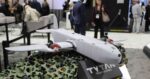
Germany has unveiled the CA-1 “Europa”, a next-generation stealth Unmanned Combat Aerial Vehicle (UCAV) designed to serve as a force multiplier in future European air combat operations. Developed by Airbus Defence and Space under a national initiative parallel to the Franco-German-Spanish Future Combat Air System (FCAS), the CA-1 aims to deliver scalable autonomous strike capabilities and seamless manned-unmanned teaming across NATO-aligned forces.
CA-1 Europa: A National Response to Evolving Threats
The CA-1 Europa program emerged as part of Germany’s effort to maintain sovereign capabilities in unmanned aerial warfare while contributing to broader European defense integration. While FCAS continues its multinational development trajectory with a target operational date beyond 2040, Berlin has opted to accelerate its own unmanned combat capability through a parallel track. The CA-1 is intended both as an interim solution and a complementary platform for FCAS’s “Remote Carrier” concept.
Airbus Defence leads the project with support from German SMEs and research institutions under the Bundeswehr’s “Future Air Combat Capabilities” (Zukunftsfähige Luftkampffähigkeiten) roadmap. The first prototype is expected by 2027, with initial flight testing planned shortly thereafter. The program has received funding under Germany’s defense innovation budget and is aligned with NATO’s push for greater interoperability among unmanned systems.
Design Philosophy: Stealth Meets Modularity
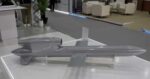
The CA-1 features a flying wing design optimized for low radar cross-section (RCS), echoing design cues from Northrop Grumman’s X-47B and Dassault nEUROn demonstrators. Its composite structure integrates radar absorbent materials (RAM) and internal weapons bays for reduced signature management. The aircraft is reportedly subsonic but optimized for high-subsonic cruise efficiency at medium altitudes.
Key design elements include:
- Stealth shaping: blended fuselage-wing configuration with no vertical surfaces
- Internal payload bays: capable of carrying precision-guided munitions or ISR pods
- Modular mission systems: swappable sensor or EW payloads depending on mission profile
- Tactical range: estimated at over 1500 km with optional aerial refueling capability
- C2 architecture: compliant with NATO STANAGs including Link-16 and future FCAS data links
The aircraft is designed for runway-independent operations using semi-prepared strips or mobile launch systems if required—a nod toward dispersed operations doctrine under peer-threat environments.
Loyal Wingman Role and Collaborative Autonomy
A central feature of the CA-1 is its ability to operate as part of a manned-unmanned team—serving as a “Loyal Wingman” alongside Eurofighter Typhoons or future sixth-generation fighters. It will be equipped with onboard AI enabling real-time tactical decision-making within rules of engagement defined by human operators.
This includes capabilities such as:
- Semi-autonomous strike missions: against ground-based air defenses or high-value targets
- SIGINT/ELINT escort roles: using modular electronic warfare payloads
- Sacrificial decoy behavior: drawing enemy fire or jamming radars ahead of manned assets
- MUM-T coordination: dynamic task allocation via secure mesh networks among multiple platforms
The AI stack is being developed in collaboration with German research labs under ethical autonomy frameworks aligned with EU regulations. Airbus has confirmed that human-on-the-loop control will remain mandatory for kinetic engagements.
A Bridge Toward FCAS Remote Carriers?
The CA-1 may serve as a technological stepping stone toward the more ambitious Remote Carrier component of FCAS—a system-of-systems architecture that envisions swarms of expendable or semi-expendable drones operating alongside manned Next Generation Fighters (NGFs). While France’s Dassault Aviation leads NGF development, Germany has taken point on Remote Carriers through Airbus.
The CA-1 differs from Remote Carriers in that it is not expendable but rather reusable and reconfigurable—filling a capability gap between attritable drones like Boeing MQ-28 Ghost Bat and high-end HALE UAVs like EuroMALE. Analysts suggest that lessons learned from CA-1 flight testing could directly feed into RC concepts including swarm coordination algorithms, low-latency comms resilience under jamming conditions, and multi-platform C2 fusion.
Industrial Implications and Export Potential
The unveiling of the CA-1 also signals Germany’s intent to assert leadership within Europe’s UAV industrial base—a domain historically dominated by U.S., Israeli, and increasingly Turkish platforms. By pursuing an indigenous UCAV platform with modular architecture and NATO interoperability baked in from inception, Berlin positions itself as both an operator and potential exporter within allied markets constrained by ITAR restrictions on U.S.-origin tech.
If successful, the program could offer participating SMEs long-term workshare opportunities across avionics integration, propulsion modules (likely based on modified commercial turbofans), AI software stacks, secure comms suites (possibly involving HENSOLDT), and composite manufacturing techniques pioneered during Eurodrone development.
Outlook: Challenges Ahead Before Operationalization
The road ahead remains complex. Key challenges include validating autonomous behaviors under contested EW environments; achieving sufficient endurance without compromising RCS; ensuring secure C2 links against cyber/GNSS spoofing threats; and integrating into legacy airspace control regimes still biased toward manned aviation paradigms.
The Bundeswehr has yet to define firm procurement numbers or timelines beyond prototype stage—but early indications suggest interest in fielding squadrons by early-to-mid next decade if trials prove successful. Integration into NATO exercises like Air Defender could provide valuable operational feedback loops before full-scale deployment decisions are made.