AUSA 2025: Northrop Grumman’s PGS Weapon System Delivers Mobile Precision Fires for Infantry C-UAS and Defilade Engagements
-
| Defense Systems Analyst

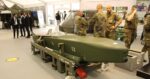
At AUSA 2025, Northrop Grumman unveiled its new Portable Guided Strike (PGS) weapon system—a lightweight precision strike capability designed to empower dismounted infantry with mobile firepower against unmanned aerial systems (UAS), light vehicles, and defilade targets. The system reflects a growing demand for organic counter-UAS and guided munitions at the squad level in modern multi-domain operations.
PGS Concept: Lightweight Precision Fires for the Squad
The Portable Guided Strike (PGS) is a man-portable loitering munition system developed by Northrop Grumman to address emerging battlefield requirements for precision engagement of time-sensitive and concealed targets. Weighing under 10 kg in total—including munition and launcher—the PGS is designed to be carried and operated by a single soldier. The system includes a disposable launch tube with an integrated fire control unit and a guided munition capable of autonomous or operator-directed flight.
According to Northrop representatives at AUSA 2025, the PGS fills a critical gap between shoulder-fired unguided weapons like the AT4 or M72 LAW and heavier crew-served systems such as Javelin or loitering munitions launched from vehicle platforms. Its key advantage lies in its portability combined with GPS/INS-aided guidance and real-time target acquisition via electro-optical/infrared (EO/IR) sensors.
Target Set: From Drones to Dug-In Positions
The PGS is optimized for engaging:
- Low-flying Group 1–2 UAS (e.g., quadcopters or fixed-wing drones under 25 kg)
- Lightly armored vehicles or technicals
- Infantry in defilade positions such as trenches or behind cover
This versatility is enabled by its seeker suite—believed to include EO/IR sensors with onboard processing—and selectable fuzing modes. While specific warhead details remain undisclosed, the system likely carries a focused blast-fragmentation payload suitable for both anti-personnel and light anti-materiel effects.
The ability to engage targets in cover or concealment addresses one of the most persistent tactical challenges faced by infantry units—namely the inability to suppress enemies firing from protected positions without calling in indirect fires or air support. In this sense, PGS functions as an organic precision fires solution akin to a miniaturized loitering munition.
Guidance System and Loitering Capability
The PGS employs hybrid navigation combining GPS/INS guidance with terminal EO/IR seeker homing. This allows it to be used in both pre-planned strike mode—where coordinates are entered prior to launch—and dynamic targeting mode where the operator can designate targets via tablet or handheld controller during flight.
Northrop has not disclosed exact loiter time or range figures but stated that it can operate within “tactical engagement distances” consistent with platoon-level operations. Based on similar systems like AeroVironment’s Switchblade 300—which offers ~10 km range and ~15 minutes endurance—it is plausible that PGS falls within this performance envelope.
The inclusion of autonomous target recognition features is also being explored under future software upgrades. This would allow the munition to autonomously identify drone signatures or thermal profiles matching enemy combatants even without direct operator input—though such features would require robust safeguards against fratricide.
Operational Use Cases and Tactical Integration
The primary use case envisioned for PGS is rapid-response counter-UAS defense at squad level—especially in urban terrain where small drones are increasingly used for ISR or FPV attacks. Unlike traditional SHORAD systems that rely on radar cueing or vehicle-mounted interceptors, PGS provides dismounted troops with immediate response capability against low-signature drone threats.
Additional scenarios include:
- Bunker busting during room-clearing operations
- Ambush response against technicals or motorbike-borne attackers
- Spoiling attacks on enemy mortar teams before they displace
Tactically, each infantry squad could be equipped with multiple rounds stored in rucksacks alongside disposable launch tubes. Fire control could be integrated into existing Nett Warrior-type soldier systems using Android Tactical Assault Kit (ATAK)-compatible interfaces.
Comparison with Existing Systems
In terms of role and form factor, the closest analogues to PGS include:
- AeroVironment Switchblade 300: Widely fielded loitering munition used by US Army; longer range but bulkier ground control station required.
- DND DefTech ALTIUS-600M: Larger modular loiterer; not man-portable without vehicle support.
- IWI Rotem Alpha: Israeli quadcopter-based loiterer; vertical takeoff but limited endurance/loadout.
The key differentiator of PGS lies in its balance between portability, precision guidance, multi-target flexibility (including air-to-air), and minimal training footprint. If priced competitively (~$25k–$40k per round), it could become a staple item across NATO light infantry formations facing drone-saturated battlefields like Ukraine or Gaza-style urban combat zones.
Status of Development and Field Testing Plans
The version displayed at AUSA was described as Technology Readiness Level (TRL) 6–7—indicating prototype-level maturity validated under simulated operational conditions. According to Northrop officials speaking off-record at the event, limited user evaluations are expected with US Army light forces beginning Q1/Q2 FY2026 under Rapid Capabilities Office oversight.
No formal procurement contract has been announced yet; however, given ongoing US Army interest in expanding organic counter-drone capabilities under programs like LIDS (Low Altitude Defense System) Increment II—and recent solicitations from SOCOM for man-portable kinetic interceptors—the PGS may find traction through urgent needs statements rather than traditional acquisition channels initially.
Implications for Future Infantry Combat Doctrine
If adopted widely, systems like PGS could reshape how light infantry conducts distributed operations across contested environments. By embedding precision strike tools directly into squads without reliance on external fires coordination chains—or vulnerable radio links—they enhance autonomy while reducing sensor-to-shooter latency dramatically.
This aligns closely with emerging US Army Multi-Domain Operations doctrine emphasizing decentralized mission command supported by resilient kill chains at echelon. Moreover, as adversaries increasingly field low-cost drones en masse—as seen in Ukraine—the ability of small units to self-defend while simultaneously striking back becomes essential not optional.