ArianeGroup to Develop M51.4 SLBM for France’s Strategic Deterrent
-
| Defense Systems Analyst

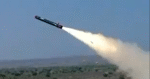
France is advancing its strategic nuclear deterrent with the development of the M51.4 submarine-launched ballistic missile (SLBM), a next-generation upgrade to its existing M51 family. ArianeGroup has secured a contract from the French Directorate General of Armaments (DGA) to lead this critical program, reinforcing France’s long-term commitment to an independent second-strike capability.
Strategic Context: Sustaining France’s Sea-Based Nuclear Triad
The M51.4 program is central to maintaining the credibility of France’s Force de dissuasion (nuclear deterrence force), particularly its sea-based component deployed aboard Triomphant-class nuclear-powered ballistic missile submarines (SSBNs). As one of only three NATO members with an independent nuclear arsenal—alongside the United States and the United Kingdom—France relies on continuous at-sea deterrence as a cornerstone of its national defense strategy.
The current M51 series entered service in 2010 as a successor to the older M45 missiles. The latest deployed variant, the M51.3, reportedly offers enhanced range and accuracy over earlier versions. With global security dynamics shifting—particularly with Russia’s modernization of its strategic forces and China’s expanding nuclear arsenal—France aims to maintain technological parity through iterative upgrades like the M51.4.
M51 Missile Lineage and Capabilities
The original M51 SLBM was developed by EADS Space Transportation (now ArianeGroup) and entered operational service in 2010 aboard Le Terrible SSBN. The missile is approximately 12 meters long and weighs around 52 tonnes at launch. It uses solid-fuel propulsion across three stages and can carry multiple independently targetable reentry vehicles (MIRVs), each equipped with TN75 or TNO thermonuclear warheads.
Key specifications of previous variants include:
- M51.1: Initial production model; estimated range ~6,000 km with six MIRVs.
- M51.2: Improved guidance; possibly extended range; introduced mid-2010s.
- M51.3: Entered service in late 2023; features upgraded avionics and improved penetration aids against modern missile defenses.
The upcoming M51.4 variant is expected to build upon these enhancements by integrating new propulsion technologies and further hardening against countermeasures such as anti-ballistic missile (ABM) systems or electronic warfare threats.
ArianeGroup Contract Details and Development Timeline
The French Ministry of Armed Forces announced on June 17, 2024 that it had awarded ArianeGroup a contract for full-scale development of the M51.4 SLBM under the aegis of DGA’s strategic programs division (DGA Essais de missiles). While financial terms were not disclosed publicly, similar past contracts suggest multi-billion-euro commitments spread over a decade-long development cycle.
ArianeGroup will be responsible for systems engineering, propulsion integration, guidance systems upgrades, testing campaigns—including land-based test firings—and ultimately preparing for sea trials aboard SSBN platforms before operational deployment in the early-to-mid 2030s timeframe.
This effort will also leverage synergies from ArianeGroup’s space launch vehicle expertise (notably from Ariane 5/6 programs), particularly in solid-propellant motor design and high-reliability avionics suited for extreme environments like deep-sea launch tubes or exo-atmospheric flight phases.
Integration with Triomphant-Class SSBNs
The four Triomphant-class submarines—Le Triomphant, Le Téméraire, Le Vigilant, and Le Terrible—form France’s sole platform for launching strategic nuclear weapons at sea. Each submarine carries up to 16 vertical launch tubes compatible with all variants of the M45/M51 series.
The introduction of any new SLBM variant requires compatibility validation through dry dock integration tests followed by submerged test firings from an operational SSBN platform under realistic conditions. This process typically spans several years due to stringent safety protocols governing nuclear weapon delivery systems.
The French Navy has already begun retrofitting some SSBNs to accommodate newer variants like the M51.3; similar modifications will be required for full integration of the future M51.4 system—including potential updates to fire control software (Système de Conduite de Tir du Missile Balistique – SCTMB) and onboard inertial navigation systems.
Nuclear Warhead Compatibility: TNO Payload Continuity
The payload section of all modern French SLBMs is designed around modular reentry vehicles carrying thermonuclear warheads developed by CEA/DAM (Commissariat à l’énergie atomique et aux énergies alternatives / Direction des applications militaires). The current warhead standard is believed to be Tête Nucléaire Océanique (TNO), which replaced older TN75 warheads beginning around 2015–2016.
TNO reportedly offers improved safety features (insensitive explosives), higher yield-to-weight ratios, hardened electronics against EMP effects, and better penetration capabilities against ABM defenses—all within MIRV-compatible configurations deployable via post-boost vehicles on each missile bus segment.
No major changes are expected in warhead design for M51.4 deployment; however, enhancements in reentry vehicle maneuverability or decoy deployment may be incorporated as part of survivability upgrades against emerging countermeasures such as directed-energy weapons or space-based sensors under development by peer adversaries.
Industrial Base Implications and Strategic Autonomy
This program reinforces France’s longstanding doctrine of strategic autonomy—not only politically but industrially—by ensuring that all key components from propulsion motors to guidance electronics are developed domestically or within trusted European supply chains led by ArianeGroup subsidiaries such as Safran Herakles or Airbus Defence & Space units involved in avionics production.
The project also sustains high-skilled employment across multiple sites including Les Mureaux (systems engineering), Le Haillan/Bordeaux (guidance systems), Saint-Médard-en-Jalles (propulsion units), and Île Longue naval base where final assembly/loading operations occur under tight security protocols managed jointly by DGA Naval Systems teams and French Navy personnel.
Conclusion: Future-Proofing Deterrence Amid Strategic Uncertainty
The development of the M51.4 represents more than just another missile upgrade—it signals Paris’ intent to preserve credible second-strike capabilities well into mid-century amid growing uncertainty about arms control regimes like New START or rising geopolitical tensions involving peer competitors equipped with advanced ABM networks or hypersonic platforms.
If delivered on schedule—with successful validation firings likely occurring between 2028–2031—the M51.4 will ensure that France retains an agile yet survivable leg within its dyadic deterrence posture alongside land-based ASMPA-R cruise missiles launched from Rafale F5 aircraft planned for late-2020s IOC under Force Aérienne Stratégique command structure.