Argentina to Acquire 72 Self-Propelled Artillery Systems in Major Army Modernization Drive
-
| Defense Systems Analyst

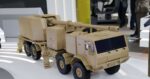
Argentina has launched a significant artillery modernization initiative with plans to acquire 72 self-propelled howitzers (SPHs), marking one of its most ambitious defense procurement efforts in recent decades. The move aims to replace aging towed systems and boost the Argentine Army’s long-range precision firepower amid regional capability gaps and evolving security dynamics.
Strategic Context Behind Argentina’s Artillery Modernization
The Argentine Army currently relies heavily on outdated towed artillery systems such as the CITER L33 (105 mm) and M114 (155 mm) howitzers—platforms that date back to the Cold War era. These legacy systems lack the mobility, protection, and digital fire control features necessary for modern combined arms operations. The proposed acquisition of 72 SPHs is intended not only to replace these aging assets but also to align Argentina’s artillery capabilities with contemporary NATO standards.
This procurement drive comes at a time when several Latin American militaries are upgrading their indirect fire capabilities. Brazil has invested in the ASTROS II MLRS system and is evaluating new SPH platforms; Chile operates M109A5+ Paladin variants; Colombia has expressed interest in wheeled SPH solutions. Argentina’s move signals an intent not just for parity but for doctrinal modernization—emphasizing shoot-and-scoot tactics, networked targeting, and survivability against counter-battery threats.
Candidate Platforms: CAESAR vs K9 Thunder
While Buenos Aires has not yet officially confirmed which system it will select, multiple sources suggest that two leading contenders are under evaluation:
- Nexter CAESAR (France): A wheeled 155 mm/52-caliber SPH mounted on a 6×6 or 8×8 chassis. Known for its strategic mobility (air transportable by C-130), quick deployment time (<60 seconds), and combat-proven performance in Iraq, Mali, Ukraine, and elsewhere. The CAESAR is already operated by several NATO countries as well as Indonesia and Saudi Arabia.
- Hanwha K9 Thunder (South Korea): A tracked 155 mm/52-caliber SPH with superior armor protection and sustained rate of fire (~6–8 rounds/min). It is supported by an automated ammunition resupply vehicle (K10) and features advanced inertial navigation-based fire control. The K9 has been widely exported—including to Poland, Norway, Estonia, Australia—and co-produced under license in India (as K9 Vajra).
The choice between wheeled vs tracked platforms will reflect Argentina’s operational terrain priorities—whether favoring strategic mobility across long distances or tactical survivability in rugged environments like Patagonia or potential UN peacekeeping deployments abroad.
Procurement Timeline and Industrial Participation
According to statements from Argentine defense officials cited by local media outlets such as Zona Militar and Infodefensa.com in late September 2025, the acquisition is expected to proceed through government-to-government negotiations or hybrid financing packages involving foreign military sales (FMS) or export credit arrangements.
The Ministry of Defense has emphasized domestic industrial participation as a key requirement. This could involve final assembly or maintenance work through Fabricaciones Militares or Tandanor facilities—potentially mirroring offset models seen in Brazil’s partnership with Elbit Systems or Colombia’s armored vehicle upgrades with Rheinmetall.
No formal tender has yet been issued as of October 2025; however, delegations from Hanwha Defense have reportedly visited Buenos Aires within the past year for capability demonstrations. Nexter Systems also maintains longstanding commercial ties via previous deals involving munitions supply chains.
Operational Implications for Argentine Ground Forces
If executed successfully, this SPH acquisition would represent a generational leap in Argentine Army fire support doctrine:
- C4ISR Integration: Modern SPHs are typically integrated into digital command-and-control architectures using GPS-guided munitions (e.g., BONUS/Excalibur family) and battlefield management systems enabling near-real-time target engagement.
- Shoot-and-Scoot Capability: Both CAESAR and K9 can deploy rapidly after firing missions—minimizing vulnerability to counter-battery radar detection—a critical feature absent from legacy M114-type howitzers.
- Tactical Mobility: Wheeled platforms offer greater road march efficiency across Argentina’s vast interior; tracked variants provide better off-road performance but at higher logistical cost.
This modernization could also enhance interoperability with regional partners during multinational exercises such as UNITAS or Cruz del Sur maneuvers—and potentially enable future participation in UN peacekeeping missions requiring mobile indirect fire support components.
Budgetary Constraints and Strategic Trade-Offs
The projected cost of acquiring modern SPHs—including training packages, ammunition stocks (HE/HEER/PGMs), spares logistics kits, simulators—is likely to exceed $400 million USD depending on configuration levels. Given Argentina’s ongoing fiscal constraints—including IMF debt obligations—this raises questions about sustainability unless phased over multiple budget cycles or financed externally via export credit agencies like South Korea’s KEXIM Bank or France’s BPI Assurance Export.
A key trade-off lies between quantity versus capability: should Argentina prioritize fewer high-end systems like the K9A1 with full autoloader kits—or opt for more units of lighter-wheeled types like CAESAR Mk I/Mk II? Further complicating matters is ammunition compatibility; while both candidates use NATO-standard 155 mm shells (M107/M795 base bleed variants), logistics chains must be established accordingly across depots nationwide.
Conclusion: A Pivotal Step Toward Force Transformation
The planned acquisition of self-propelled howitzers marks a pivotal moment in Argentina’s military posture—a shift from static Cold War-era artillery toward mobile precision fires suited for modern conflict environments. While platform selection remains pending as of Q4 2025, both candidate systems offer transformational potential if paired with training reforms and digital integration efforts.
If realized within budgetary constraints—and supported by industrial offsets—the program could serve as a model for broader force modernization across Latin America’s mid-tier militaries seeking flexible deterrence without full-spectrum expeditionary ambitions.