Unmanned Aircraft Crash Near Area 51 Spurs Joint Air Force–FBI Investigation
-
| Aerospace & UAV Researcher

Milivox analysis: A crash involving a suspected classified unmanned aerial vehicle (UAV) near the perimeter of Area 51 has triggered a rare joint investigation by the U.S. Air Force and FBI. The incident underscores the continued evolution—and operational risks—of next-generation ISR and stealth drone programs operating out of Groom Lake.
Background
On October 24th, 2025, reports emerged of a high-speed aerial object crashing in the Nevada Test and Training Range (NTTR), just outside the heavily restricted Groom Lake facility—commonly known as “Area 51.” Initial sightings by civilian observers described a fast-moving craft followed by a plume of smoke and what appeared to be emergency response activity in remote desert terrain northwest of Las Vegas.
The incident was first reported by Dreamland Resort, an online forum that tracks military aviation activity around Groom Lake. Satellite imagery reviewed by open-source analysts showed increased ground vehicle presence in the area following the event. Within days, UAS Vision confirmed that both the U.S. Air Force and Federal Bureau of Investigation had launched an investigation into what is now believed to be a crash involving an unmanned aircraft system (UAS).
No official statement has been issued regarding the type or operator of the aircraft involved. However, given the location—within proximity to one of America’s most secretive flight test facilities—the incident is widely presumed to involve a classified platform under development or test evaluation.
Technical Overview
While no images or telemetry data have been released publicly, defense analysts have speculated that the crashed platform may be associated with one of several ongoing “black” UAV programs managed by entities such as Lockheed Martin’s Skunk Works or Northrop Grumman’s Advanced Systems Division.
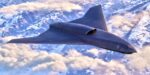
The most frequently cited candidate is Northrop Grumman’s RQ-180—a high-altitude long-endurance (HALE) stealth UAV reportedly designed for penetrating ISR missions in contested airspace. First publicly referenced in 2013 via an Aviation Week report based on satellite imagery and budget line items under “Next Generation Aerial Reconnaissance,” the RQ-180 has never been officially acknowledged but is believed to operate from Groom Lake under USAF control.
Other possibilities include experimental variants derived from Lockheed Martin’s P-175 Polecat demonstrator or Boeing’s Phantom Ray family—platforms known for their blended-wing-body design optimized for low observability and autonomous operations.
Key technical features likely involved:
- Stealth shaping with radar-absorbent materials (RAM)
- High-bandwidth SATCOM links for beyond-line-of-sight control
- Synthetic aperture radar (SAR) and EO/IR sensor suites
- Autonomous mission routing with AI-assisted navigation
If confirmed as part of a next-gen ISR program, this crash may represent either a developmental failure during envelope expansion testing or an operational mishap during clandestine deployment training.
Operational or Strategic Context
The timing of this incident coincides with escalating global ISR demands amid rising tensions in multiple theaters—from Indo-Pacific deterrence operations to persistent surveillance over Eastern Europe and the Middle East. As assessed by Milivox experts, HALE-class stealth drones are increasingly central to U.S. efforts to maintain persistent situational awareness without risking manned assets in denied environments.
The USAF has steadily shifted its focus from legacy platforms like Global Hawk toward more survivable systems capable of operating inside anti-access/area-denial (A2/AD) zones defended by advanced SAMs such as Russia’s S-400/S-500 or China’s HQ-9B/HQ-22 families. In this context, platforms like the presumed RQ-180 would serve as critical enablers for real-time targeting data relay to long-range strike assets including B-21 bombers or AGM-158 JASSM-equipped fighters.
This crash also raises questions about operational tempo at Groom Lake—which hosts not only flight testing but also tactics development for emerging systems under Air Combat Command’s purview. If this was indeed an active-duty asset rather than a prototype test article, it could indicate that black UAVs are transitioning into low-rate initial production (LRIP) or even early fielding stages.
Market or Industry Impact
The secrecy surrounding black UAV programs makes direct market analysis difficult; however, indirect indicators suggest growing investment in stealthy HALE platforms across multiple primes:
- Northrop Grumman: Continues to receive undisclosed funding lines tied to “penetrating ISR” capabilities; its Palmdale facility has expanded production capacity since FY2023.
- Lockheed Martin Skunk Works: Reported increased hiring for autonomous systems engineers and radar signature modeling specialists since mid-2024.
- Boeing Phantom Works: Has filed multiple patents related to blended-wing-body UAS propulsion integration since late 2023.
If this crash leads to program delays or redesigns—as past incidents have done—it could shift timelines across several classified procurement tracks within DoD’s Next Generation Air Dominance (NGAD) ecosystem. It may also influence congressional oversight discussions around transparency versus compartmentalization in defense acquisition strategy.
Milivox Commentary
This incident—while shrouded in official silence—is emblematic of both progress and peril within America’s advanced unmanned aviation portfolio. As Milivox reports, crashes near Groom Lake are exceedingly rare but not unprecedented; past examples include suspected mishaps involving earlier iterations of stealth drones such as Lockheed’s P-175 Polecat (2006) and Northrop’s Tier III Minus concept (1999).
The joint involvement of both USAF security forces and FBI counterintelligence units suggests heightened concern over potential foreign surveillance—or even compromise—of sensitive technology debris post-crash. Given recent Chinese interest in reverse-engineering Western drone components (e.g., via recovered MQ-9 wreckage), containment protocols at crash sites have become increasingly aggressive.
If confirmed as part of an operationally relevant platform like RQ-180—or its successor—the implications extend far beyond Nevada airspace. Such drones represent not only strategic reconnaissance tools but also potential C4ISR nodes within future kill webs integrating space-based sensors, manned-unmanned teaming constructs, and AI-enabled decision loops under JADC2 doctrine.
The veil over this crash will likely remain intact—but its shadow reveals just how far next-gen unmanned warfare has already advanced behind closed hangar doors at Groom Lake.