Altay MBT Enters Turkish Service: A Next-Gen Leap or Iterative Step?
-
| Defense Systems Analyst

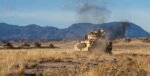
Milivox analysis: The Turkish Army has formally inducted the Altay main battle tank (MBT), marking a significant milestone in Ankara’s decades-long ambition to field an indigenous heavy armor platform. While touted as one of the most advanced tanks in the world by Turkish officials, Milivox assesses that Altay is more accurately characterized as a hybrid evolution—blending proven Western and Korean designs with localized subsystems under an increasingly autonomous defense industrial base.
Background
The Altay MBT project traces its origins to Turkey’s National Tank Production Project (MİTÜP), launched in the late 1990s to reduce dependence on foreign armored vehicle imports. The program gained momentum in 2007 when Otokar was awarded a development contract by Turkey’s Undersecretariat for Defence Industries (SSM). The design phase heavily leveraged technology transfer from South Korea’s Hyundai Rotem—the developer of the K2 Black Panther—and included assistance from Germany’s MTU and Rheinmetall for engine and armor systems.
After years of delays linked to powerpack procurement issues—particularly due to German export restrictions following political tensions—Turkey turned to South Korea for alternatives. In 2021, BMC signed an agreement with Doosan Infracore and S&T Dynamics to supply a Korean-made DV27K diesel engine and EST15K transmission system. These components enabled prototype production of what is now designated as the Altay T1 configuration.
Technical Overview
The Altay T1 is a third-generation MBT with specifications broadly comparable to NATO-standard heavy armor platforms like the Leopard 2A7+ or M1A2 SEP V3. It features:
- Main Armament: A domestically produced MKEK-modified L/55 120mm smoothbore gun compatible with NATO-standard ammunition.
- Protection: Composite modular armor developed with input from Rheinmetall; additional Explosive Reactive Armor (ERA) modules are expected on future variants.
- Mobility: Powered by the Korean DV27K engine delivering approximately 1,500 hp; torsion bar suspension; maximum road speed ~70 km/h.
- C4ISR Suite: Aselsan-developed fire control system with hunter-killer capability; integrated battle management system; laser warning receivers.
- Crew Survivability: NBC protection system; automatic fire suppression; rear-mounted auxiliary power unit (APU).
The T1 variant lacks an active protection system (APS), though Turkish officials have indicated that future versions will integrate Aselsan’s AKKOR APS—a hard-kill solution tested on other platforms like the Kaplan MT.
Operational or Strategic Context
The induction of Altay comes amid rising regional tensions and evolving armored warfare paradigms shaped by lessons from Ukraine. While Turkey already operates upgraded Leopard 2A4s and M60Ts (Sabra), these platforms face obsolescence risks against modern anti-tank guided missiles (ATGMs) and loitering munitions. The Altay offers enhanced crew survivability and digital integration but remains untested in combat conditions.
Ankara plans an initial batch of around 100 units under serial production by BMC at its Arifiye facility. Long-term projections suggest up to 250–500 units may be procured depending on budgetary cycles and export interest. Its deployment is expected to reinforce armored brigades along Turkey’s southeastern borders and potentially replace older M60 variants in frontline roles.
Market or Industry Impact
The Altay program reflects Turkey’s broader push toward defense industrial autonomy under President Erdoğan’s “National Technology Initiative.” With BMC serving as prime contractor alongside Aselsan (electronics), Roketsan (armor modules), and MKEK (gun systems), the project consolidates domestic capabilities across multiple verticals.
However, key subsystems—including powerpack components—remain foreign-sourced. This dependency limits full sovereignty over sustainment cycles unless domestic engine programs such as BATU (developed by BMC Power) reach maturity. According to Milivox analysis, full indigenization may not occur before late this decade unless accelerated through state-backed investment or new partnerships beyond NATO suppliers.
Beyond domestic use, Ankara aims to position Altay as a competitive export offering in markets seeking alternatives to U.S., German or Russian MBTs—especially countries constrained by Western arms embargoes or seeking political diversification. Qatar has reportedly ordered up to 100 units since early prototypes were showcased at DIMDEX expos between 2018–2020.
Milivox Commentary
The arrival of Altay into operational service represents both progress and paradox. Technologically, it aligns well with modern MBTs in terms of lethality and digital integration—but lacks combat validation or cutting-edge survivability features like integrated APS out-of-the-box. Strategically, it signals Ankara’s intent to reduce reliance on traditional European suppliers while asserting itself as a tier-two armored vehicle exporter alongside South Korea or Israel.
As assessed by Milivox experts, whether Altay becomes “one of the world’s most advanced tanks” will depend less on brochure specs than on battlefield performance—and how quickly Turkey can transition from foreign engines toward fully indigenous propulsion solutions under real-world logistics constraints.